'You shouldn’t talk every day': Macron slams Trump over Iran war remarks, warns on NATO
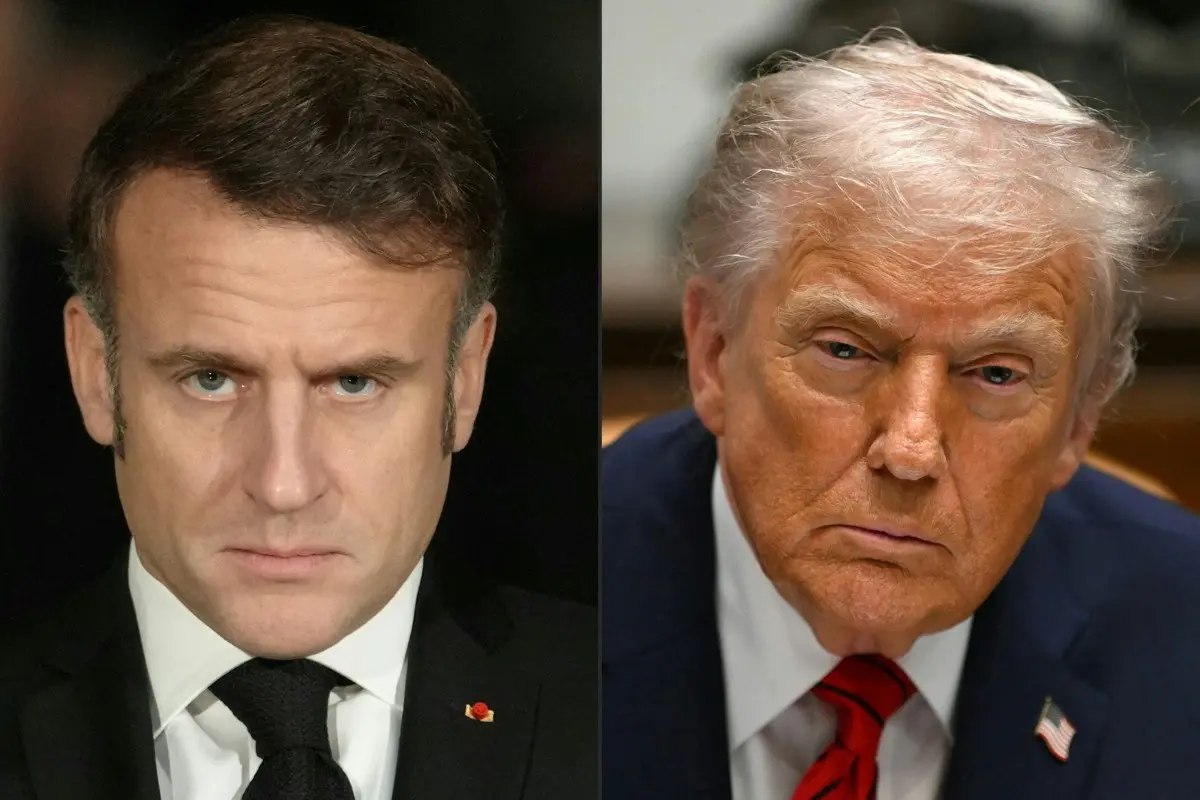
Paris/Seoul: French President Emmanuel Macron on Thursday sharply criticised US President Donald Trump, accusing him of sending mixed signals on the Iran conflict and weakening the credibility of the North Atlantic Treaty Organisation (NATO) through recent statements.
Macron calls out ‘contradictory’ messaging
Speaking during his state visit to South Korea, Macron said consistency is essential in international leadership. He remarked that serious engagement requires avoiding daily reversals in position, adding that frequent and conflicting statements risk eroding trust.
“You have to be serious. When you want to be serious, you don’t say the opposite every day of what you said the day before. And perhaps you shouldn’t talk every day,” he said.
He warned that repeatedly casting doubt on commitments to NATO diminishes the alliance’s strength. Macron also noted that there has been excessive commentary that lacks clear direction. Alongside his criticism, he reiterated the need for an immediate ceasefire in the ongoing conflict and called for a return to diplomatic negotiations.
Trump questions NATO, signals possible exit
Macron’s remarks followed Trump’s suggestion that he is strongly considering withdrawing from NATO after the alliance declined to back the US-Israeli war effort against Iran. Trump described NATO as a “paper tiger” and indicated that his scepticism towards the alliance has been longstanding.
In comments to The Telegraph, he said his stance goes beyond reconsideration and claimed he had never been convinced by NATO’s strength. He also suggested that Russian President Vladimir Putin shares that view. T
he remarks signal growing distance between the US administration and its European allies, particularly after NATO members rejected Washington’s call to deploy warships to reopen the Strait of Hormuz.
Macron rejects military plan for Hormuz
Addressing the situation in the Strait of Hormuz, Macron described proposals for a military operation to reopen the crucial oil route as unrealistic and time-consuming. The strait has remained blocked by Iran since US-Israeli strikes on February 28, severely disrupting global energy flows.
He pointed to significant “coastal threats”, including Iran’s Islamic Revolutionary Guard Corps, which he said possesses substantial resources and ballistic missile capabilities. Macron emphasised that France has not supported the option of using force, noting that such proposals have been inconsistently raised by the United States.
Global energy concerns mount
The Strait of Hormuz, a key artery for global oil shipments, has been effectively paralysed for weeks, contributing to rising crude prices and affecting markets worldwide. Iran’s Revolutionary Guards have vowed to keep the passage closed to what they describe as hostile nations, while Trump has made reopening it a precondition for any ceasefire.
US pressures allies, signals escalation
Trump has urged allies to take responsibility for securing shipping routes through Hormuz, suggesting that countries heavily dependent on the route, including South Korea, Japan and China, should lead such efforts.
At the same time, he has set a tentative timeline of two to three weeks for a possible end to the conflict, while also deploying thousands of US troops to the region in preparation for potential escalation. Trump has warned of severe retaliation against Iran, stating that the country could face devastating consequences if tensions continue to rise.
With agency inputs