Mystery shrouds newly-laid airstrip on Yemeni island in Red Sea
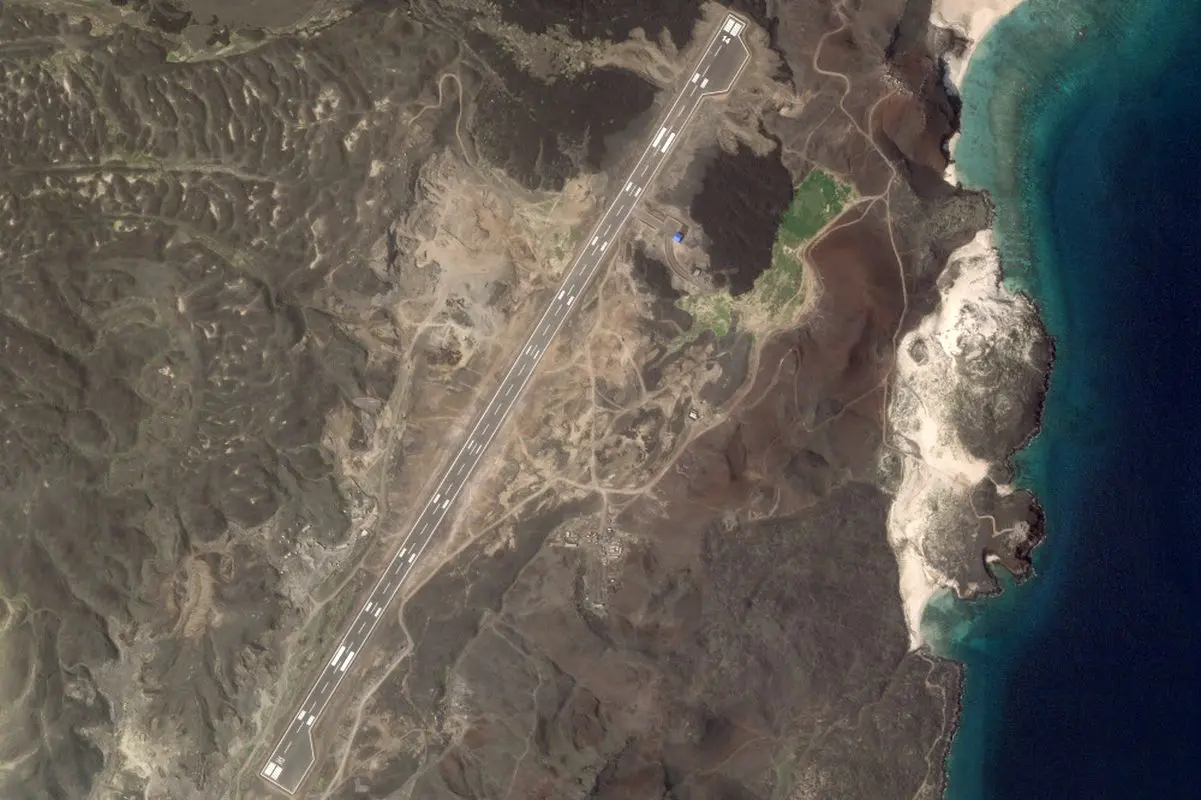
A newly-constructed airstrip on the remote Yemeni island of Zuqar in the strategic Red Sea is raising alarms and fueling speculation that forces opposed to the Iranian-backed Houthi rebels are escalating their military footprint in a region critical to global shipping.
Satellite images analyzed by the Associated Press confirm the construction of a nearly 2,000-meter (6,560-foot) runway on the volcanic island, which sits 90 kilometers southeast of the Houthi-held port city of Hodeida. The base provides a strategic aerial surveillance platform over the Bab el-Mandeb Strait, the Gulf of Aden, and the volatile Red Sea, where Houthis have severely disrupted maritime traffic since the Israel-Hamas war began.
Construction and UAE ties
The runway construction appears to have begun in April, with asphalt being laid by late August. While no entity has claimed responsibility for the work, evidence points toward actors allied with the United Arab Emirates (UAE).
Ship-tracking data indicates that the bulk carrier Batsa delivered asphalt to Zuqar after departing Berbera in Somaliland, home to a DP World port. A Dubai-based maritime firm also confirmed receiving an order to deliver asphalt on behalf of other UAE-based companies.
The UAE has previously been linked to the construction of several other runways in the region, including projects in Mocha, Dhubab, and on the strategically crucial Mayun Island in the Bab el-Mandeb Strait.
Strategic Shift: Countering Smuggling
The timing of the base's construction is critical. While the divided anti-Houthi forces have struggled to launch a coordinated ground offensive against the rebels, analysts suggest the new base’s primary role may be to disrupt the flow of illicit weapons.
Eleonora Ardemagni, an analyst at the Italian Institute for International Political Studies, emphasizes this function: “A likely Emirati airstrip in Zuqar could serve to improve surveillance and monitoring off the Hodeida coast to better support Yemeni forces in tackling smuggling.”
The build-up comes as anti-Houthi forces have successfully executed several significant seizures of weapons destined for the rebels, a development that has earned praise from the US military’s Central Command.
A Fragmented Opposition
Zuqar Island was captured by the Houthis in 2014 but retaken by the Saudi-led coalition in 2015. It has since become a staging ground for naval forces loyal to Tariq Saleh, the nephew of Yemen's late strongman leader Ali Abdullah Saleh, who is backed by the UAE.
Despite intense bombing campaigns by the US and Israel targeting Houthi sites -- strikes the Houthis have consistently endured -- the anti-Houthi coalition remains fragmented. This suggests that the new airstrip may be part of a long-term strategy of pressure rather than a precursor to an immediate large-scale ground attack.
However, the escalation of offshore infrastructure provides a clear signal that the protracted conflict is entering a new phase focused on tightening the noose around the Houthi supply lines and enhancing regional surveillance capabilities in the Red Sea.