Why Houthi drone attack on Israel signals a wider escalation in West Asia tensions
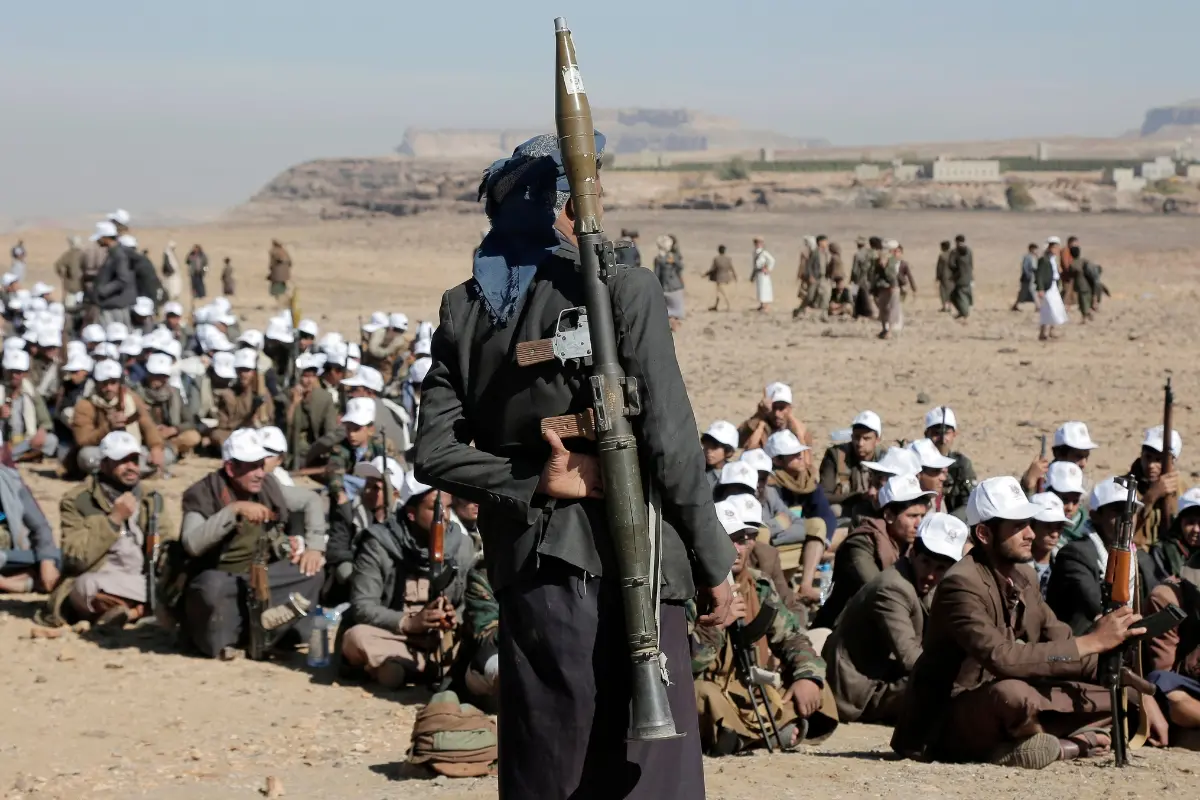
Tehran: The recent missile launch by Yemen’s Iran-backed Houthi group towards Israel signals a possible widening of the ongoing Middle East conflict.
While intercepted, the strike has raised concerns about the security of key maritime corridors and the risk of broader regional spillover.
Why the Houthis are acting now
Analysts suggest the timing of the Houthis’ actions is linked to the escalation of regional hostilities following the broader Iran-Israel-US conflict. The Houthis, who control parts of Yemen including the capital Sanaa, have historically aligned themselves with Iran and have previously carried out attacks in response to regional developments. Their involvement appears to reflect coordination within a wider network of Iran-aligned groups operating across the Middle East.
The significance of the strike lies not only in its military impact but in its strategic signalling. By demonstrating capability to launch missiles towards Israel, the Houthis are indicating their potential to open an additional front in the conflict. This adds pressure to already strained regional security dynamics and complicates defence calculations for involved states.
Red Sea and Bab el-Mandeb as emerging flashpoints
The Red Sea corridor, particularly the Bab el-Mandeb Strait, is a critical global shipping route connecting the Indian Ocean to the Suez Canal via the Gulf of Aden. Any escalation involving attacks on commercial vessels could disrupt maritime traffic. Approximately 12% of global seaborne oil passes through this chokepoint, making it a key node in global energy logistics.
If attacks on vessels increase, shipping companies may be forced to reroute via the Cape of Good Hope, significantly increasing transit time and costs. Such disruptions can affect global supply chains, delay deliveries, and raise freight and insurance costs. These factors may contribute to broader economic pressures, including inflation in energy and transport sectors.
Link with wider regional tensions
The situation in the Red Sea is unfolding alongside tensions in the Strait of Hormuz, another critical maritime chokepoint. Together, these routes form essential arteries for global oil and goods movement. Any simultaneous instability in both regions could have amplified effects on international trade and energy markets.
Houthis’ military capability and past activity
The Houthis have demonstrated the ability to conduct long-range drone and missile strikes, as well as maritime attacks. Reports from recent years indicate they have targeted commercial vessels in the Red Sea, particularly during periods of heightened regional conflict. Their capabilities allow them to influence shipping lanes even without direct territorial control of the wider region.
The involvement of the Houthis introduces a potential new front in the conflict, extending beyond direct Iran-Israel confrontation. It reflects a pattern of regional proxy dynamics, where multiple actors influence the conflict across different geographic zones. This increases the complexity of de-escalation efforts and raises the risk of a prolonged, multi-front confrontation.
The Houthis’ recent actions highlight how the conflict is expanding beyond traditional battle zones into critical maritime corridors. While the immediate military impact may be limited, the broader implications for global trade, energy security, and regional stability are significant, particularly if attacks on shipping in the Red Sea intensify.