Why NATO is spending 5% of GDP on defence?
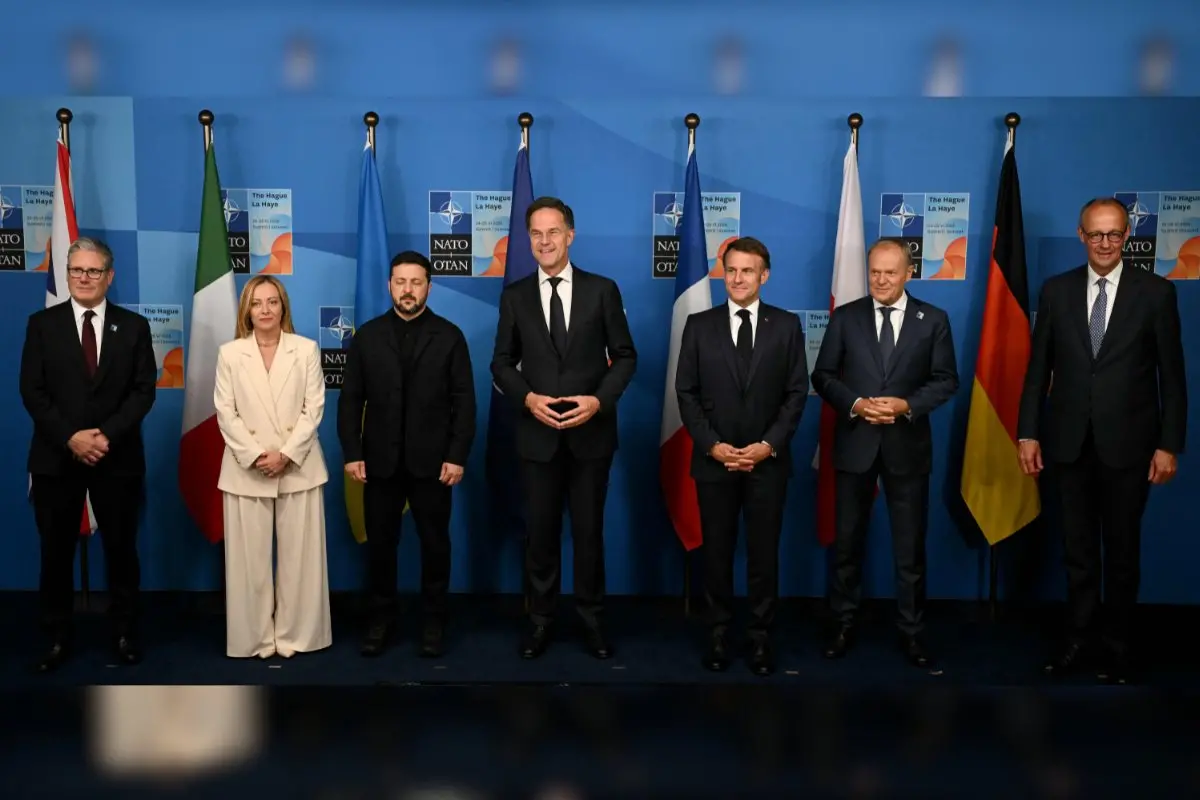
The Hague: In a major strategic move aimed at strengthening collective security, the NATO Heads of State and Government on Wednesday committed to investing 5 percent of GDP annually on core defence requirements and defence-related spending by 2035.
The declaration was made at the conclusion of the two-day NATO Summit in The Hague, where the alliance also reinforced its unity against security threats, including the long-term challenge posed by Russia and the persistent threat of terrorism.
‘Ironclad commitment’ to defence
"United in the face of profound security threats and challenges, in particular the long-term threat posed by Russia to Euro-Atlantic security and the persistent threat of terrorism, Allies commit to invest 5 percent of GDP annually on core defence requirements as well as defence-and security-related spending by 2035 to ensure our individual and collective obligations, in accordance with Article 3 of the Washington Treaty," stated The Hague Summit Declaration.
The leaders reaffirmed their unity in protecting NATO’s one billion citizens and emphasised the central role of Article 5 of the Washington Treaty.
"We, the Heads of State and Government of the North Atlantic Alliance, have gathered in The Hague to reaffirm our commitment to NATO, the strongest Alliance in history, and to the transatlantic bond. We reaffirm our ironclad commitment to collective defence as enshrined in Article 5 of the Washington Treaty – that an attack on one is an attack on all. We remain united and steadfast in our resolve to protect our one billion citizens, defend the Alliance, and safeguard our freedom and democracy," read the Joint Statement.
Making NATO ‘stronger, fairer and more lethal’
At the summit, NATO allies took steps to make the alliance “stronger, fairer and more lethal”, and signed several new multinational projects while also expanding existing ones. Belgium, Canada, Denmark, Germany, Greece, Italy, the Netherlands, Norway, Poland, Sweden, Turkey, and the United Kingdom agreed to jointly acquire, store, transport, and manage stockpiles of defence-critical raw materials, including through recycling.
"Our investments will ensure we have the forces, capabilities, resources, infrastructure, warfighting readiness, and resilience needed to deter and defend in line with our three core tasks of deterrence and defence, crisis prevention and management, and cooperative security," the statement said.
Breakdown of the 5% spending commitment
According to the declaration, the five percent commitment will consist of two essential defence investment categories.
"Allies will allocate at least 3.5 percent of GDP annually based on the agreed definition of NATO defence expenditure by 2035 to resource core defence requirements, and to meet the NATO Capability Targets. Allies agree to submit annual plans showing a credible, incremental path to reach this goal. And Allies will account for up to 1.5 percent of GDP annually to inter alia protect our critical infrastructure, defend our networks, ensure our civil preparedness and resilience, unleash innovation, and strengthen our defence industrial base," the Joint Statement explained.
The progress of this plan will be reviewed in 2029, taking into account the strategic environment and updated Capability Targets.
Support for Ukraine and defence industry expansion
The allies also reaffirmed their continuing support to Ukraine.
"Allies reaffirm their enduring sovereign commitments to provide support to Ukraine, whose security contributes to ours, and, to this end, will include direct contributions towards Ukraine's defence and its defence industry when calculating Allies' defence spending," the declaration added.
The NATO member states pledged to rapidly expand transatlantic defence industrial cooperation and emphasised the importance of innovation and technology in strengthening collective security.
"We will work to eliminate defence trade barriers among Allies and will leverage our partnerships to promote defence industrial cooperation," they pledged.
(IANS inputs)