Why are cost-of-living protests turning violent across Europe?
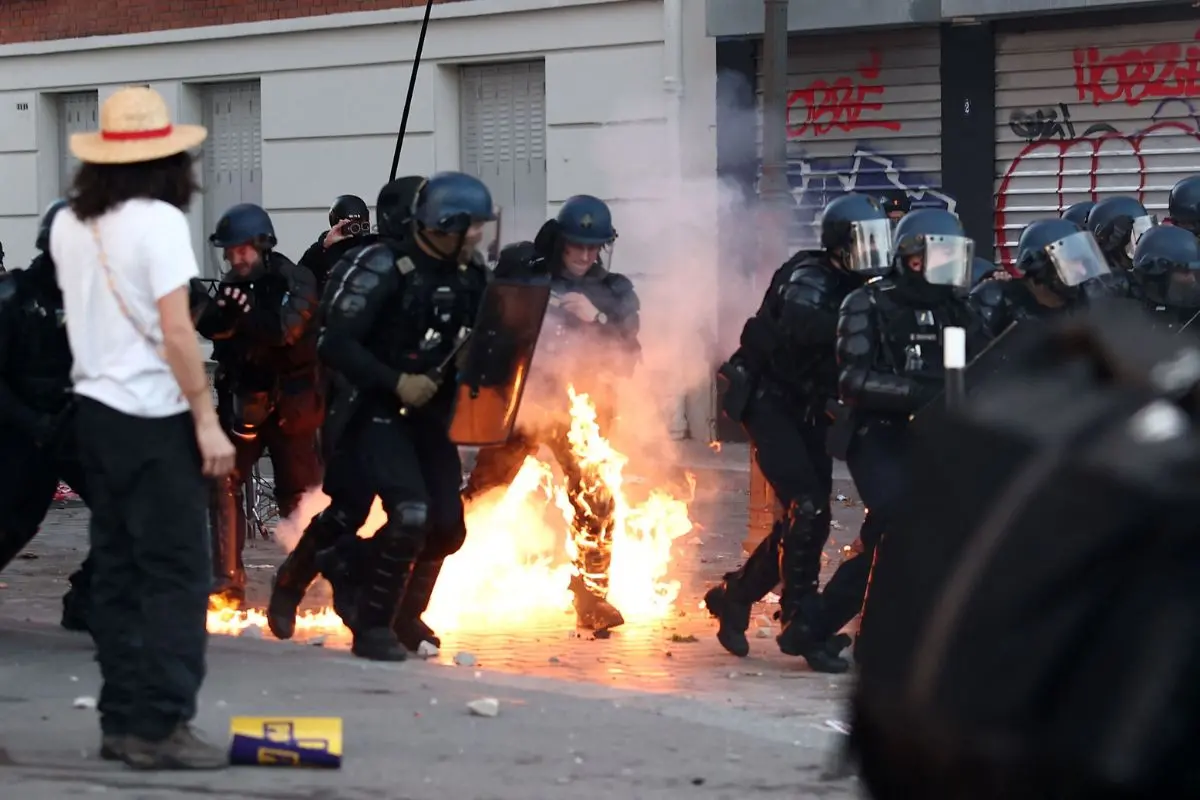
A wave of youth-led protests has swept across several European countries, with thousands taking to the streets over rising living costs, housing affordability, underfunded public services and cuts to education.
The demonstrations, largely peaceful during the day, turned violent in several German cities late on Saturday, with rioters looting shops and clashing with police.
Frankfurt, Germany's financial hub, witnessed some of the worst violence. Police reported that shop windows had been smashed, Molotov cocktails thrown at emergency services and several stores broken into. Looters reportedly stole trainers and other merchandise.
Police deployed special units in the city centre, while a large section of Frankfurt's main shopping street was cordoned off. Several arrests were made.
Violence was also reported in Berlin, Cologne and Hamburg. In Cologne, police said officers near the main railway station were attacked with bottles, while a bicycle was also thrown at them. Authorities used water cannon to disperse protesters in some locations.
What triggered the protests in Germany?
Thousands of people participated in demonstrations organised by Gen Z regelt, a campaign group whose name translates to 'Gen Z takes charge'.
The protesters raised concerns over the rising cost of living, inadequate funding for schools, cuts in public spending and compulsory military service.
Authorities in Frankfurt, Munich and Berlin reported a combined turnout of up to 18,000 protesters, approximately half the number estimated by organisers. German media, however, reported that tens of thousands had participated in demonstrations across the country.
While most of the protests remained peaceful during the day, tensions escalated after nightfall, resulting in clashes and vandalism.
France witnesses another weekend of mass protests
Germany's unrest comes amid a wider wave of youth-led demonstrations across Europe. France witnessed another weekend of large-scale protests, with more than 320,000 people taking part in demonstrations across the country.
It was the third consecutive weekend of protests, with demonstrators demanding action on the rising cost of living and deteriorating public services, particularly in education.
More than 500 people were arrested following clashes in Toulouse, Lyon and Marseille. Police fired tear gas in some cities, while officers in Paris reported attacks by groups of rioters throwing projectiles at security forces.
French Interior Minister Laurent Nuñez said a police officer had been injured by a Molotov cocktail.
Protests spread to other European countries
Demonstrations and clashes were also reported in Italy, where protesters confronted police in Rome and Turin.
In Portugal, thousands marched against a proposed rental bill, arguing that it could aggravate the country's housing crisis. Police subsequently moved to clear a newly established tent camp. House prices in Portugal have more than doubled over the past decade.
The recent wave of demonstrations has also reached Belgium, Ireland, Spain, Greece, Serbia and Albania.
What are the protesters demanding?
Although the immediate triggers differ across countries, the demonstrations share several underlying concerns.
Young people across Europe are increasingly frustrated by the rising cost of living, unaffordable housing, declining quality of public services and limited opportunities.
Access to affordable accommodation has emerged as a major concern, particularly in countries where housing costs have risen sharply. Underfunded schools, education cuts and reduced public spending have also featured prominently in the protests.
While the demands vary from country to country, the demonstrations point to a broader generational discontent over economic pressures and the quality of public services.