Was Iran close to having a nuclear bomb in its arsenal?
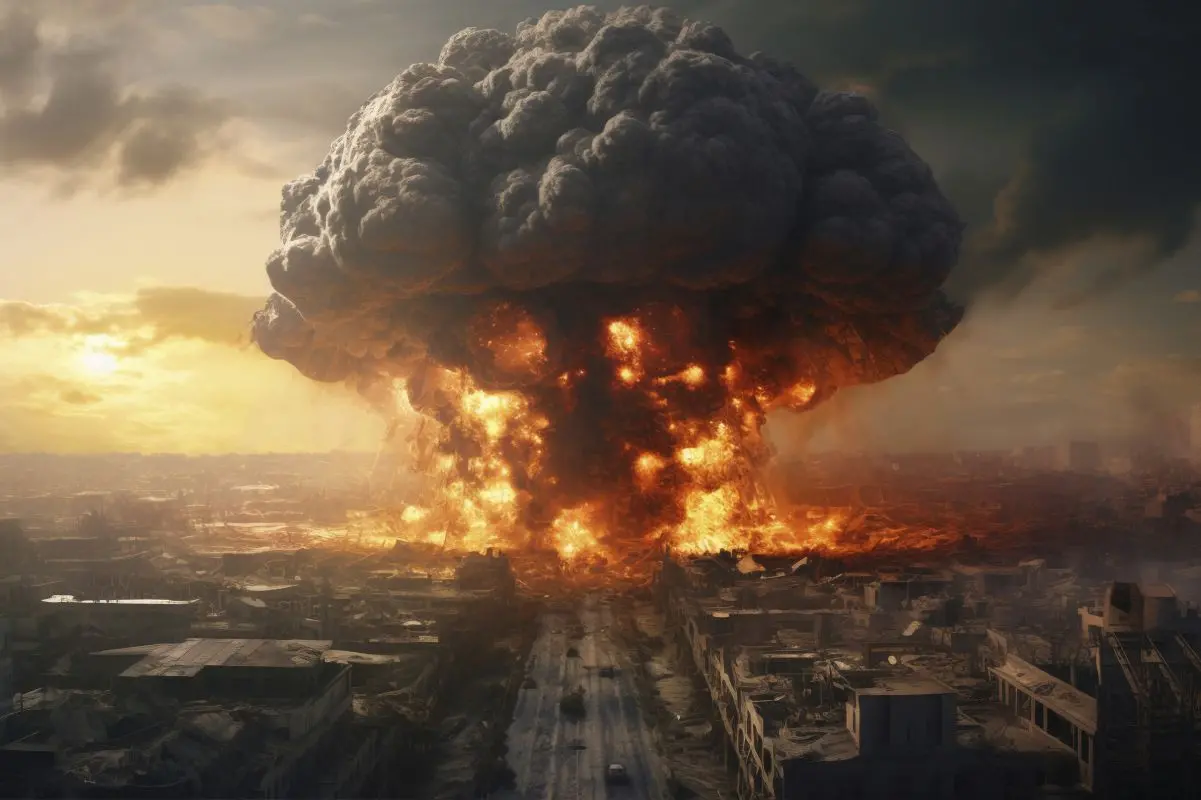
United States President Donald Trump ordered sweeping airstrikes on Iran early Saturday, escalating a confrontation over Tehran's nuclear programme that has haunted his predecessors across party lines for decades. The attacks follow Iran's rapid buildup of near-weapons-grade uranium and the collapse of recent indirect talks, with Trump vowing to prevent Tehran from acquiring a nuclear bomb "at all costs."
In a pre-dawn video address, Trump described the operation as "massive and ongoing," targeting key nuclear facilities. "We sought repeatedly to make a deal, but Iranian officials rejected every opportunity to renounce their nuclear ambitions," he said. "We can't take it anymore."
The strikes come less than a year after US airstrikes in June 2025 crippled three major sites -- Fordo, Natanz, and a research facility near Isfahan -- yet failed to halt Iran's enrichment push.
Nuclear stockpile nears weapons threshold
Iran denies pursuing nuclear weapons but has amassed 972 pounds of uranium enriched to 60% purity as of mid-June 2025, per International Atomic Energy Agency (IAEA) estimates -- just before last year's strikes.
This marks a sharp rise from 605.8 pounds in February 2025 and 267.9 pounds a year earlier. IAEA data indicates 92.5 pounds at this level suffices for one bomb if further enriched to 90% weapons-grade.
US Defense Intelligence Agency (DIA) assessments from May 2025 pegged Iran's "breakout time" to produce enough fissile material for a bomb at under one week, with assembly potentially taking three to eight months barring delays.
However, US intelligence maintains Iran halted its structured weapons program in 2003 and shows no current evidence of restarting. "Iran almost certainly is not producing nuclear weapons," the DIA stated, though it has positioned itself to do so quickly if desired.
IAEA Director-General Rafael Grossi echoed this on February 18, telling TF1 there were no signs of active weaponization. Iran insists its program is peaceful, enriching beyond civilian needs -- making it the only non-nuclear state producing such material, per the IAEA.
Damage without destruction
June 2025's precision strikes inflicted "severe damage" on targeted sites but spared much of Iran's uranium stockpile, Grossi told CBS News. Satellite imagery from late January revealed reconstruction efforts, including roofs over damaged Natanz and Isfahan buildings.
A confidential IAEA report notes unexplained activity at bombed sites, amid suspended inspections since Iran's post-strike cooperation freeze.
Iranian Foreign Minister Abbas Araghchi dismissed the impact on Fox News in January: "You destroyed facilities and machines, but technology and determination cannot be bombed." Secretary of State Marco Rubio confirmed last week that enrichment has paused, though Iran aims to resume.
Programme rooted in revolution-era ambitions
Iran's nuclear efforts trace to pre-1979 research under a US-backed regime, evolving into centrifuge development by the mid-1980s via black-market acquisitions.
Global scrutiny intensified in 2002 after revelations of secret facilities. The IAEA confirmed a "structured programme" for nuclear explosive activities until 2003, some with dual-use potential.
The 2015 Joint Comprehensive Plan of Action (JCPOA) under then President Barack Obama curbed stockpiles and enabled IAEA monitoring in exchange for sanctions relief. Trump withdrew in 2018, launching "maximum pressure" sanctions to force a tougher deal. Biden-era revival attempts failed, prompting Iran to breach limits and hit 60% enrichment.
Trump now demands zero enrichment, citing Iran's oil reserves: "You don't have to enrich when you have that much oil." Araghchi rejected this, framing it as "a matter of dignity and pride" for Iran's self-reliant scientists.
Recent weeks saw indirect US-Iran talks alongside a US naval buildup in the Middle East. The strikes coincide with Trump's return to office and Iran's Chabahar Port tensions with India, where a US sanctions waiver expires April 26. Analysts warn of broader regional fallout, including oil market shocks and proxy escalations.
As explosions lit Iranian skies Saturday, the world braces for Tehran's response -- and whether this marks the end of negotiations or the spark of wider conflict.