Can a President set global tariffs alone? Trump's decisions face Supreme Court scrutiny
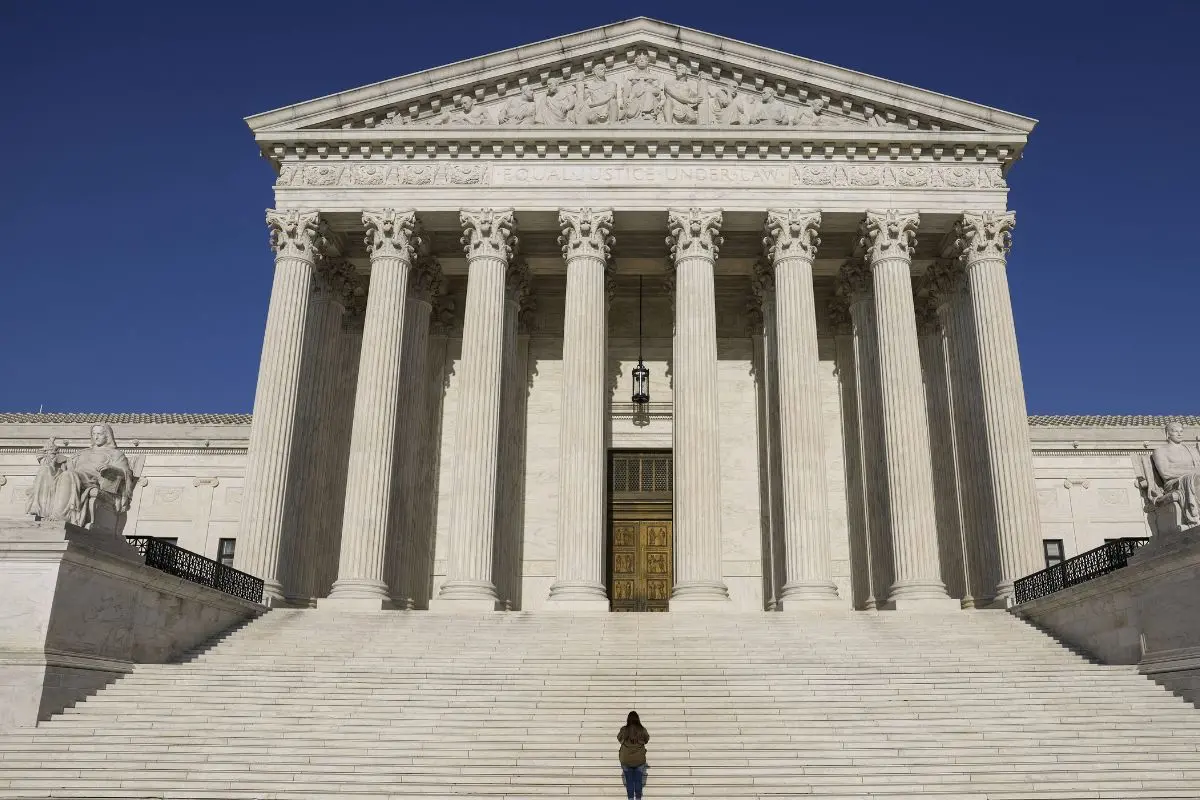
Washington: The US Supreme Court appeared sceptical of former President Donald Trump’s far-reaching global tariffs imposed under emergency powers, in a landmark case, on Wednesday, that could redefine the scope of presidential authority over trade.
The nine justices examined whether Trump acted lawfully when he invoked the International Emergency Economic Powers Act (IEEPA) of 1977 to impose tariffs on imports from more than 100 countries, measures that have reshaped global trade, increased costs for US consumers, and sparked retaliation from key partners.
The case stems from two lawsuits filed by 12 US states, led by Oregon, along with several small businesses, which argue that the IEEPA does not authorise a president to impose tariffs unilaterally. They contend that the US Constitution reserves the power to tax imports exclusively for Congress under the separation of powers.
Representing the petitioners, Indian-American lawyer Neal Katyal argued that Congress, in enacting the IEEPA, never intended to give "the President the power to overhaul the entire tariff system and the American economy in the process, allowing him to set and reset tariffs on any and every product from any and every country, at any and all times.”
Chief Justice John Roberts questioned the administration’s broad interpretation of the law, observing that “the vehicle is the imposition of taxes on Americans, and that has always been a core power of Congress.”
During the hearing, Justice Brett Kavanaugh referenced Trump’s 50 per cent tariffs on India in his discussion of what constitutes an emergency situation.
“Think about India right now, the tariff on India, that's designed to help settle the Russia-Ukraine war. I don't pretend to be an expert, but if that's gone, that's a tool that's designed...talking about foreign-facing the most serious crisis in the world, and that's out of the window. So, I think it's just contextually an emergency. It's just a bit unusual to read it that way,” he noted.
US Solicitor General John Sauer, arguing for the government, said the tariffs were a legitimate use of executive power to regulate foreign commerce and that any revenue raised was merely “incidental.” He warned that stripping the president of such authority could “undermine America’s negotiating leverage” in future trade disputes.
Trump, who has described tariffs as his “favourite economic and diplomatic tool,” previously defended his actions on social media, saying his ability to “quickly and nimbly use the power of tariffs” was essential for achieving “fair and sustainable deals” with nations such as China.
Lower courts have rejected Trump’s interpretation. In August, the US Court of Appeals for the Federal Circuit ruled that while the IEEPA grants broad emergency powers, Trump’s tariffs went beyond those limits. Earlier, in May, the International Trade Court struck down his Liberation Day and fentanyl-related tariffs on China and Canada.
More than 40 amicus briefs have been submitted to the Supreme Court, including one signed by 207 lawmakers, with only one Republican, Alaska Senator Lisa Murkowski, arguing that “neither the word ‘duties’ nor ‘tariffs’ appears anywhere in the IEEPA.”
A ruling against the government could trigger massive refunds, potentially exceeding $100 billion in duties collected since 2022, posing significant market disruption. The court’s decision, expected in early 2026, is likely to have far-reaching implications for US trade policy, presidential power, and Washington’s global economic influence.
IANS