US reverse-engineered Iranian Shahed-136 kamikaze drone, used it on Iran
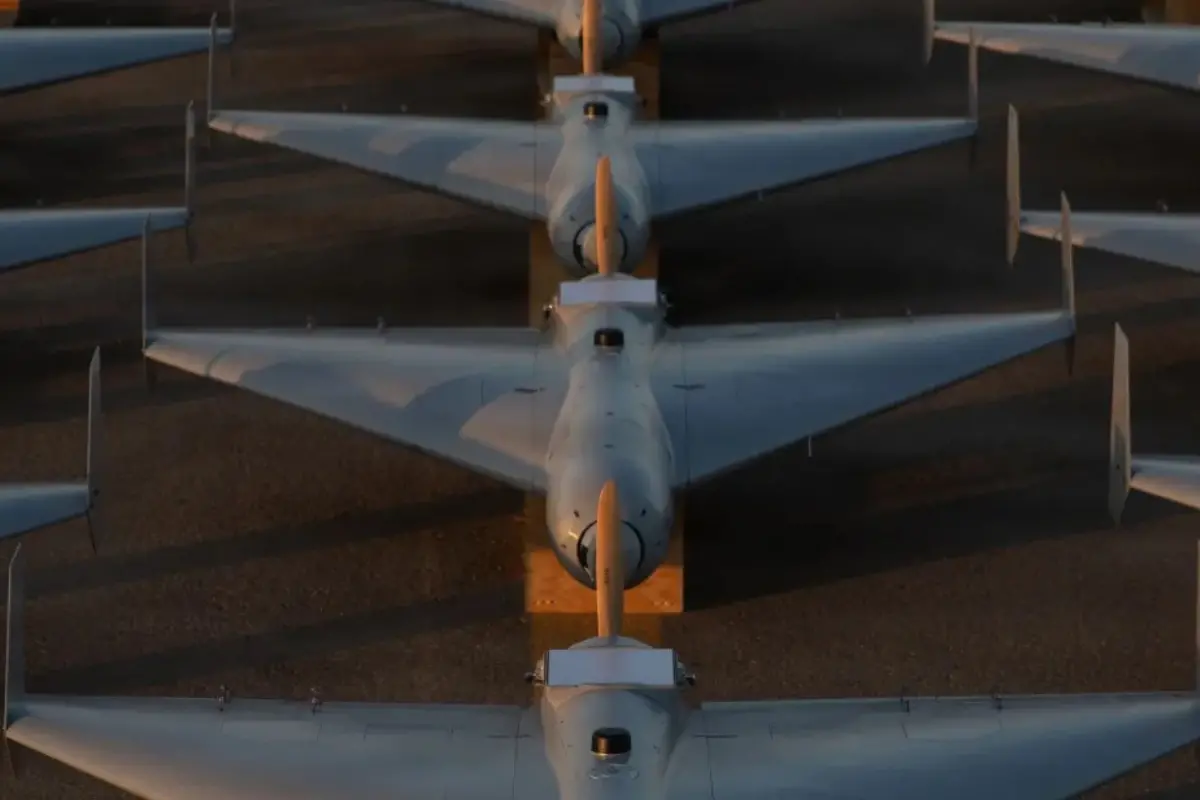
Iran was at the receiving end of the American military blitzkrieg that saw its top leadership, including its supreme leader Ayatollah Ali Khamenei, being wiped out on Saturday. There was one weapon technology in particular that the US Central Command (CENTCOM) deployed with lethal accuracy -- Low-cost Unmanned Combat Attack System or LUCAS. These drones, ironically, are based on Iran's own home-grown Shahed-136 unmanned aerial vehicles.
US Central Command confirmed the deployment of these "kamikaze" drones via social media, characterising the engagement as a historic milestone in modern warfare. The operation covered a massive theatre, with CENTCOM’s naval and aerial assets monitoring over 2.5 million square miles of ocean ranging from the Red Sea to the Indian Ocean.
Operation Epic Fury, as the mission was dubbed, targeted a wide array of high-value assets belonging to the Islamic Revolutionary Guard Corps. According to official reports, the swarm of LUCAS drones struck command and control facilities, national air defence nodes, missile launch sites, and military airfields across Iran.
Also read | Who will replace Khamenei? Mojtaba Khamenei emerges in Iran succession debate
While the drones carry a relatively modest 40-pound payload that is insufficient for penetrating heavily fortified underground bunkers, analysts argue that the sheer volume of the attack rendered such concerns moot. Bryan Clark, a senior fellow at the Hudson Institute, noted that the force was an ideal choice for neutralising softer, distributed targets like road networks and missile production facilities, especially given that Iran’s ageing air defence network proved incapable of handling such a dense saturation of targets.
The LUCAS platform represents a significant shift in US procurement strategy, favouring high-volume, affordable technology over traditional, multi-million-dollar munitions. Developed by the Arizona-based firm SpektreWorks, the drone is a specialized spinoff of their FLM 136 target model, which was originally designed to help US forces train against Iranian-style threats.
Also read | Iran Supreme Leader Ali Khamenei killed in US-Israel strikes, Iranian media reports
Unlike the heavier Iranian Shahed, the American LUCAS weighs only 180 pounds and carries a price tag of approximately $35,000 per unit. This extreme cost-effectiveness allows the military to scale attacks to a level that was previously fiscally impossible, ensuring that any attempt by an adversary to intercept the drones results in a massive financial loss for the defender.
The strategic shift toward these loitering munitions was set in motion three months ago when Secretary of War Pete Hegseth directed the military to accelerate the acquisition of affordable drone technology. This led to the creation of Task Force Scorpion Strike, the first dedicated one-way-attack drone squadron in the Middle East.
These systems are designed for extreme flexibility, capable of being launched from catapults, rocket-assisted takeoff systems, or mobile ground vehicles. Once in the air, the drones can loiter over a target area for extended periods, waiting for the optimal moment to dive and explode upon impact.
Military experts point out that the United States was forced to adapt quickly after witnessing the devastating effectiveness of Shahed-style drones in the war in Ukraine and against merchant vessels in the Red Sea. Samuel Bendett of the Center for a New American Security emphasized that while the LUCAS drones closely resemble their Iranian counterparts in their delta-wing design and basic piston propulsion, they offer the US a range and loitering capability that rivals or exceeds many traditional missiles.
By flying at low altitudes with a small radar signature, these drones effectively bypassed what remained of Iran’s radar coverage, proving that in the new era of warfare, quantity and affordability have become a quality all their own.