US and Iran hint at possible breakthrough in talks to end Middle East War
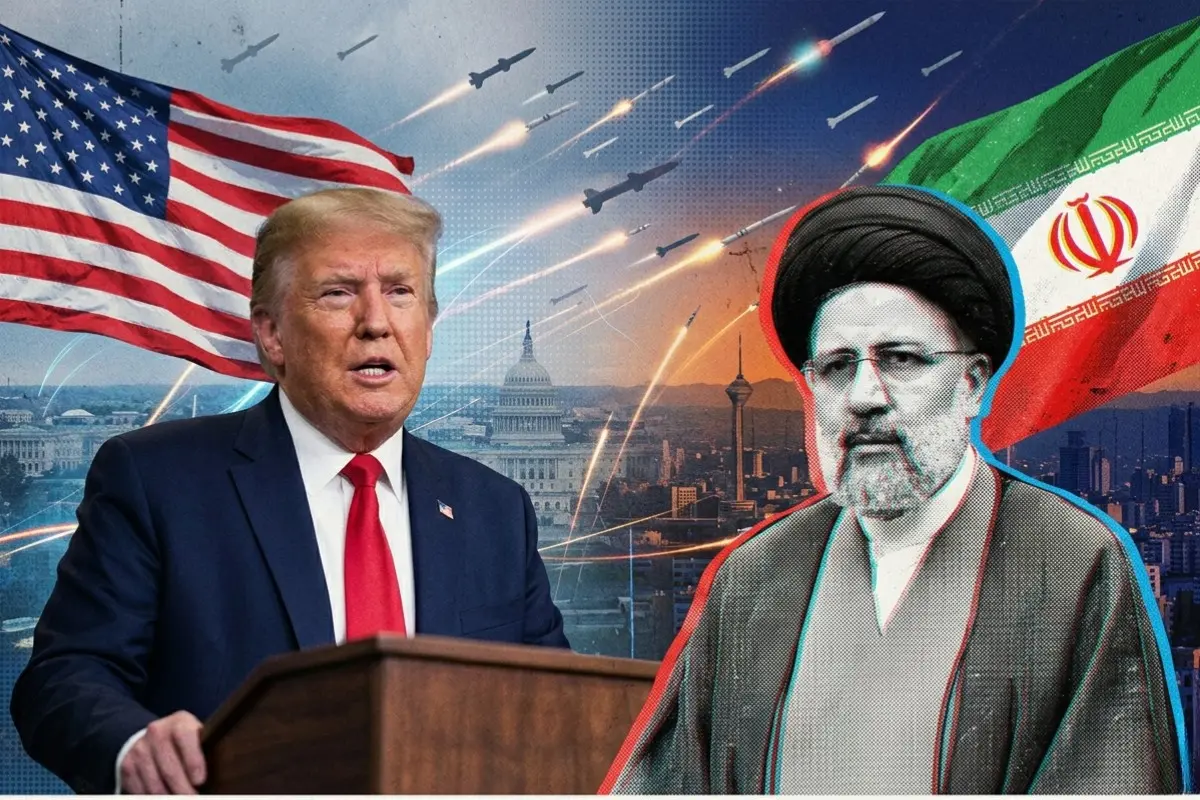
Tehran: Senior officials from the United States and Iran indicated on Saturday that negotiations aimed at ending the ongoing conflict in the Middle East may be nearing a breakthrough, raising cautious hopes of a possible draft agreement after weeks of war and diplomatic deadlock.
While Iranian officials acknowledged that important differences still remain between the two sides, both Washington and Tehran suggested that progress had been made in recent talks.
The dispute surrounding Iran’s nuclear programme, however, is not expected to form part of the initial agreement currently under discussion.
Marco Rubio says ‘Good News’ could be near
Marco Rubio expressed optimism during a visit to New Delhi, shortly after Pakistan’s army chief concluded two days of meetings with senior Iranian leaders in Tehran.
“There is a chance that, whether it's later today, tomorrow, in a couple days, we may have something to say,” Rubio told reporters on Saturday.
He added that he hoped to soon announce “good news” regarding the negotiations.
Pakistan’s army chief Asim Munir has emerged as a key intermediary between Washington and Tehran during the latest phase of diplomatic efforts.
Iran says draft framework agreement may be close
Iran’s foreign ministry also indicated that a preliminary framework agreement could be nearing completion.
According to foreign ministry spokesman Esmaeil Baqaei, the current focus is on preparing a memorandum of understanding consisting of 14 clauses.
“Our intention was first to draft a memorandum of understanding, a kind of framework agreement composed of 14 clauses,” Baqaei said on Iranian state television.
He acknowledged what he described as “a trend towards rapprochement” between the two sides but cautioned that major disagreements still remain unresolved.
“It does not necessarily mean that we and the United States will reach an agreement on the important issues,” he added.
Iran warns of ‘crushing’ response if conflict resumes
Earlier, Iran’s chief negotiator Mohammad Bagher Ghalibaf warned that Tehran would respond strongly if the United States resumed military action.
His remarks came after American media reports suggested the possibility of further strikes and Iranian officials accused Washington of placing “excessive demands” on the negotiations.
“Our armed forces have rebuilt themselves during the ceasefire period in such a way that if Trump commits another act of folly and restarts the war, it will certainly be more crushing and bitter for the United States than on the first day of the war,” Ghalibaf posted on social media.
The warning followed his meeting in Tehran with Pakistan’s army chief Asim Munir, who has played a prominent role in attempts to negotiate an end to the conflict.
Weeks of talks yet to deliver permanent settlement
Despite weeks of negotiations, including direct face-to-face discussions reportedly hosted by Pakistan, diplomats have so far failed to secure a permanent settlement or fully restore access to the strategically crucial Strait of Hormuz.
The continued disruption has affected major global oil supplies and intensified economic uncertainty across the region.
The conflict began after the United States and Israel launched attacks against Iran on February 28.
Ordinary Iranians speak of fear and uncertainty
As diplomatic negotiations continue, many ordinary Iranians say they remain trapped in uncertainty amid fears that fighting could resume at any moment.
A 39-year-old resident of Tehran named Shahrzad described the emotional strain caused by the prolonged instability.
“The state of ‘neither war nor peace’ is far filthier than war itself,” she said.
“You can't even plan something as simple as signing up for a gym, let alone bigger things. I'm about to start a new job, and I'm scared war might break out again, that I'll end up leaving the job like before, running off to another city out of fear,” she added.
Iran holds diplomatic outreach with regional leaders
Iranian Foreign Minister Abbas Araghchi spoke with Antonio Guterres and said Tehran remained engaged diplomatically despite what he called repeated betrayals and military aggression by Washington.
According to Iranian state media outlet Islamic Republic News Agency, Araghchi also held discussions with counterparts from Turkey, Iraq, Qatar and Oman.
Meanwhile, Donald Trump spoke on Saturday with Qatar’s Emir Tamim bin Hamad Al Thani.
According to Qatar’s official statement, the Emir told Trump that he supported “all initiatives aimed at containing the crisis through dialogue and diplomacy”.
Fighting continues along Lebanon front
Despite diplomatic momentum, hostilities continue on other fronts linked to the wider regional conflict.
Israel on Saturday warned residents of 15 villages in southern Lebanon to evacuate immediately ahead of planned air strikes targeting alleged positions of Hezbollah.
Since a ceasefire announced on April 17, Israel has continued carrying out strikes, demolitions and evacuation operations in southern Lebanon, saying its actions are aimed at Hezbollah targets.
Hezbollah, meanwhile, has continued attacks on Israeli forces.
The group entered the conflict on March 2 after rocket fire was launched towards Israel following the killing of Iran’s supreme leader in US-Israeli strikes.
Hezbollah says Iran will continue support
Iran-backed Hezbollah said on Saturday that its leader Naim Qassem had received a message from Iranian Foreign Minister Abbas Araghchi.
According to Hezbollah, the message indicated that Iran would continue supporting movements seeking “justice and freedom”, particularly Hezbollah.
The organisation also claimed that Iran’s latest ceasefire proposal, conveyed through Pakistani mediators, included demands related to halting fighting in Lebanon as part of a broader effort to secure “a permanent and stable end to the war”.
Agency inputs