24 lakh Afghan girls still denied schooling, UNESCO warns of ‘irreversible harm’
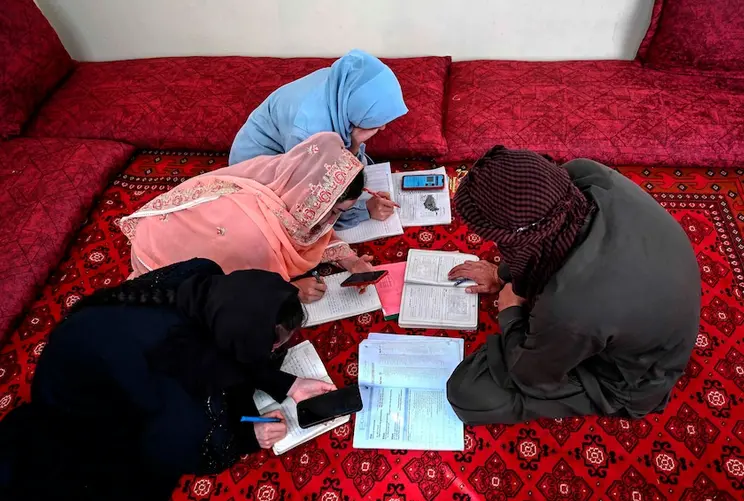
Paris: United Nations Educational, Scientific and Cultural Organisation (UNESCO) has called for the immediate restoration of education rights for girls and women in Afghanistan, warning that the Taliban's continuing restrictions could leave an entire generation facing decades of lost opportunities and irreversible harm.
Afghanistan remains the only country in the world where girls and women are formally barred from education beyond the primary level, according to UNESCO. The UN agency estimates that 24 lakh (2.4 million) girls are currently excluded from classrooms because of restrictions introduced after the Taliban returned to power in 2021.
Two decades of progress reversed
UNESCO said the restrictions have undone years of progress in Afghanistan's education system.
While girls' access to schooling was severely restricted in 2001, nearly one million girls were enrolled in secondary education by 2021, the agency said.
The continuing ban, UNESCO warned, is not only denying girls their right to learn but also limiting their ability to work, earn an income and contribute to Afghanistan's economy.
The agency also pointed to the wider social consequences, including increased risks of child marriage, poverty and deteriorating mental and physical health among girls and women.
Ban on female teachers affects boys too
The restrictions are also affecting the broader education system.
UNESCO said the Taliban's decision to prevent female teachers from teaching boys has worsened teacher shortages and could undermine the quality of education available to male students as well.
The agency warned that the impact therefore extends beyond the millions of girls directly excluded from schools.
Community programmes offer limited lifeline
In response, UNESCO and its partners, including the Global Partnership for Education, the European Union and Canada, have expanded community-based learning programmes offering literacy classes, vocational training and psychosocial support.
Nearly 70,000 learners have benefited from these programmes so far, with women accounting for 73 per cent of participants, UNESCO said.
The programmes have also helped some participants improve household incomes and livelihoods. However, UNESCO stressed that such initiatives cannot replace formal schooling.
UNESCO calls for end to restrictions
UNESCO said education is essential not only for knowledge and employment but also for dignity, resilience and the ability of women to shape their own futures.
The agency urged the international community to maintain pressure and engagement with Afghanistan and called for an immediate and unconditional restoration of education rights for girls and women.
The warning comes as millions of Afghan girls continue to grow up without access to secondary education, raising concerns about the long-term social and economic consequences for the country.
(With ANI inputs)