At least 7 killed as twin earthquakes strike southern Philippines, tsunami warnings issued
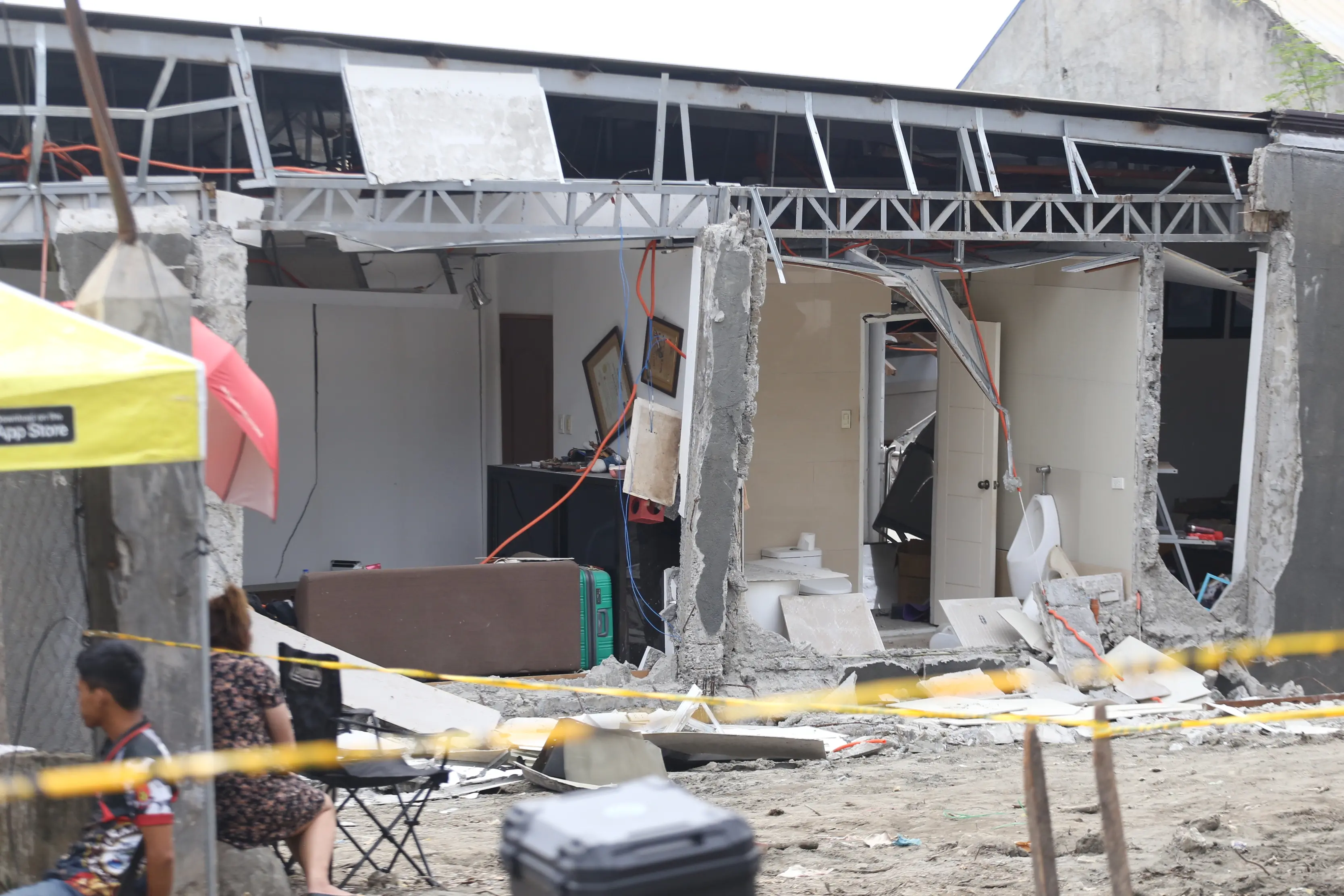
Manila: The southern Philippines was rocked by two powerful offshore earthquakes on Friday, 10 October 2025, leaving at least seven people dead and several areas damaged. The first quake, with a magnitude of 7.4, struck near Manay in Davao Oriental at a shallow depth of 23 kilometres, sending strong tremors across Mindanao, including Davao City and General Santos.
Seven hours later, a second quake measuring 6.8 magnitude shook the same region, heightening panic and triggering another tsunami warning. The Philippine Institute of Volcanology and Seismology (Phivolcs) urged residents in coastal areas to move to higher ground, warning that waves could rise more than one metre above normal tides.
Videos and photos shared online showed residents rushing into open spaces as vehicles and metal gates rattled violently. Several roads cracked, churches and houses were damaged, and power outages were reported in parts of Davao Oriental and nearby provinces.
President Ferdinand Marcos Jr directed national and local disaster agencies to coordinate rescue and relief operations, assuring citizens that emergency assistance was being prioritised. “We are working round the clock to ensure help reaches everyone who needs it,” he said.
Neighbouring Indonesia also issued temporary tsunami warnings following the tremors, though no major damage or casualties were reported there. Experts said the back-to-back earthquakes were part of ongoing tectonic movements along the Philippine Trench — one of the most active seismic zones in the world.
Phivolcs described the twin events as a “doublet”, meaning two large quakes of similar strength occurring close together in time and location. The agency has warned residents to brace for possible aftershocks and to stay clear of coastal areas and unstable structures as the region continues to experience seismic unrest