Who needs regulators? Trump’s AI ‘Monster Bash’ lets tech giants police each other
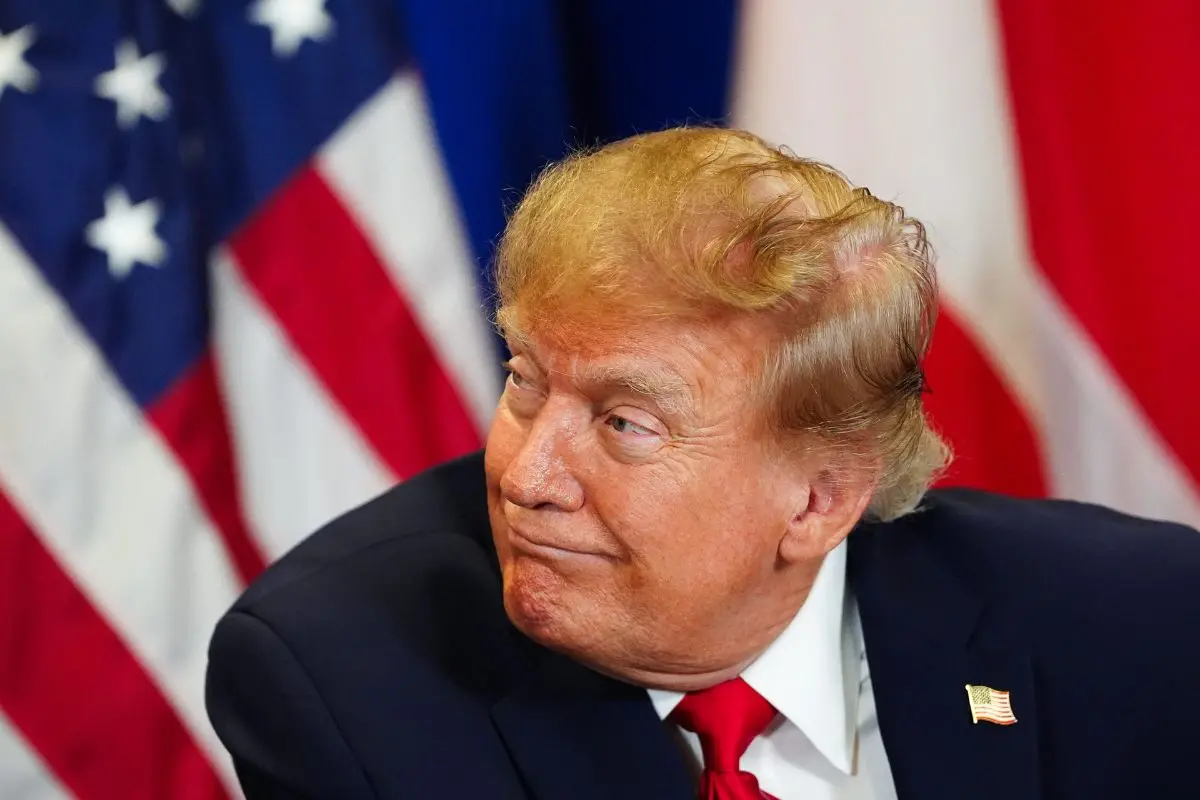
Washington DC: US President Donald Trump brought some of the world’s most influential technology executives together at the White House on September 29 for a meeting focused on artificial intelligence, AI safety and the future of advanced technology.
The gathering also produced a voluntary accord under which participating companies agreed to strengthen internal safeguards and independent oversight of frontier AI systems.
Trump jokes about Sundar Pichai
The White House luncheon featured Google CEO Sundar Pichai alongside Elon Musk, Mark Zuckerberg, Jeff Bezos, Nvidia CEO Jensen Huang, Microsoft CEO Satya Nadella and other senior technology executives.
Trump joked about Pichai during the gathering, calling him a “monster” and saying that few people knew him. Pichai responded humorously to the remark. The light-hearted exchange came during a meeting centred on increasingly powerful AI systems and how they should be developed safely.
Who attended the White House meeting?
The gathering brought together executives from some of the largest technology and AI companies, including Google, Meta, Nvidia, Microsoft, Amazon, Anthropic and other firms.
The meeting included major figures involved in developing AI models, supplying advanced chips, operating cloud infrastructure and deploying AI-powered products.
What is the White House AI accord?
Trump and technology leaders announced a voluntary agreement focused on safety standards for advanced AI systems.
The accord, described by Trump as being “almost like a constitution”, establishes a framework built around several layers of safeguards. Companies are expected to monitor their AI models for risks including cybersecurity, biosecurity and chemical threats and to prevent systems from accessing technical systems in unintended ways.
The framework also calls for:
- Internal teams to assess whether safety controls are working.
- Independent external auditors or evaluators to review safeguards.
- Independent board committees to examine audit findings.
- Regular cooperation between companies to develop common safety standards.
The accord could eventually provide principles that are incorporated into legislation or regulation, but the agreement itself is currently voluntary and non-binding.
‘Grading each other’s homework’
Elon Musk described the approach as companies effectively “grading each other’s homework”, referring to the combination of joint monitoring, external reviews and board-level oversight.
The arrangement therefore places significant responsibility on the companies themselves to identify and address potential risks.
Trump described the agreement as “morally binding”, while the accord does not currently establish the same legal enforcement mechanisms as a federal law or mandatory regulatory regime.
Why is AI self-regulation under scrutiny?
The White House approach comes amid wider debate in the US over whether advanced AI should primarily be governed through industry-led safeguards or through formal government regulation.
The accord requires participating companies to introduce additional safety processes and independent reviews, but it does not itself create statutory penalties for failing to comply.
The question of how much oversight should remain with technology companies is therefore likely to remain part of the wider US AI policy debate.
Trump’s ‘Super Intelligence’ push
The White House meeting also came alongside Trump’s decision to promote the term “Super Intelligence”, or “SI”, in place of “artificial intelligence” in federal executive-branch communications.
An executive order signed by Trump directs US government agencies, where legally permitted, to use “Super Intelligence” and “SI” instead of “Artificial Intelligence” and “AI” in official communications, websites, reports and policy documents. It also directs officials to propose a federal definition of the new terminology within 60 days.
What the White House accord changes
The accord represents an industry-led approach to AI safety rather than the creation of a new federal regulatory authority.
Its four-layer model combines company-level safeguards, internal monitoring, independent external assessments and board oversight. That structure could create more consistent safety practices among participating companies, while its voluntary nature leaves questions about enforcement and accountability.
The White House has also indicated that the principles could eventually be incorporated into legislation or regulation. For now, however, the agreement remains a voluntary framework.
The gathering brought together technology executives with significant influence over AI models, chips, cloud infrastructure and digital platforms at a time when governments are debating how to manage increasingly capable AI systems.
The meeting also highlighted the US administration’s preference for working with technology companies on AI safety rather than immediately imposing a comprehensive new regulatory regime.