Trump says 'Mojtaba Khamenei is 90% gone' as US-Iran tensions escalate
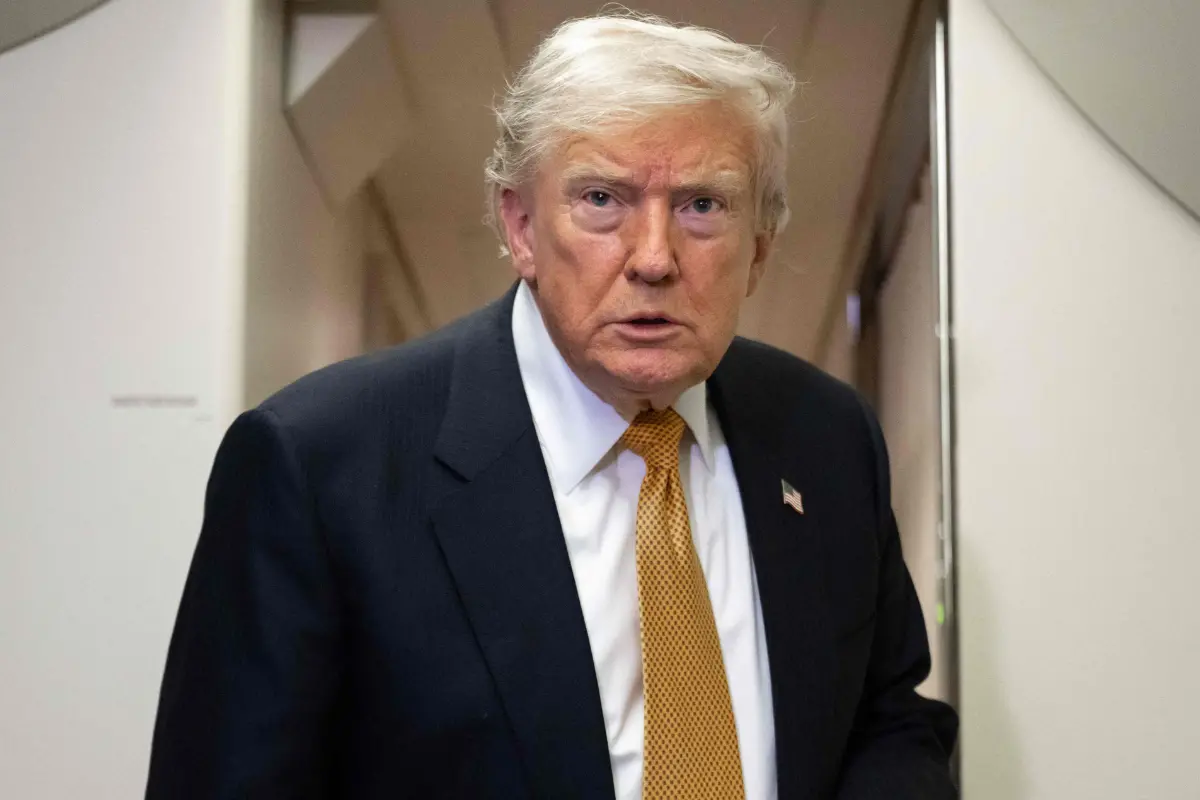
Washington: US President Donald Trump on Monday claimed that Iran's top military leadership has been largely eliminated, asserting that Mojtaba Khamenei, the son of the late Supreme Leader Ayatollah Ali Khamenei, is "90% gone" as tensions between Washington and Tehran continue to escalate.
Trump made the remarks during an interview with Fox News, where he said recent coordinated military operations by the United States and Israel had severely weakened Iran's military capabilities.
"They have no navy. They have no air force. It's all gone. Their anti-aircraft is gone. Their leaders have all been killed," Trump said.
He also claimed that Iran's senior military commanders had been killed in the strikes.
"Their best leaders have been killed. They're gone. Khamenei is gone," Trump said, referring to Ayatollah Ali Khamenei, who was killed during the initial wave of US-Israeli strikes earlier this year.
Trump further alleged that Mojtaba Khamenei, widely seen as his late father's successor, had also been critically wounded during the conflict.
"Mojtaba Khamenei is 90% gone," Trump claimed, without providing further details.
Mojtaba Khamenei was absent from the funeral ceremonies held for his father earlier this month. Reports have suggested that he is recovering from injuries sustained in an earlier airstrike.
Trump's comments came after the United States and Iran exchanged fresh missile strikes over the weekend, marking another escalation in the ongoing conflict.
The US President also announced plans to reimpose a maritime blockade on Iran and introduce fees for commercial vessels using the Strait of Hormuz, saying the move was intended to ensure safe navigation through one of the world's most critical shipping routes.
In a post on Truth Social, Trump said the US military would act as the "Guardian of the Hormuz Strait."
"The Hormuz Strait is OPEN, and will remain OPEN, with or without Iran. We are reinstating the Iranian blockade. All other countries will have fair and open use of the Strait," he wrote.
Trump also proposed that countries using the strategic waterway should pay the United States a fee equivalent to 20 percent of the value of cargo transported through the route to help cover security costs.
Iran swiftly rejected the proposal. Foreign Minister Abbas Araghchi said Iran has always been responsible for safeguarding the Strait of Hormuz and dismissed Trump's proposal.
"Iran has always been the guardian of the Strait and will remain so forever. Twenty percent is, of course, too much. We will be fair," Araghchi said in a post on social media.
The exchange reflects growing tensions between Washington and Tehran, with both countries asserting competing claims over the security and administration of the Strait of Hormuz, a vital global energy corridor, as military operations continue across the Gulf.
(With ANI inputs)