Why are Illinois and Chicago suing Trump over National Guard deployments? | EXPLAINER
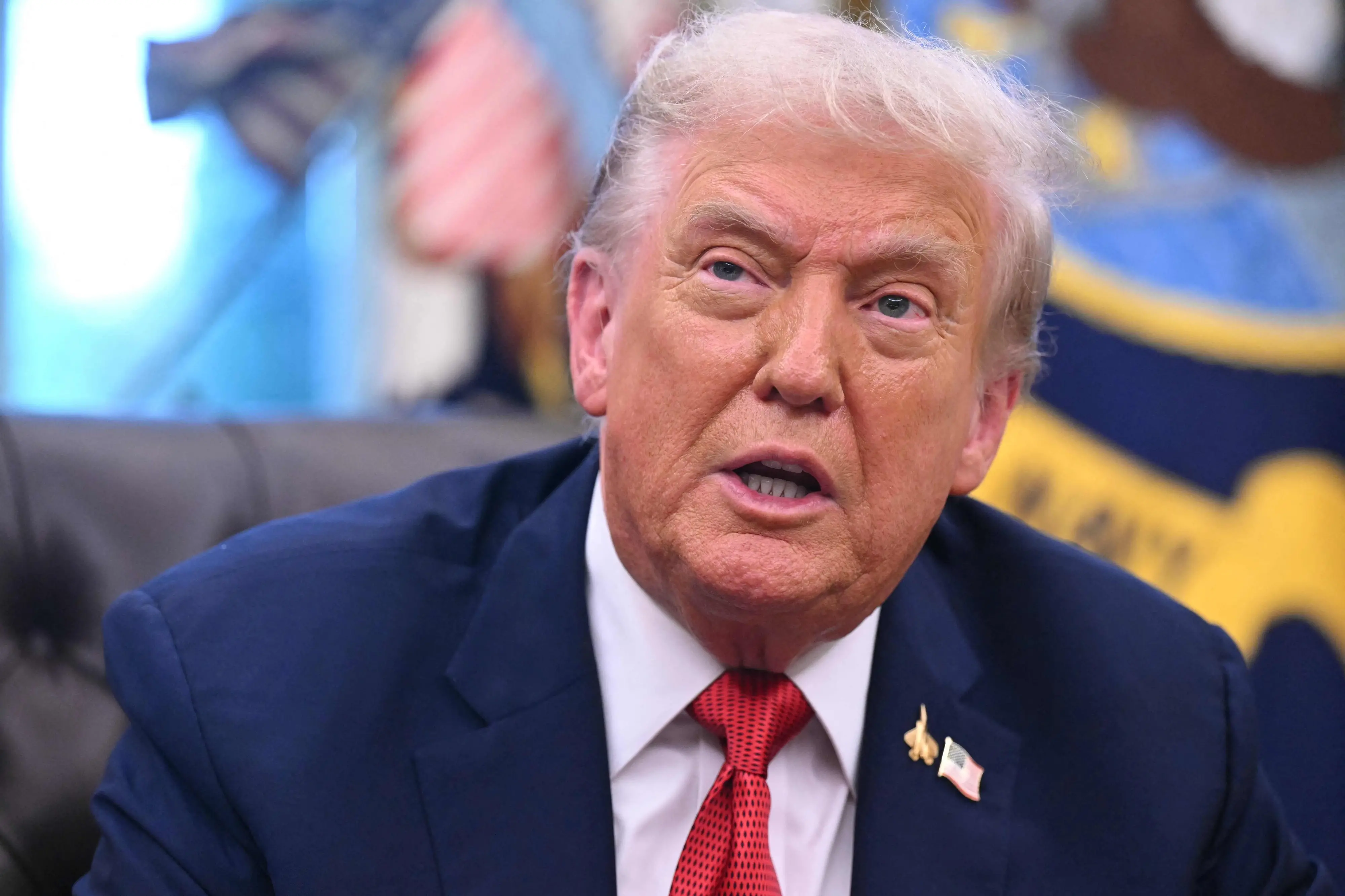
Illinois has joined California and Oregon in filing lawsuits to stop President Donald Trump from sending National Guard troops to Democrat-led major cities.
The lawsuit filed on Monday by Illinois and Chicago claims that Trump's authorisation to deploy 300 troops to the Windy City is "unlawful and dangerous." Trump, meanwhile, continues to assert federal power, arguing that the troops are needed to support federal immigration enforcement and to tackle crime.
What happened in Oregon and California?
In Oregon, a federal judge on Sunday temporarily blocked the deployment of troops. This came just hours after the state’s governor said that California National Guard members had arrived, with more expected to reach Portland.
Sending the National Guard to states against their governor’s wishes is not a new concept for Trump’s inner circle. Stephen Miller, the White House deputy chief of staff, said in November 2023 that a second Trump administration would order the Guard in Republican-led states to Democrat-run states that refuse to cooperate with his drive for mass deportations.
What is happening in Chicago?
The Illinois and Chicago lawsuit follows Democratic Governor JB Pritzker’s announcement that approximately 300 of the state’s Guard troops were to be federalised and sent to Chicago, alongside 400 others from Texas.
“Donald Trump is using our service members as political props and as pawns in his illegal effort to militarise our nation’s cities,” Pritzker said after filing the lawsuit. He added that a court hearing was scheduled for Thursday.
The ACLU of Illinois also filed a suit on Monday against Trump, the Department of Homeland Security, Immigration and Customs Enforcement, and several of their leaders. The group claims federal agencies have unleashed violence and intimidation against peaceful protesters and journalists outside an ICE detention facility in Broadview, Illinois.
At the Broadview facility, about 12 miles west of Chicago, federal agents have repeatedly fired tear gas, pepper balls, and other projectiles at crowds. At least seven people have been charged with federal crimes following arrests during these clashes.
A coalition of news outlets, media associations, and protesters, including the Illinois Press Association, Block Club Chicago, and the Chicago Headline Club, also filed a lawsuit. They allege that federal agents used “indiscriminate” force and interfered with First Amendment rights, including freedom of speech and freedom of the press.
Broadview Mayor Katrina Thompson issued an executive order on Monday requiring protesters to demonstrate outside the ICE facility only between 9 am and 6 pm daily. Thompson said the order aimed to “balance the constitutional rights of protestors with the needs and safety of Broadview’s residents and businesses.”
Why did the White House send troops?
White House spokesperson Abigail Jackson confirmed that the president authorised using Illinois National Guard members, citing what she described as “ongoing violent riots and lawlessness” that local leaders had not addressed.
Trump has described Portland and Chicago as areas with high crime and unrest. Since the beginning of his second term, he has sent or discussed sending troops to 10 cities, including Baltimore, Memphis, the District of Columbia, New Orleans, Oakland, San Francisco, and Los Angeles.
How did Oregon respond?
Oregon Governor Tina Kotek spoke to Trump in late September and said a deployment was unnecessary. She refused to call up Oregon National Guard troops, so Trump issued the order himself to Defence Secretary Pete Hegseth. This prompted a lawsuit from city and state officials, leading to the temporary hold on Sunday.
What are Chicago officials doing?
Chicago Mayor Brandon Johnson signed an executive order on Monday preventing federal agents from using city-owned property as staging areas. This applies to parking lots, garages, and vacant lots.
The presence of armed, masked Border Patrol agents near prominent downtown landmarks has raised concerns about racial profiling. Many Chicago residents were already uneasy after the immigration crackdown began, as agents have focused on immigrant-heavy, largely Latino areas.
DHS acknowledged that federal agents shot a woman on Saturday on the southwest side of Chicago. The department said it occurred after Border Patrol agents “were rammed by vehicles and boxed in by 10 cars.”
“The officers exited their trapped vehicle, when a suspect tried to run them over, forcing the officers to fire defensively,” the statement said.
No law enforcement officers were seriously injured, DHS spokesperson Tricia McCulligh said. The woman who was shot is a US citizen and was armed with a semiautomatic weapon. She was being treated at a hospital, according to fire officials.
“Federal agents, ICE, HSI are officers," Chicago Police Superintendent Larry Snelling said. “If you box them in with vehicles, it is reasonable for them to believe that they are being ambushed and this could end in a deadly situation, and it’s reasonable for them to use force based on those conditions.”
What is happening in Portland?
Around 400 protesters marched on Saturday to a Portland ICE detention facility. Federal agents used chemical crowd control munitions, including tear gas canisters and less-lethal guns that sprayed pepper balls, the Oregonian reported.
US District Judge Karin Immergut temporarily blocked the deployment of Oregon National Guard troops on Saturday, stating that the relatively small protests did not justify using federalised state forces and that the deployment could harm Oregon’s sovereignty.
The Trump administration responded by attempting to send in National Guard troops from California and Texas. This prompted Governor Kotek and California Governor Gavin Newsom, also a Democrat, to return to court on Sunday. Immergut blocked any National Guard troops from being sent to Oregon for 14 days.
White House deputy chief of staff Stephen Miller said the administration would appeal the ruling.
The Portland ICE facility has been the site of demonstrations for months. Since June, 30 people have been charged with federal crimes related to the protests, according to the U.S. Attorney’s Office in Oregon.
What else is happening with Trump’s national guard plan?
On Wednesday, Hegseth, Miller, and Attorney General Pam Bondi rallied members of a federal law enforcement task force that began operating in Memphis as part of Trump’s crime-fighting plan. Tennessee Governor Bill Lee, a Republican, has supported the effort.
On 30 September, Republican Louisiana Governor Jeff Landry requested a guard deployment to New Orleans and other cities to help fight crime.
Trump previously deployed Guard soldiers and active-duty Marines in Los Angeles during the summer over the objections of Governor Newsom, who sued and won a temporary block after a federal judge found the president’s use of the Guard was likely unlawful.
The Trump administration appealed, and the block was put on hold by a three-judge panel of the Ninth US Circuit Court of Appeals. The appellate case is still ongoing, but the panel has indicated that it believes the administration is likely to prevail.
(Agency inputs)