We’ll see what happens: Trump says US may hold talks with Maduro as aircraft carrier arrives near Venezuela
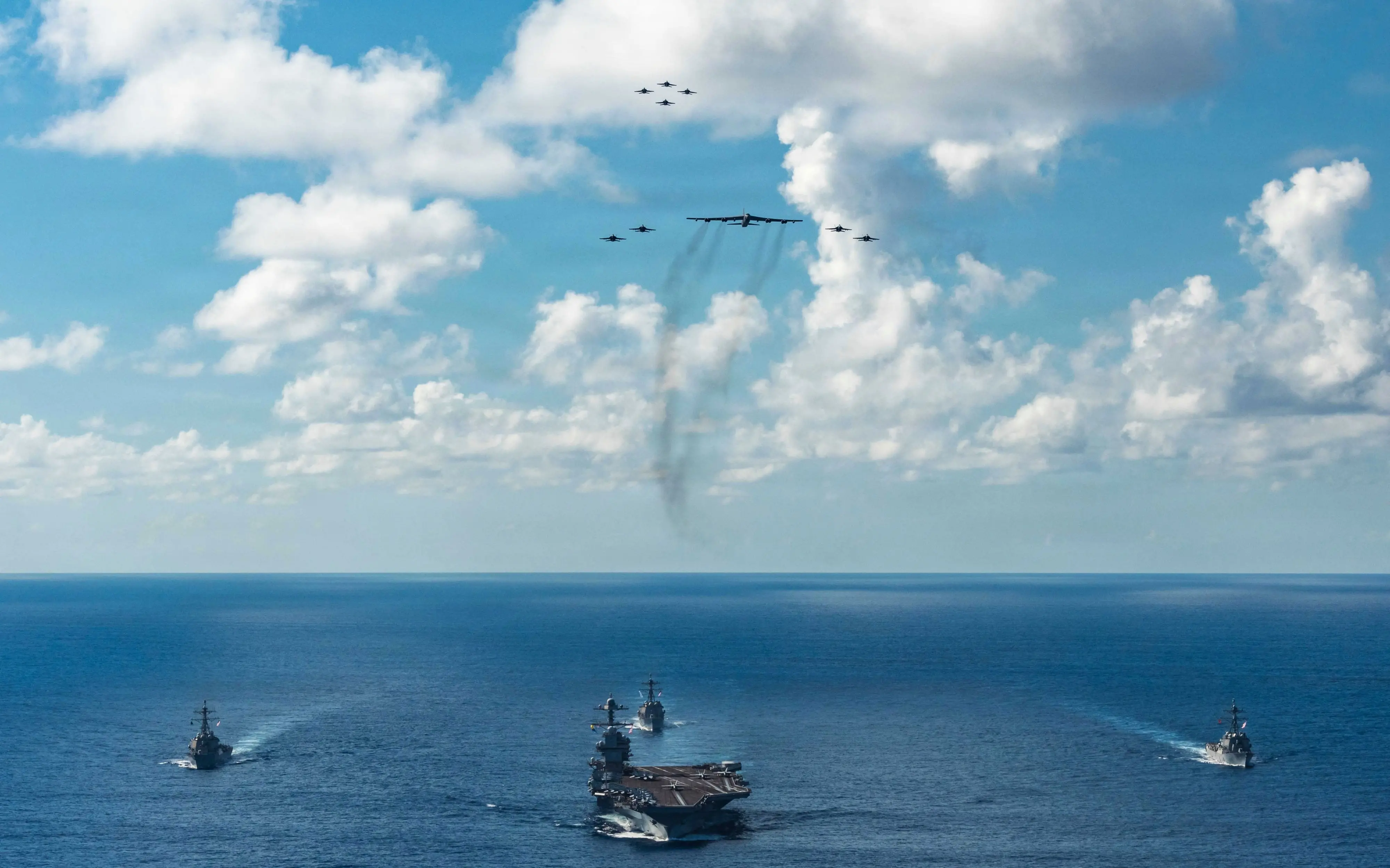
Florida: President Donald Trump said Sunday the U.S. “may be having some discussions” with Venezuelan President Nicolás Maduro, hinting at a possible diplomatic opening as Washington expands its military presence near Venezuela with the arrival of its most advanced aircraft carrier.
Trump gave no details on the potential talks, saying only that “Venezuela would like to talk.” When asked what he meant, he replied: “What does it mean? You tell me, I don’t know.” Moments later, he added, “I’ll talk to anybody. We’ll see what happens.”
The USS Gerald R. Ford’s deployment completes the largest U.S. show of naval force in the region in decades, part of “Operation Southern Spear,” which now includes nearly a dozen ships and about 12,000 sailors and Marines. The Navy said the strike group transited the Anegada Passage near the British Virgin Islands on Sunday.
The buildup comes as U.S. forces have intensified deadly strikes on boats suspected of ferrying drugs. U.S. Southern Command posted a video on Sunday of a small vessel being blown up in the eastern Pacific, an attack that killed three men. At least 83 people have died in 21 strikes since early September.
Rear Adm. Paul Lanzilotta said the strike group will strengthen efforts “to protect our nation’s security and prosperity against narco-terrorism in the Western Hemisphere.” Adm. Alvin Holsey said the deployment is “a critical step in reinforcing our resolve to protect the security of the Western Hemisphere and the safety of the American Homeland.”
In Trinidad and Tobago, officials said U.S. Marines from the 22nd Expeditionary Unit have begun joint “training exercises” aimed at tackling violent crime. Venezuela has called the drills an act of aggression and had no immediate comment on the carrier’s arrival.
Army Secretary Dan Driscoll said U.S. troops are also training in Panama, noting, “We’re reactivating our jungle school in Panama. We would be ready to act on whatever” Trump and Defence Secretary Pete Hegseth needed.
The administration maintains the mission targets drug traffickers, though it has provided no evidence that those killed were “narcoterrorists.” Trump has suggested U.S. action could expand to stopping drugs from entering “by land.”
Secretary of State Marco Rubio reiterated that the U.S. does not recognise Maduro, calling Venezuela’s government a “transhipment organisation” for drug trafficking. Rubio said the State Department will designate the Cartel de los Soles a foreign terrorist organisation on Nov. 24, saying it is headed by Maduro and other top officials. When the designation takes effect, providing “material support” to the cartel will be a crime.
Maduro, facing U.S. narcoterrorism charges, has accused Washington of “fabricating” a war against him. On Facebook, he wrote that the “Venezuelan people are ready to defend their homeland against any criminal aggression.” His government recently promoted a “massive” mobilisation of troops and civilians amid fears of a U.S. attack.
Trump’s strategy has drawn criticism from regional leaders, the U.N. human rights chief and U.S. lawmakers, including Republicans, who have demanded clarity on who is being targeted and the legal basis for the strikes. Senate Republicans recently blocked a measure that would have restricted Trump’s ability to attack Venezuela without congressional approval. AP