Donald Trump says Israel did not influence his decision to attack Iran
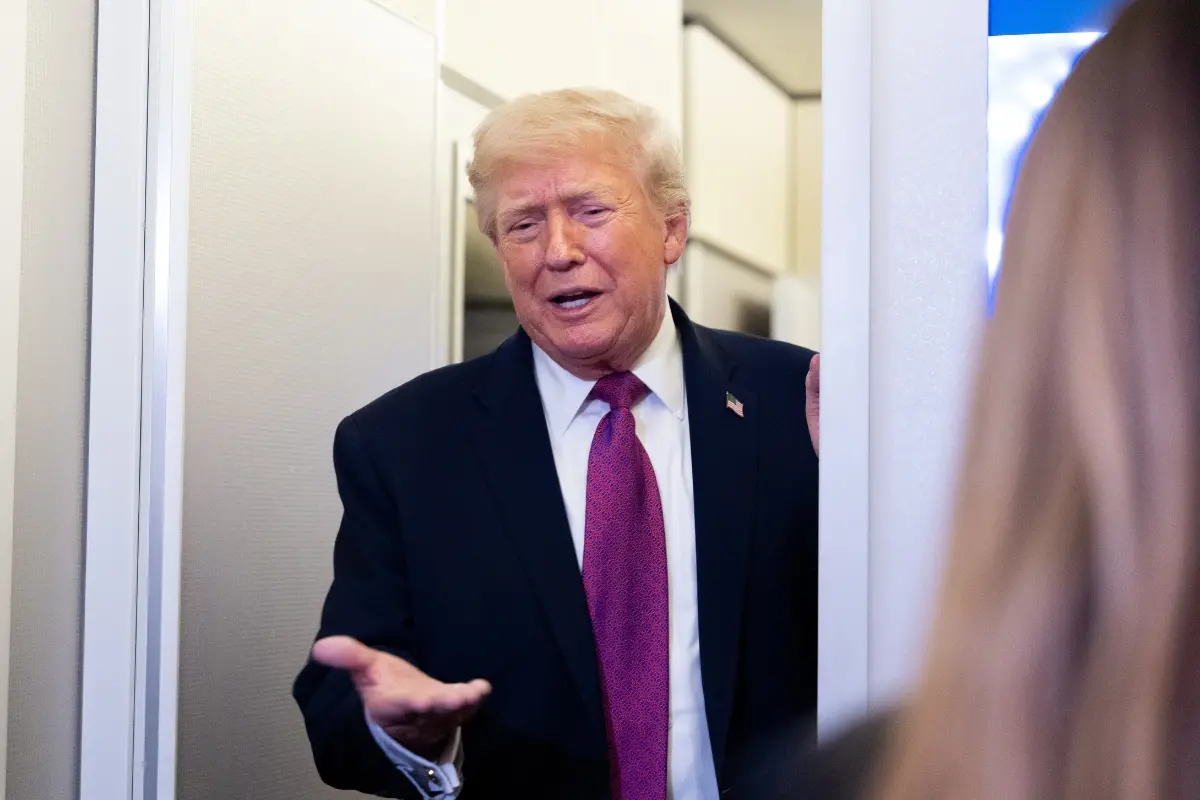
Donald Trump said on Monday that Israel did not influence his decision to go to war with Iran, pushing back against growing claims that Israeli leadership had steered Washington into the conflict.
In a post on Truth Social, Trump rejected suggestions that Israeli Prime Minister Benjamin Netanyahu played a decisive role, insisting his stance was shaped by long-held views on Iran’s nuclear ambitions and recent regional developments.
“Israel never talked me into the war with Iran, the results of Oct. 7th, added to my lifelong opinion that IRAN CAN NEVER HAVE A NUCLEAR WEAPON, did. I watch and read the FAKE NEWS Pundits and Polls in total disbelief. 90% of what they say are lies and made up stories, and the polls are rigged, much as the 2020 Presidential Election was rigged. Just like the results in Venezuela, which the media doesn’t like talking about, the results in Iran will be amazing - And if Iran’s new leaders (Regime Change!) are smart, Iran can have a great and prosperous future!” he wrote on truth social.
Denial of Israeli influence
Trump’s remarks come amid mounting domestic debate in the United States, where critics, including some conservative voices, have argued that Israel may have drawn Washington into a prolonged conflict with unclear outcomes.
Reports have suggested that senior US officials were uneasy with intelligence assessments presented by Netanyahu prior to the strikes, while some former security officials have alleged that Israeli backchannels were used to lobby for military action. The White House has repeatedly denied these claims.
Without directly naming such reports, Trump dismissed the narrative, accusing media outlets and analysts of spreading misinformation.
War origins and ongoing tensions
The conflict began in late February when US and Israeli forces carried out coordinated strikes on Iran, triggering a wider regional confrontation.
Since then, hostilities have escalated across the Middle East, including disruptions to shipping routes and heightened military activity in strategic areas such as the Strait of Hormuz, a key global oil transit point.
Trump has continued to defend the campaign, framing it as necessary to prevent Iran from acquiring nuclear weapons and to reshape the country’s leadership.
Uncertain path for diplomacy
Diplomatic efforts to end the conflict remain fragile. Iran signalled on Monday that it has not yet decided whether to participate in a fresh round of negotiations with the United States.
“We have no plans for the next round of negotiation, and no decision has been made in this regard,” Iranian foreign ministry spokesman Esmaeil Baqaei said.
“The US is carrying out behaviours that do not in any way indicate seriousness in pursuing a diplomatic process,” he added, accusing Washington of violating a temporary ceasefire through actions such as port blockades and ship seizures.
The US, meanwhile, has accused Tehran of breaching the truce by targeting vessels in the Strait of Hormuz.
Markets jittery as conflict risks persist
Uncertainty over the ceasefire, set to expire soon, has rattled global markets, with oil prices rising sharply amid fears of renewed fighting.
Iran’s temporary closure of the Strait of Hormuz has further intensified concerns over energy supplies, even as parts of the country, including Tehran’s main airports, begin to reopen.
(With inputs from agencies)