‘Have to knock them down’: Trump warns Iran against nuclear buildup during Netanyahu summit
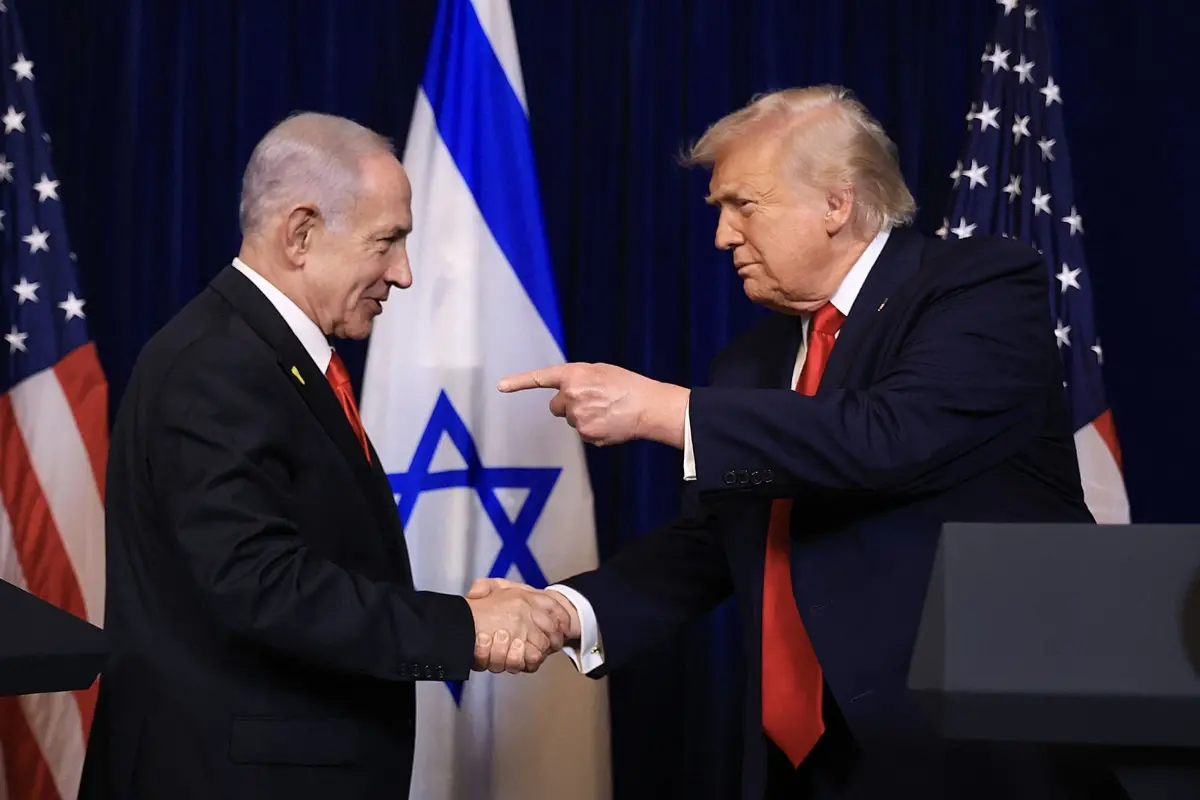
President Donald Trump issued a firm warning to Iran on Monday, threatening to "knock the hell out of them" if Tehran attempts to revive its nuclear weapons program, while hosting Israeli Prime Minister Benjamin Netanyahu for high-stakes diplomacy at Mar-a-Lago.
The warning follows US airstrikes in June that Trump maintains "completely and fully obliterated" Iran's nuclear enrichment facilities. However, standing alongside Netanyahu, Trump acknowledged recent reports of renewed activity. “Now I hear that Iran is trying to build up again,” Trump told reporters. “And if they are, we're going to have to knock them down. We'll knock them down... But hopefully that's not happening.”
The summit comes at a precarious crossroads for the US-brokered Gaza ceasefire. While a first-phase truce enacted in October has largely held, the transition to a more complex second phase has stalled. Trump reaffirmed his desire to move forward “as quickly as we can,” but emphasised that "there has to be a disarming of Hamas."
The Hostage Impasse
A central hurdle to the next stage of the peace plan is the recovery of the remains of Ran Gvili, the final Israeli hostage held in Gaza. Netanyahu has signalled he will not proceed to Phase 2 until the remains of the police officer, known as "Rani," are returned.
Gvili’s parents met at Mar-a-Lago on Monday with Netanyahu, Secretary of State Marco Rubio, and Trump’s top Middle East advisors, Jared Kushner and Steve Witkoff. Trump noted the family's pain, stating, “They're waiting for their son to come home.” The family, supported by the Hostages and Missing Families Forum, is demanding that Hamas fulfil its Phase 1 commitments before the deal advances.
Post-War Governance and Security
Trump’s 20-point peace framework, endorsed by the UN Security Council, envisions a radical restructuring of Gaza:
- The Board of Peace: A Trump-chaired international body would supervise Gaza’s reconstruction under a renewable two-year U.N. mandate.
- Technocratic Rule: Daily affairs would be managed by a non-political committee of Palestinian technocrats, whose members are currently being vetted by Israel.
- Security Force: A proposed "International Stabilisation Force" would maintain order and disarm militant groups.
However, deep divisions remain. A Western diplomat noted a “huge gulf” between the US-Israeli vision of a "commanding" force and the fears of potential troop contributors who worry the mission could be viewed as an "occupation."
The Pardon Controversy
In a notable domestic intervention, Trump renewed his public pressure on Israeli President Isaac Herzog to pardon Netanyahu, who is currently on trial for corruption. Trump, who has frequently compared Netanyahu’s legal challenges to his own, called the Prime Minister a “hero” and a “wartime prime minister.”
While Trump claimed Monday that Herzog told him a pardon was “on its way,” Herzog’s office issued a swift denial, stating no such conversation had occurred and that the request remains under established legal review.
The meetings followed separate briefings for Netanyahu with Defence Secretary Pete Hegseth and Secretary Rubio, as the administration pushes to name the members of the "Board of Peace" as early as next month.
With inputs from AP