Trump’s bold Hormuz plan explained; how US could escort oil tankers through danger zone
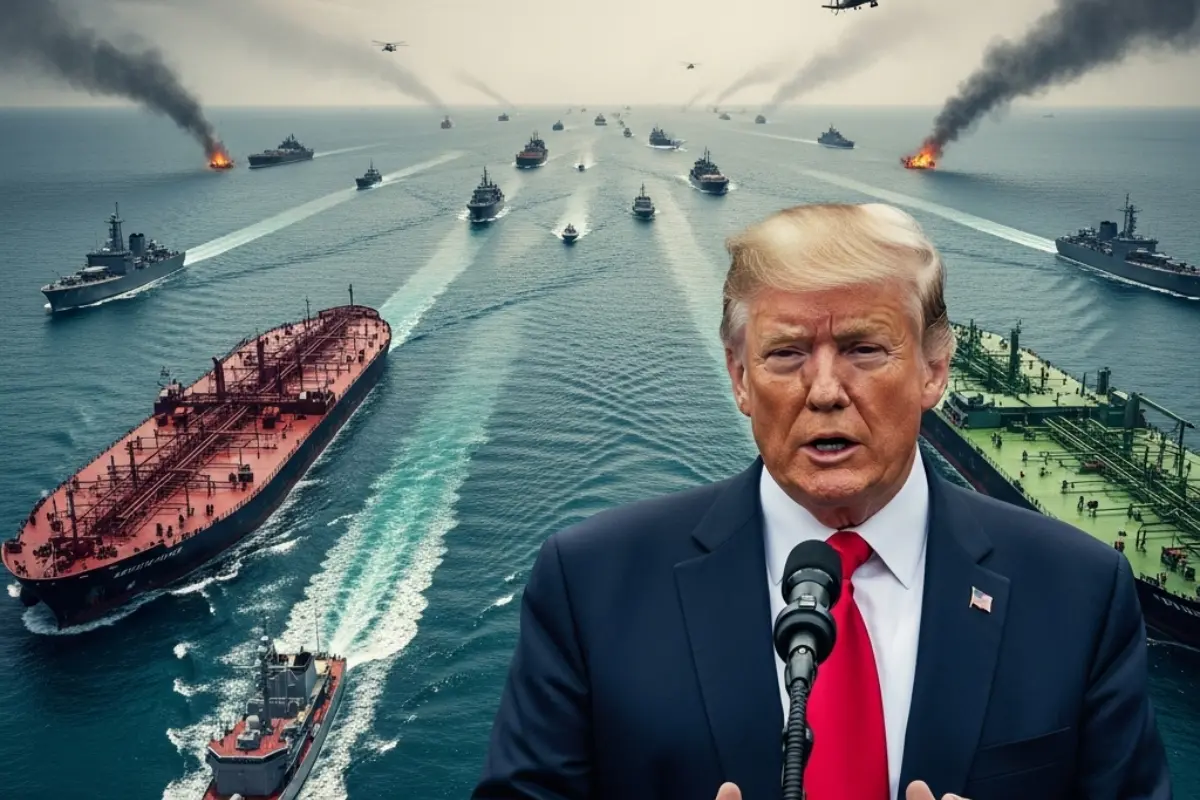
The Donald Trump administration is weighing a complex military operation to escort oil tankers through the Strait of Hormuz, as escalating conflict with Iran threatens one of the world’s most critical energy routes.
Why the Strait of Hormuz matters
The Strait of Hormuz is a narrow maritime passage connecting the Persian Gulf to global shipping routes, through which nearly 20% of the world’s oil supply passes.
Recent attacks on commercial vessels, along with threats from Iran, have significantly reduced tanker movement through the strait. As a result, global oil markets have been disrupted, with prices reportedly rising sharply amid supply concerns.
What the US plan involves
The proposed plan centres on deploying the US Navy and allied forces to escort commercial oil tankers safely through the contested waters. The objective is to restore confidence among shipping operators and reopen the vital trade route.
According to officials, the operation could involve forming convoys, where naval ships guide multiple tankers through the strait, supported by air cover and surveillance systems. International partners may also join the mission as part of a broader coalition.
Two-phase military strategy
Military experts suggest the operation would likely unfold in two phases.
- Phase one: reducing threats
Before escorts begin, US forces would attempt to weaken Iran’s ability to target ships. This includes strikes on missile systems, drones, and mine-laying capabilities. Reports indicate that several such targets have already been hit in recent operations.
- Phase two: convoy protection
Once risks are considered manageable, naval forces would begin escorting ships in groups. Warships would lead and protect tankers through the narrow passage, similar to convoy strategies used in past conflicts.
Risks and challenges
Despite planning, the operation carries significant risks. Iran is believed to possess a range of weapons capable of targeting ships, including naval mines, anti-ship missiles, drones, and fast-attack boats.
Experts warn that even limited attacks could disrupt the mission. The narrow width of the strait — around 21 miles at its tightest point — makes vessels particularly vulnerable.
There are also concerns that the first escorted ships could be targeted deliberately, increasing the risk of escalation.
Global impact and economic stakes
The disruption in the Strait of Hormuz has already had global consequences. Several oil-exporting countries have reportedly reduced production due to uncertainty, while rising oil prices are affecting markets worldwide.
Although the United States is less dependent on Middle Eastern oil than in the past, global price fluctuations still influence fuel costs internationally.
Historical precedent
A similar operation was carried out in the late 1980s during the Iran-Iraq War, when US naval forces escorted tankers through the region to protect them from attacks. That mission involved a large deployment of naval assets and carried its own risks, including direct confrontations.
Situation remains uncertain
Officials have indicated that the escort operation is still in the preparatory stage, with no immediate timeline confirmed. The decision to proceed will depend on military readiness and an assessment of risks in the region.
As tensions continue between the United States and Iran, the Strait of Hormuz remains a critical flashpoint with far-reaching implications for global energy security.