Trump lifts Nvidia’s H20 export ban to China: What’s behind the policy shift?
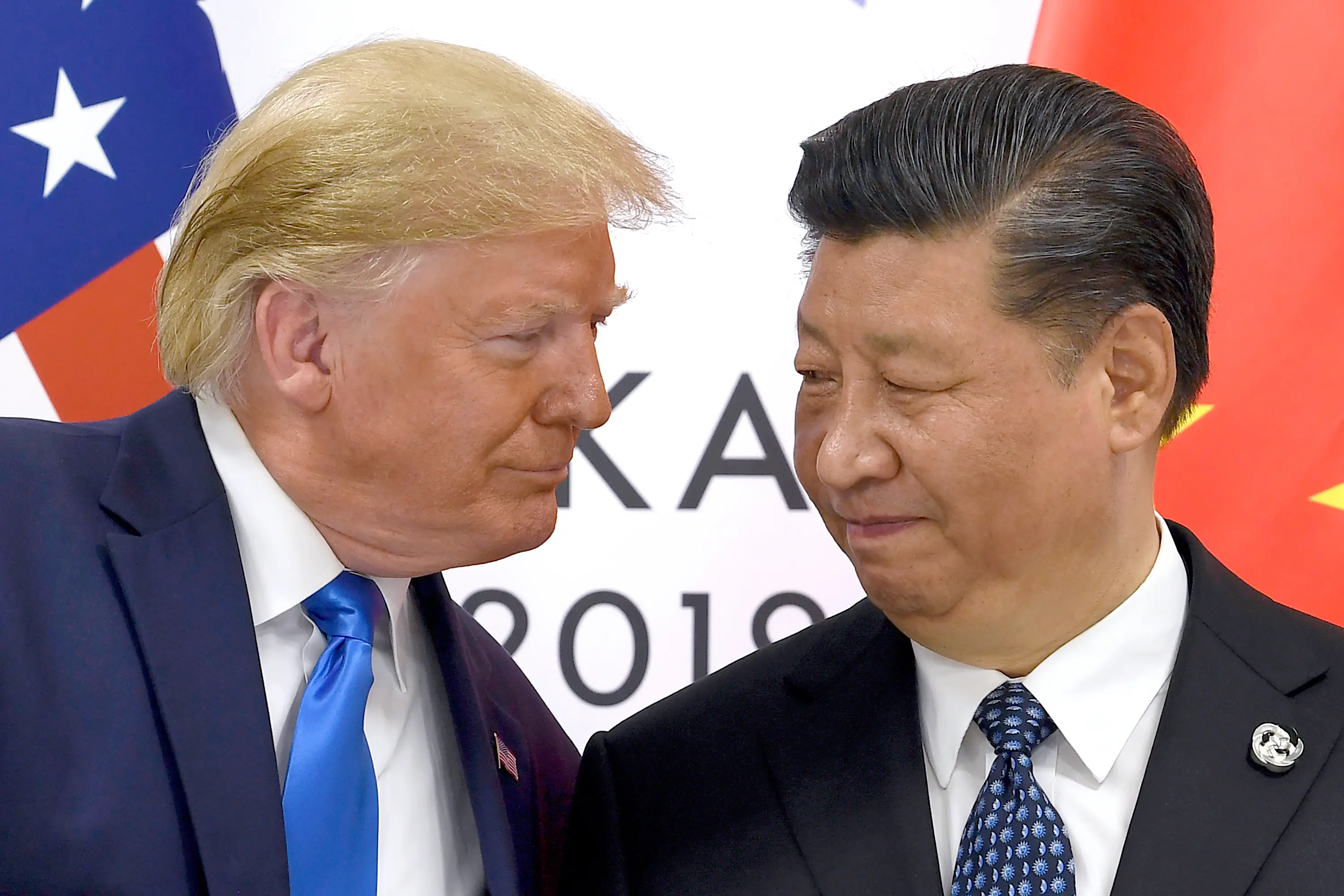
New York: Former President Donald Trump said on Wednesday that he expected to lower tariffs on China, adding that he and President Xi Jinping “would work out something.” He described the US-China relationship as “very good” and expressed optimism about achieving “a very good outcome for our country and for the world.”
The remarks came as Nvidia and its CEO Jensen Huang lobbied the Trump administration to permit sales of the company’s latest Blackwell chips to China. Nvidia has argued that such exports would strengthen America’s leadership in artificial intelligence.
Speaking at Nvidia’s first Washington conference, Huang said he did not know if AI chips would be discussed during the Trump-Xi meeting but insisted that enabling Chinese researchers to access Nvidia’s technology would benefit both nations. He noted that half of the world’s AI researchers are based in China, and restricting access could hinder US tech progress.
In his keynote, Huang highlighted Nvidia’s growing role as an American innovator, comparing it to AT&T, IBM, and Apple, and emphasised new chip production in Arizona at Trump’s request. He ended his address by thanking the audience for “making America great again.”
Huang is expected to attend the Asia-Pacific Economic Cooperation (APEC) summit in South Korea, where Trump and Xi will meet on the sidelines.
During Trump’s first term, his administration cracked down on Chinese firms like Huawei, laying the groundwork for broader technology restrictions under President Biden. These curbs angered Beijing, which has since sought to expand its domestic tech capabilities.
In his second term, Trump initially blocked sales of Nvidia’s downgraded H20 chip to China but later reversed the decision after discussions with Huang, allowing sales under a plan for the federal government to take a share of revenue. Although such an arrangement is currently illegal, Huang said regulations were being drafted to enable it.
Trump’s advisers say he views technology policy transactionally, often using it as leverage in wider negotiations. He has also been closely tracking the US stock market’s performance, where Nvidia plays a major role. On Wednesday, Nvidia became the first publicly traded company to exceed $5 trillion in market value.
Meanwhile, China has urged its companies to seek domestic chip alternatives, though experts believe they would still welcome access to Nvidia’s downgraded Blackwell chips. These versions, labelled B30A, reportedly have half the computing power of the standard Blackwell but remain far more advanced than China’s local production capabilities.
Former US State Department official Chris McGuire cautioned that such sales would erode America’s technological edge, describing the Blackwell as “one of the most sophisticated products made on earth.”
Donald Trump’s remarks on lowering tariffs come at a critical juncture in US-China relations, with trade and technology cooperation once again in focus. Nvidia’s push to resume AI chip sales highlights the delicate balance between economic opportunity and national security concerns.
The Trump administration’s reversal on the H20 chip sale represents a significant shift in US export control policy. The decision contrasts with the Biden-era restrictions aimed at limiting China’s access to advanced semiconductors amid growing competition in artificial intelligence and supercomputing.
Experts argue that permitting even downgraded versions of Nvidia’s Blackwell chips could help China bridge the technological gap. However, the Trump administration appears to be pursuing a more pragmatic, revenue-oriented approach, potentially linking tech policy with trade negotiations and broader economic goals.
As Trump and Xi prepare to meet at the APEC summit, the outcome of their discussions could set the tone for the next phase of US-China technology and trade relations.