Trump backed Nvidia CEO's return: His own stock holdings may have gained $15 million
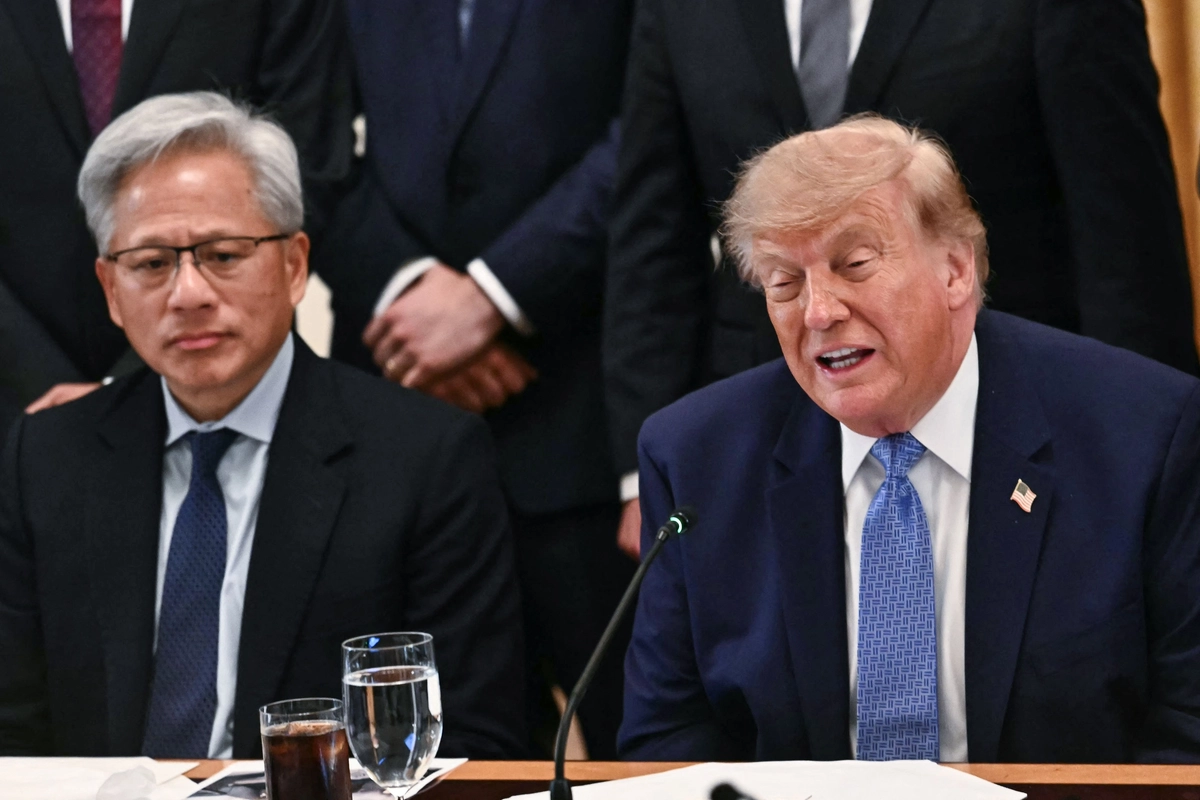
Washington: US President Donald Trump has found himself at the centre of Nvidia's dramatic leadership reversal after publicly backing the return of co-founder Jensen Huang as chief executive, claiming he personally persuaded the company's board to reinstate him. The episode has also drawn attention to Trump's own financial interests, with a Financial Times estimate suggesting his Nvidia stock holdings could have gained as much as $15 million following the company's share-price rally.
The controversy took an unusual turn when Trump shared an altered photograph on his Truth Social account showing Huang holding a red bra, recreating the famous image of Trump raising his fist after surviving an assassination attempt in Pennsylvania in July 2024.
The post came after Trump told CNBC that the controversy surrounding Huang had generated publicity for Nvidia, adding: "Sex sells."
Trump claims credit for Jensen Huang's return
Huang returned as Nvidia's president and CEO on November 23, just 11 days after stepping down amid reports of alleged extramarital relationships, including one involving a Chinese businesswoman suspected by US intelligence of having links to Beijing.
Trump said he had spoken to Nvidia's board members directly and indirectly to support Huang's return.
"I've been speaking to the board directly and indirectly, and I felt very strongly about it," Trump told CNBC.
He also claimed credit for the board's decision, saying: "I spoke to them, let me put it that way. And I convinced them. I made the deal."
Nvidia's board unanimously reinstated Huang after receiving input from senior US government officials. The company said it was confident that his return did not pose a national security risk.
From presidential intervention to a bra meme
Trump's response went beyond public support for Huang's reinstatement.
He shared an AI-edited version of the photograph taken after the 2024 assassination attempt in Butler, Pennsylvania. The altered image replaced Trump's face with Huang's, showed an Nvidia flag in the background and depicted the chipmaker's chief executive raising a fist while holding a red bra.
The post drew attention because it appeared to reference the personal relationships that had triggered the leadership controversy.
Trump had earlier told CNBC that Huang's apology to Nvidia, the United States and his family had helped put the episode behind him.
He also argued that the publicity had highlighted Nvidia's technological capabilities.
"I think it could be a net positive," Trump said, describing the attention as an opportunity for people to recognise how advanced the company was in chipmaking.
Could Trump's Nvidia holdings have gained $15 million?
The Financial Times estimated that Trump's Nvidia investments could have increased in value by between $1.3 million and $15 million following the company's share-price surge on November 23.
Nvidia shares rose approximately 31.5 per cent after the announcement of Huang's return, adding roughly $950 billion to the company's market value.
The newspaper based its calculations on Trump's financial disclosures filed with the US Office of Government Ethics. The latest disclosure, submitted on November 5, covered holdings up to September 30 and suggested that he could have owned between 32,000 and 370,000 Nvidia shares.
The wide range reflects the fact that US financial disclosures report investments and transactions in value brackets rather than providing exact share counts.
The upper estimate assumes Trump purchased shares at the highest end of the reported ranges and sold at the lowest. The lower estimate uses the opposite assumptions.
The disclosures do not establish how many Nvidia shares Trump held on November 23 or whether he bought or sold any shares in October or November.
The estimated increase is therefore a potential paper gain, not a confirmed profit from shares sold.
Democrats raise questions over possible conflict of interest
Trump's involvement in Huang's reinstatement, combined with his reported Nvidia investments, has prompted calls for scrutiny from Democratic lawmakers.
Arizona Senator Ruben Gallego called for an investigation into stock positions taken before the announcement of Huang's return.
"We need to investigate what stock positions took place before the announcement," Gallego wrote on X.
The concern centres on whether a sitting president's involvement in a corporate leadership decision could intersect with his personal financial interests.
However, the available disclosures do not establish that Trump traded Nvidia shares ahead of the announcement or that he personally directed any investment decisions. The White House has said his portfolio is managed by independent third parties.
Why did Jensen Huang leave Nvidia?
Huang stepped down on November 12 following disclosures about his personal conduct, including reports of extramarital relationships. Reports also alleged a connection with Alice Huang, a Chinese businesswoman suspected by US intelligence of having links to Beijing.
The allegations raised questions about Nvidia's corporate governance, access to sensitive information and potential national security implications.
Further reports identified two other women allegedly involved with Huang, including a senior Nvidia employee. Huang reportedly disclosed additional relationships to the board during a meeting before his reinstatement.
Nvidia's leadership reversal came after the board reconsidered his return and received input from senior US government officials. The company has maintained that Huang's reinstatement does not pose a national security risk.
Trump's Nvidia intervention raises questions beyond the CEO controversy
The episode brings together three issues: presidential influence over a major American technology company, potential financial conflicts of interest and national security concerns surrounding advanced semiconductor technology.
1. The question of presidential financial interests
The estimated $1.3 million to $15 million increase in the value of Trump's Nvidia holdings has drawn attention because he publicly acknowledged speaking to the company's board about Huang's return. The available information does not establish wrongdoing or prove that Trump traded shares based on inside information. However, the overlap between his public intervention and reported financial exposure raises questions about transparency and safeguards against conflicts of interest.
2. Nvidia's importance to US technological leadership
Nvidia is a major supplier of advanced chips used in artificial intelligence systems and data centres. Its position makes the company's leadership and business decisions important to the United States' technological and economic interests. Any concerns about access to sensitive technology or possible foreign intelligence links therefore extend beyond the personal conduct of its chief executive.
3. Corporate governance and board independence
Huang's return just 11 days after his resignation raises questions about the board's decision-making process. Trump's admission that he personally pressed for the reinstatement also brings the relationship between government influence and corporate independence into focus.
4. The difference between a stock rally and a confirmed financial gain
Nvidia's share-price jump increased the estimated value of Trump's holdings, but the exact number of shares he owned at the time remains unknown. The $15 million figure represents the highest possible valuation gain under the Financial Times' assumptions. It should not be treated as confirmed income or evidence of a completed transaction.
The controversy now extends beyond Huang's return to the questions surrounding Trump's involvement, Nvidia's governance and the financial interests of a sitting US president.