What is 'false God' controversy involving Alexander Duncan and the Hanuman statue? | VIDEO
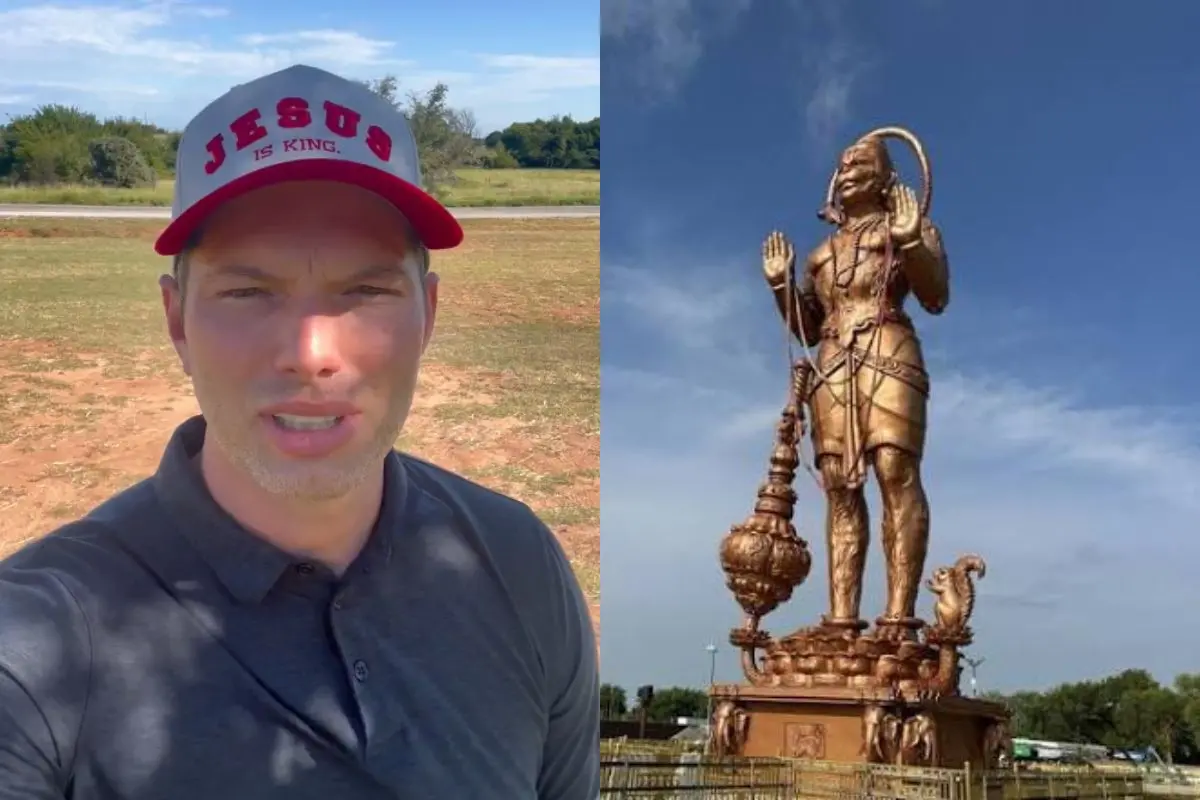
Texas: A fierce controversy erupted recently involving Texas Republican Senate candidate Alexander Duncan, who publicly denounced a 90-foot statue of the Hindu deity Hanuman as a “false god.” The statue, called the Statue of Union, is located at the Sri Ashtalakshmi Temple in Sugar Land, Texas, and is the tallest Hanuman statue in North America.
Duncan’s Remarks and Response
Duncan took to the social media platform X (formerly Twitter) to share a video of the statue along with a statement questioning why such a “false statue of a false Hindu God” is allowed in Texas. He declared emphatically, “We are a CHRISTIAN nation!” Further tweets quoted biblical passages from Exodus 20:3-4 and Romans 1:25, which prohibit the worship of other gods and idols, reiterating his rejection of the statue’s presence.
The remarks quickly triggered condemnation from the Hindu American Foundation (HAF), which condemned Duncan’s statements as “anti-Hindu and inflammatory.” The organisation petitioned the Texas Republican Party to discipline Duncan for violating non-discrimination guidelines and for disrespecting the First Amendment’s Establishment Clause, which guarantees religious freedom.
Duncan’s Follow-Up Statement: A Call for “Questions”
Responding to criticism, Duncan wrote, “As Americans, we need to be comfortable asking questions. What I said in my post about the Hanuman statue in Sugarland was in no way anti-Hindu. I merely asked a question, and as Christians we should be asking these questions because we know what happens when a nation turns its back on God and begins to worship man-made idols, Gods, religions, etc.”
This clarification did little to quell the backlash, with many accusing him of promoting religious intolerance and disrespecting the constitutional principle of religious freedom.
Broader Backlash and Community Reaction
Duncan’s comments have sparked wider debate on religious tolerance and cultural inclusivity in the U.S. Social media users, including Indian-Americans, criticised Duncan’s remarks, emphasising America’s constitutional commitment to religious freedom and diversity. Many pointed out that labelling a belief “false” reflects intolerance and contradicts American values.
Several commentators drew attention to the significance of the statue, which symbolises strength and devotion for the Hindu community, and argued that its presence enriches America’s multicultural spirit rather than threatening it.
Political and Cultural Context
The controversy adds to ongoing tensions within U.S. politics, particularly as hate speech and nationalist rhetoric targeting minority communities have increased. Duncan, endorsed by former President Donald Trump, is a former police officer and staunch conservative known for promoting Christian values and traditional American cultural norms.
The Texas GOP has yet to make an official statement about Duncan’s remarks. Meanwhile, the Hindu community and civil rights groups remain vigilant, advocating for respect and protection of religious expression.