From 'Jesus the Son of Man' to 'Afghanistan and the Region', Taliban eliminating 'un-Islamic' books
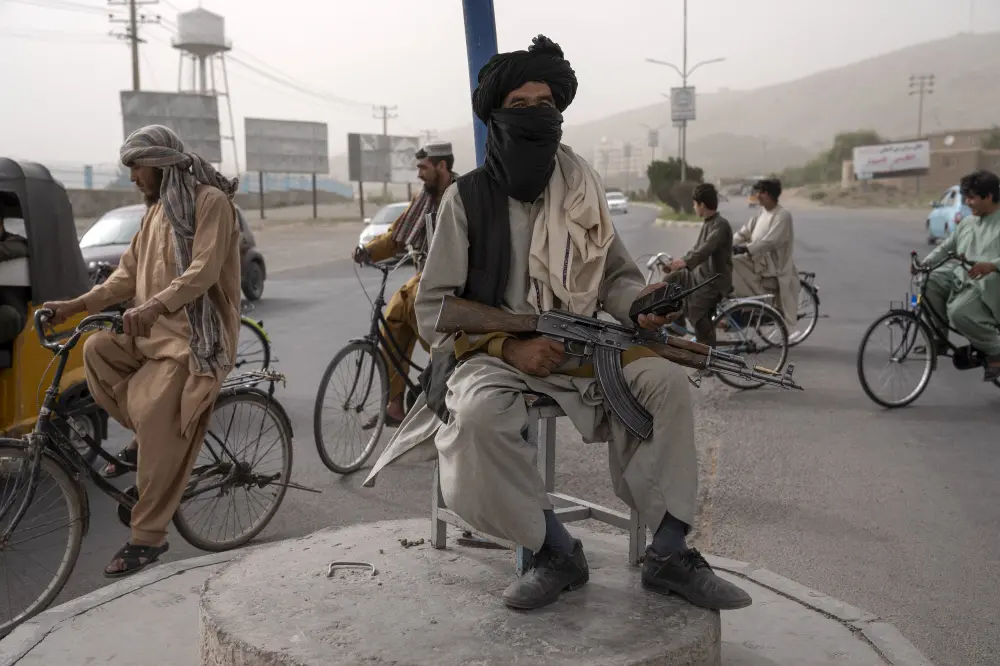
The Taliban regime in Afghanistan is continuing its crackdown on intellectual freedom, with authorities actively removing books deemed "un-Islamic" or anti-government from libraries and bookstores.
A commission established by the Ministry of Information and Culture has identified over 400 titles for censorship, citing violations of Islamic and Afghan values.
The ministry has replaced confiscated books with religious texts, particularly the Quran. While specific figures on the number of books removed are unavailable, publishers and government sources confirm widespread censorship and a climate of fear.
Banned Titles and Restrictions
Among the banned titles is Khalil Gibran's "Jesus the Son of Man," considered sinful, and Ismail Kadare's "Twilight of the Eastern Gods," labelled "counterculture." Academic works like Mirwais Balkhi's "Afghanistan and the Region" have been prohibited for alleged negative propaganda.
The Taliban's censorship extends to imported books, particularly from neighbouring Iran. Customs officials in Herat meticulously examine shipments, banning books with images of living beings, which are deemed forbidden under certain Islamic interpretations.
While authorities claim to target specific content rather than entire countries or authors, the practical implementation of these restrictions often leads to the removal of a wide range of foreign literature.
Booksellers in Kabul and Takhar provinces report that many non-Afghan works are banned simply based on the author's nationality.
Impact on Intellectual Life
The Taliban's censorship efforts have had a significant impact on Afghanistan's intellectual life. Booksellers fear for their livelihoods, while readers are deprived of access to diverse perspectives and knowledge. The restrictions have also hindered the development of a vibrant literary scene, stifling creativity and critical thinking.
As the Taliban seeks to consolidate its grip on power, the future of intellectual freedom in Afghanistan remains uncertain. The censorship of books and the suppression of ideas are a stark reminder of the challenges facing the country as it grapples with a restrictive regime.
AP