Strait of Hormuz on front line of Middle East war after surge in ship attacks
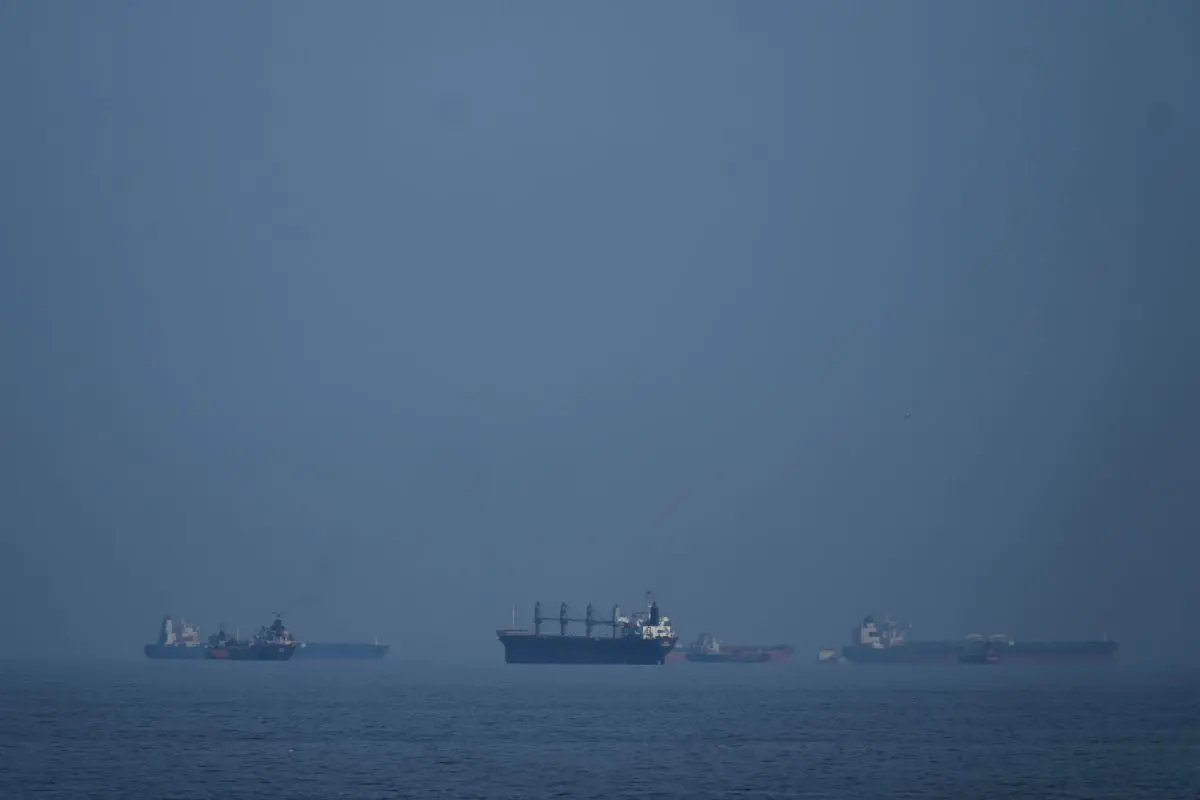
Attacks targeting commercial vessels in and around the Strait of Hormuz have pushed the critical shipping route to the centre of the ongoing Middle East conflict, raising fears of major disruptions to global energy supplies.
The narrow waterway, through which roughly 20 percent of the world’s crude oil and liquefied natural gas shipments normally pass, has seen traffic drop sharply after repeated strikes on vessels.
Iran Seeks Economic Pressure
Analysts say Iran is attempting to inflict maximum economic pressure on global markets in response to recent US-Israeli military strikes.
The escalation has significantly reduced maritime traffic through the strait, with only a small fraction of the vessels that typically transit the route managing to pass through safely.
Meanwhile, Donald Trump urged countries dependent on oil transported through the Strait of Hormuz to take greater responsibility for ensuring the security of the passage, with the United States offering support.
Multiple Oil Tankers Targeted
Since the conflict began, at least 10 oil tankers have been hit, targeted, or involved in reported attacks, according to data from the UK Maritime Trade Operations, the International Maritime Organization, and regional authorities.
Seven vessels reported to UKMTO include the Skylight, MKD Vyom, Hercules Star, Ocean Electra, Stena Imperative, Libra Trader, and Sonangol Namibe.
Two additional tankers — Safesea Vishnu and Zefyros — were reportedly struck, according to Iraq’s State Organisation for Marketing of Oil.
Iran’s Islamic Revolutionary Guard Corps (IRGC) also claimed drone attacks on the tankers Prima and Louis P, as well as a strike on the asphalt tanker Athe Nova. These claims could not be independently verified.
Other Ships and Crews Affected
The violence has not been limited to oil tankers. Four bulk carriers, three container ships, a tugboat, an oil drilling vessel and a cargo ship have reported explosions, strikes, or suspicious activity in the area.
Thailand’s navy said its bulk carrier Mayuree Naree was attacked while transiting the strait. Oman rescued 20 crew members, while three sailors remained missing.
Preliminary figures from the International Maritime Organization indicate that at least six sailors and one port worker have been killed during the incidents.
According to the UK Maritime Trade Operations, at least 20 maritime incidents involving commercial vessels and offshore infrastructure have been reported across the Persian Gulf, the Strait of Hormuz and the Gulf of Oman since the conflict began.
Officials say the attacks do not appear to follow a consistent pattern linked to Western ownership, suggesting a broader campaign aimed at disrupting maritime traffic rather than targeting specific vessels.
Conflicting Signals from Iran
Iranian officials have issued mixed messages regarding the future of shipping through the Strait of Hormuz.
Earlier this month, an IRGC general threatened to “burn any ship” attempting to cross the strait and block oil exports from the Gulf.
ALSO READ | Who will stop the War that began with Iran?
However, Iranian Foreign Minister Abbas Araghchi later said the country had “no intention” of closing the passage.
Meanwhile, IRGC naval commander Alireza Tangsiri warned that vessels seeking to transit the strait must first obtain permission from Iran.
US Warns Against Disrupting Shipping
The Pentagon said US forces recently destroyed 16 Iranian mine-laying vessels that could have been used to block the strategic waterway.
ALSO READ | 'I don't know if he's even alive': Donald Trump questions Mojtaba Khamenei’s whereabouts
After strikes on military infrastructure at Kharg Island, President Trump warned Iran against interfering with international shipping.
“For reasons of decency, I have chosen not to wipe out the oil infrastructure on the island,” he said, warning that any disruption to the free and safe passage of ships could prompt further action.
Global leaders react
Amid rising tensions, Emmanuel Macron, President of France and current head of the Group of Seven, called on world leaders to act quickly to restore safe navigation through the Strait of Hormuz.
The escalating maritime attacks have intensified concerns that the conflict could severely disrupt global energy markets and international trade.