Dissanayake, Sri Lanka’s Marxist politician, takes lead in presidential vote
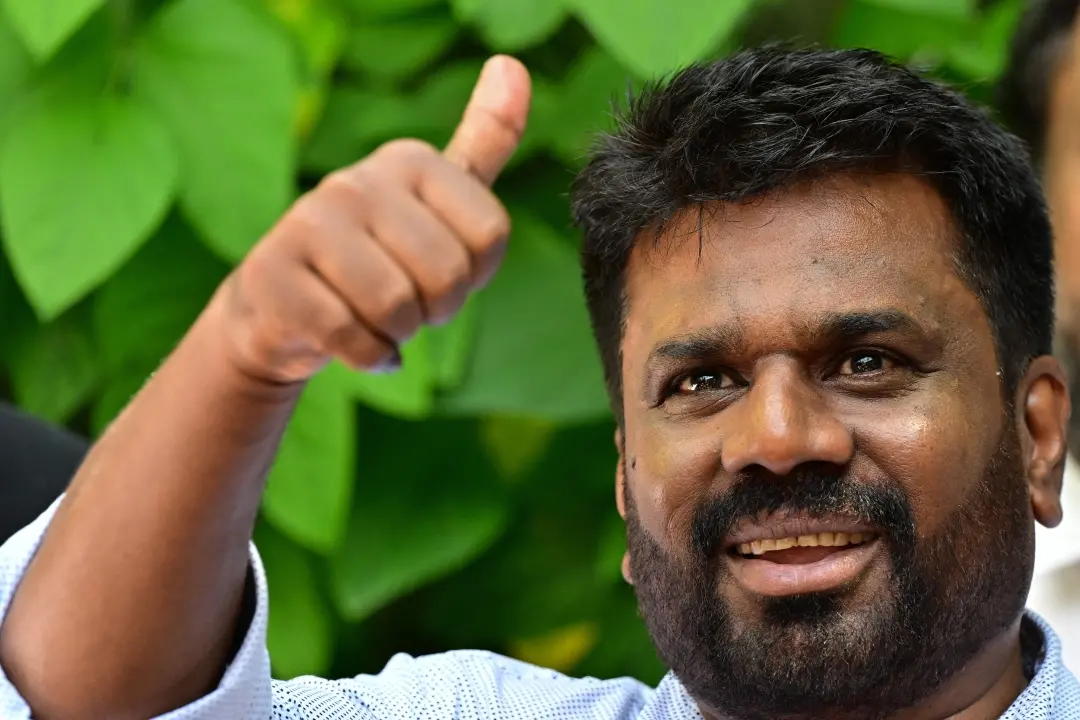
Colombo: In Sri Lanka, main Marxist politician Anura Kumara Dissanayake has taken a strong lead in a closely contested presidential election, which has become a referendum on an unpopular IMF bailout. Early results from Saturday's vote indicate that the 55-year-old could become the first leftist leader of the country.
Dissanayake is competing against President Ranil Wickremesinghe and candidate Namal Rajapaksa, who conceded defeat early Sunday. About 76 percent of the 17.1 million eligible voters participated in the election, with final results expected later in the day.
Initial counts show that Dissanayake won 58 percent of the postal votes, which often predict the overall outcome. In past elections, candidates who received over 50 percent of postal votes typically went on to win.
Rajapaksa's aides said Dissanayake had won the vote. "Anura Kumara Dissanayake has won the election," Rajapaksa's campaign aide Milinda Rajapaksha said on Facebook, adding: "Namal Rajapaksa won politics."
Namal Rajapaksa, part of the influential Rajapaksa family, was seen as using this election as a trial run for the 2029 presidential race. Sri Lanka's Foreign Minister Ali Sabry, a supporter of Wickremesinghe, also confirmed Dissanayake's victory. "After a long and arduous campaign, the results of the election are now clear," Sabry said on X. "Though I heavily campaigned for President Ranil Wickremasinghe, the people of Sri Lanka have made their decision, and I fully respect their mandate for Anura Kumara Dissanayake."
While there has been no immediate response from Wickremesinghe, he announced an eight-hour curfew despite the election being described by the independent Election Commission as one of the most peaceful in the country's history. Police said the curfew was "an additional measure to protect people." The government declared Monday a public holiday.
Wickremesinghe is seeking re-election to maintain the strict measures that have stabilised the economy after a severe downturn in 2022, which led to food, fuel, and medicine shortages. His administration has restored calm following widespread unrest that saw thousands storm the residence of his predecessor, Gotabaya Rajapaksa.
"I've taken this country out of bankruptcy," Wickremesinghe, 75, said after casting his ballot. However, Wickremesinghe's tax increases and other policies linked to a $2.9 billion IMF bailout have left many citizens struggling financially.
Dissanayake’s party, which led two failed uprisings in the 1970s and 1980s, had previously received less than four percent of the vote in the last parliamentary elections. Yet, the current economic crisis has given him a surge in support, as he promises to change the country’s “corrupt” political culture. He expressed confidence in winning the presidency at a polling station. "After the victory there should be no clashes, no violence," he said. "Our country needs a new political culture."
Sajith Premadasa, another opposition leader and son of a former president assassinated during the civil war, is expected to finish in second place. He, along with Dissanayake, has pledged to renegotiate the IMF bailout terms.
Political analyst Kusal Perera noted that it is hard to predict the outcome in this three-way race, a first for Sri Lanka.
The government has banned the sale of alcohol over the weekend and prohibited any victory celebrations until a week after the final results are announced.
Economic issues dominated the election campaign, with widespread public anger over the hardships caused by the crisis. Official data indicates that Sri Lanka's poverty rate doubled to 25 percent between 2021 and 2022, adding over 2.5 million people living on less than USD 3.65 a day.
Experts caution that Sri Lanka's economy remains fragile, with payments on the country’s USD 46 billion foreign debt still paused since a government default in 2022. While the IMF reports that reforms under Wickremesinghe are starting to yield results, the nation is warned that challenges persist.
Agency