Standoff in Seoul: Police blocked from raiding presidential office in Yoon probe
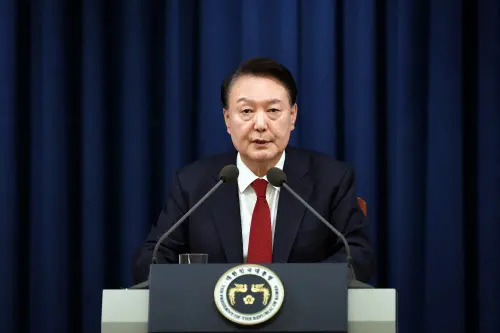
Seoul: A tense standoff unfolded in central Seoul on Wednesday as South Korean police clashed with the Presidential Security Service (PSS) while attempting to execute a search warrant at the presidential office.
The confrontation, which lasted over five hours, was part of an investigation into allegations that impeached President Yoon Suk Yeol interfered with the execution of a detention warrant earlier this year.
At approximately 10:13 a.m., police officials from a special investigation unit arrived at the presidential compound in Yongsan, armed with a court-issued warrant. The warrant authorized the search of secure internal phone servers, the PSS office, and the presidential residence.
However, the Presidential Security Service refused to allow officers entry, effectively blocking the raid. As of 3:00 p.m., police had still not gained access to any of the designated areas.
Officials have yet to confirm how the standoff will be resolved or whether legal action will follow against the PSS for obstructing a lawful investigation.
Acting PSS chief Kim Seong-hoon is accused of obstructing investigators' attempts to detain Yoon at the presidential residence in January. Last month, a Seoul court turned down the prosecution's request for warrants to arrest Kim and Lee Kwang-woo, chief of the PSS' bodyguard division, Yonhap news agency reported.
Police officials said the presidential office's surveillance cameras are also subject to the raid in connection with former Interior Minister Lee Sang-min's insurrection charges.
Earlier on April 14, Yoon Suk Yeol defended himself during his first criminal trial on insurrection charges, saying his attempt to impose martial law in December did not amount to an insurrection.
Yoon, who dramatically rose from a top prosecutor to the presidency in about three years, became the nation's second President to be formally removed from office, with his surprise martial law bid rattling the nation for months and deepening political polarisation.
With the ruling, Yoon, 64, follows in the footsteps of former South Korean President Park Geun-hye, who was ousted in 2017 when the Constitutional Court upheld her impeachment over a corruption scandal.
Before taking the nation's highest office, Yoon began his career as a prosecutor in 1994, rising through the ranks to lead an investigation team into Park's corruption scandal that ultimately led to her ouster and subsequent imprisonment.
In 2019, he was appointed as the nation's top prosecutor under then-South Korean President Moon Jae-in but clashed with the administration as he oversaw investigations into family members of former Justice Minister Cho Kuk.
Amid mounting pressure from the Moon administration, Yoon stepped down from his post in 2021, only to enter politics shortly after and win the presidential election in 2022 as the candidate for the conservative People Power Party.
Yoon's term was riddled with conflict, with an uncooperative National Assembly dominated by the main Opposition Democratic Party (DP). Yoon exercised his presidential veto power against 25 Bills passed by the National Assembly.
Tensions with the DP appeared to reach an extreme in early December as the main Opposition introduced motions to impeach the country's top auditor and a senior prosecutor, with Yoon declaring martial law on December 3, which ultimately led to his downfall.