South Korea sees 2nd impeachment in 2 weeks: Acting President Han Duck-soo removed
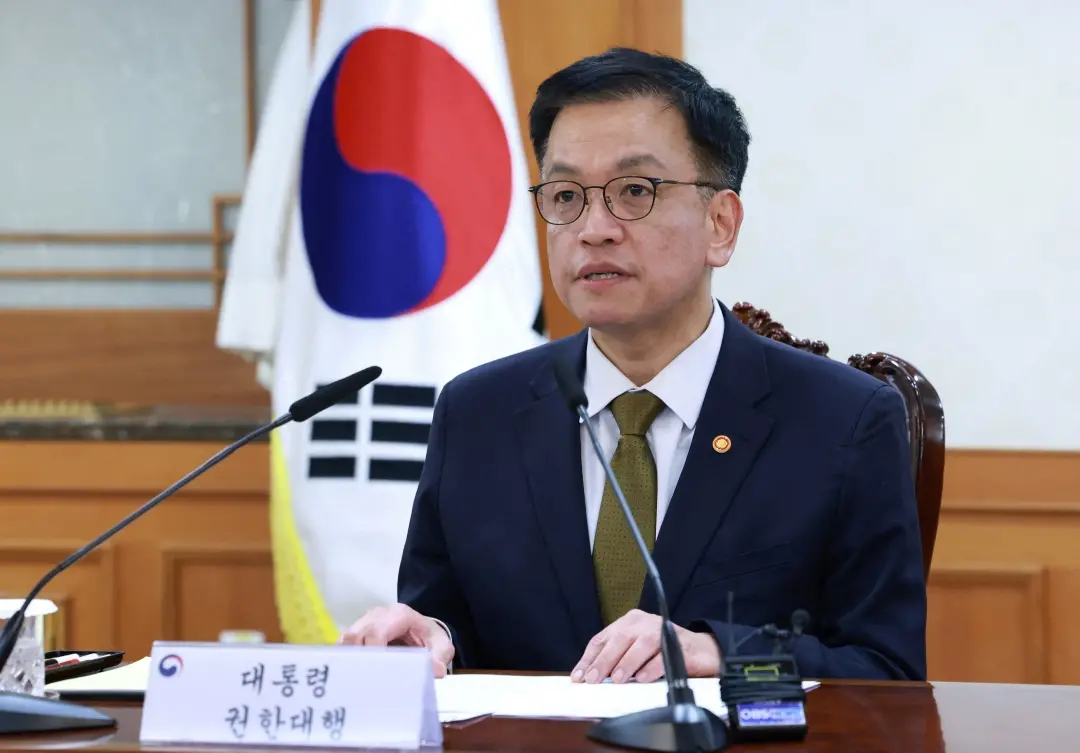
Seoul: South Korea plunged further into political turmoil on Friday as lawmakers impeached acting president Han Duck-soo, just two weeks after suspending President Yoon Suk Yeol over a controversial martial law declaration.
Han, who had been serving as prime minister, stepped into the role of acting president on December 14 following Yoon's impeachment. However, opposition MPs accused him of obstructing justice by refusing to finalise Yoon's impeachment process and appoint additional judges to the Constitutional Court, prompting Friday’s vote.
"I announce that Prime Minister Han Duck-soo's impeachment motion has passed. Out of the 192 lawmakers who voted, 192 voted to impeach," said National Assembly Speaker Woo Won-shik.
The impeachment has sparked intense protests from the ruling People’s Power Party (PPP), who argued the motion required a two-thirds majority, not a simple majority, to pass. PPP lawmakers, who abstained from the vote, accused Speaker Woo of overstepping procedural norms, with many chanting angrily and demanding his resignation.
"Han must continue to lead state affairs without yielding to the opposition's passage of the impeachment motion," said PPP leader Kweon Seong-dong.
Despite the backlash, Han stated, "I respect the parliament's decision" and pledged to await the Constitutional Court’s verdict on whether the impeachment would be upheld.
Economic turmoil and leadership transition
Finance Minister Choi Sang-mok has taken on the dual roles of acting president and prime minister. In his first address as acting leader, Choi emphasised the importance of stabilising the government.
"Minimising governmental turmoil is of utmost importance at this moment," he said. "The government will also dedicate all its efforts to overcoming this period of upheaval."
The ongoing crisis has rattled South Korea's economy, with the won hitting a 16-year low against the US dollar and the KOSPI index falling by 1.02 percent on Friday.
Judicial appointments at core of the conflict
At the centre of the controversy is Han’s refusal to appoint three additional judges to the Constitutional Court, which is currently short-staffed. Opposition lawmakers argued that Han's inaction jeopardised the impeachment process, as the court requires a supermajority to uphold Yoon’s suspension.
Democratic Party MP Jo Seoung-lae criticised Han’s stance, stating, "The refusal is a direct challenge to the Constitution and the law."
In response, Han maintained that judicial appointments should be a bipartisan effort.
"The consistent principle embedded in our constitution and laws is to refrain from exercising significant exclusive presidential powers," he argued.
International reactions
The United States reaffirmed its commitment to South Korea, emphasising support for its democratic institutions.
"We reiterate our support for the Republic of Korea (ROK), its citizens and democratic processes, and the rule of law," said Pentagon spokesman Major Pete Nguyen.
The US State Department added that it is "ready to work with Acting President Choi and the ROK government" to maintain stability in the region.
Despite the political chaos, South Korea’s Constitutional Court held its first preliminary hearing on President Yoon’s impeachment on Friday.
AFP