Sheikh Mujibur Rahman no longer Bangladesh’s ‘Father of the Nation’ as interim government drops historic title
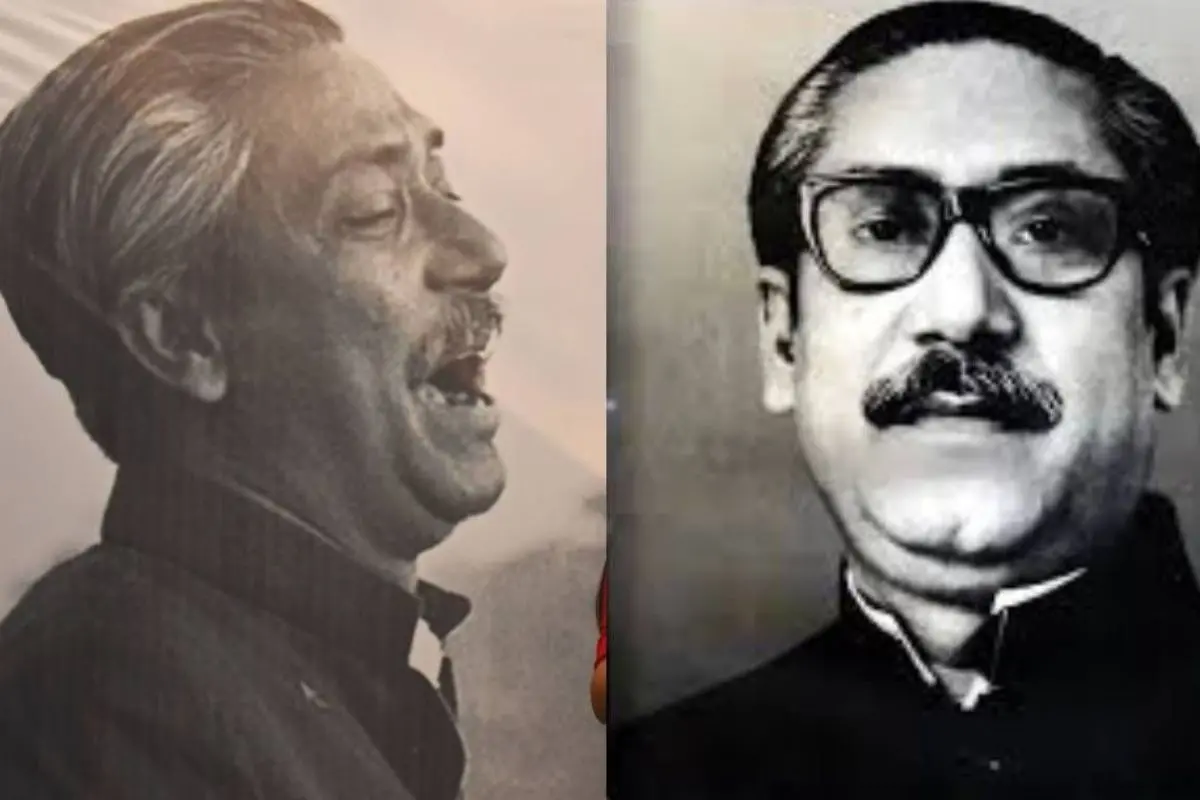
Dhaka: Bangladesh’s interim administration has removed the designation ‘Father of the Nation’ for Bangabandhu Sheikh Mujibur Rahman in a latest amendment to the country’s freedom fighters’ legislation, according to multiple media sources.
The revision, enacted the other day, alters the definition of a freedom fighter and marks another symbolic shift after the Muhammad Yunus-led government recently introduced new currency without Mujibur Rahman’s portrait—he is also the father of former Prime Minister Sheikh Hasina.
As reported by The Dhaka Tribune, the amendment to the National Freedom Fighters Council Act was issued through an ordinance by the Ministry of Law, Justice and Parliamentary Affairs late Tuesday. The update “alters” the recognition of freedom fighters and notably “modifies the term ‘Father of the Nation Bangabandhu Sheikh Mujibur Rahman’”.
The bdnews24.com portal stated that “The words ‘Father of the Nation Bangabandhu Sheikh Mujibur Rahman’ and portions of the law that mentioned the name of Bangabandhu Sheikh Mujibur Rahman have been deleted.”
Further, The Daily Star reported that the ordinance introduces subtle adjustments to the description of the 1971 Liberation War. “The new definition of Liberation War drops the name of Bangabandhu Sheikh Mujibur Rahman. The previous one mentioned that the war was waged responding to Bangabandhu's call for independence,” the paper noted.
Under the updated law, individuals who served as MNAs and MPAs with the Mujibnagar Government—Bangladesh’s wartime government-in-exile—will now be categorised as “associates of the Liberation War”, as per The Dhaka Tribune. Previously, these figures were officially recognised as freedom fighters.
The revised criteria for recognition as a freedom fighter now include all civilians who, between March 26 and December 16, 1971, undertook combat training or prepared for battle either within the country or in Indian camps, participated in the armed struggle against the Pakistani military and their local allies, and met the government-defined minimum age requirement at the time.
Entities identified as collaborators include Razakars, Al-Badr, Al-Shams, as well as members of the then-Muslim League, Jamaat-e-Islami, Nezam-e-Islam, and the peace committees.
The amended definition continues to include uniformed personnel from the armed forces, East Pakistan Rifles (EPR), police, Mukti Bahini, the Mujibnagar forces, naval commandos, Kilo Force and the Ansar.
In addition, women who suffered wartime atrocities—referred to as Birangona—will be officially acknowledged as freedom fighters under the new criteria. Healthcare workers, such as doctors, nurses, and medical aides who treated injured fighters during the war, are also now formally recognized.
The updated ordinance redefines the 1971 Liberation War as "the armed struggle carried out between March 26 and December 16, 1971, by the people of Bangladesh aiming to establish a sovereign democratic state founded on equality, human dignity and social justice, against the occupying Pakistani armed forces and their collaborators,” as stated by The Dhaka Tribune.
This revision comes amid broader changes introduced by the interim regime, including the January release of new school textbooks for the 2025 academic session. The updated curriculum now credits Ziaur Rahman, then an Army major and later a sector commander during the war, with declaring Bangladesh’s independence—replacing earlier versions that attributed the declaration to Mujibur Rahman.