Is the Middle East war finally ending? Pakistan claims US-Iran breakthrough
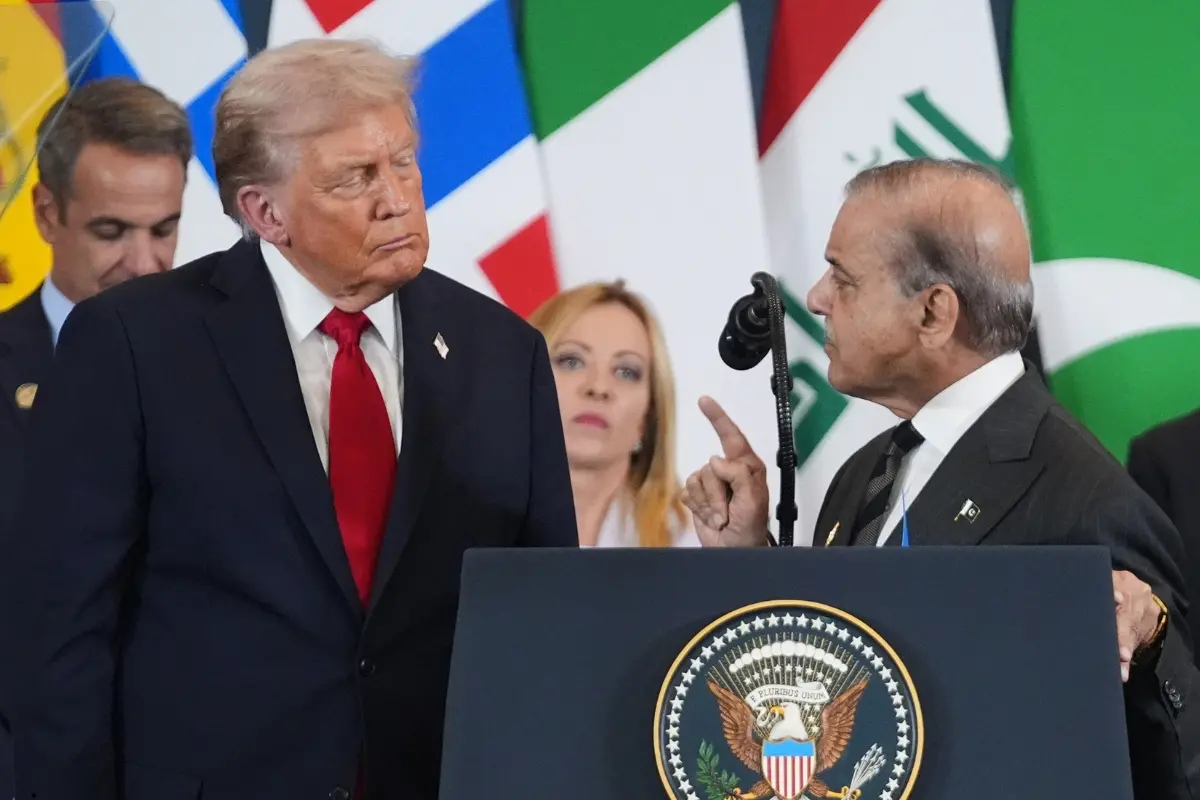
Islamabad: Pakistan Prime Minister Shehbaz Sharif on Friday announced what could be a major diplomatic breakthrough in the Middle East, saying the United States and Iran have agreed on the wording of a deal aimed at ending months of conflict and that mediators are now working to finalise the agreement.
According to Sharif, negotiators have settled on a common draft text and discussions are now focused on the final steps required before a formal agreement can be signed.
“The U.S. and Iran have reached a ‘final, agreed upon text,’” Sharif said, adding that Pakistan, which has played a central role in mediation efforts, remains engaged with both sides.
“Peace has never been this close as it is now,” Sharif said in a post on X.
The development comes after several days of heightened tensions that saw Iran exchange fire with the United States and Israel, raising fears of a wider regional conflict. Although a fragile ceasefire has remained in place since April 7, concerns about a return to full-scale war have persisted.
Neither Washington nor Tehran immediately issued official statements confirming Sharif’s announcement. However, signs of progress emerged from both sides.
Iranian Foreign Minister Abbas Araghchi struck an optimistic tone on Friday, saying an agreement “has never been closer” in a post on X. U.S. President Donald Trump later shared Araghchi’s message on his own social media platform.
While details remain limited, regional officials familiar with the negotiations indicated that the proposed agreement could include the reopening of the Strait of Hormuz, a phased easing of sanctions on Iran and the release of frozen Iranian assets.
The officials, who spoke on condition of anonymity because of the sensitivity of the talks, said the deal could help stabilise a region that has faced months of economic and security uncertainty.
A senior U.S. official said the emerging framework would also address concerns over Iran’s nuclear programme. According to the official, the agreement would require the removal and destruction of Iran’s nuclear material and the dismantling of Tehran’s nuclear infrastructure. Iran would also commit to ending financial support for terrorist groups.
The official spoke anonymously because they were not authorised to discuss the negotiations publicly.
Despite signs of progress, uncertainty remains.
Earlier on Friday, Trump criticised Iranian officials on social media, warning: “They better get their act together, and FAST!” The comment came before he later shared Araghchi’s optimistic post.
Iran’s nuclear programme continues to be one of the central issues in the negotiations. The United States and Israel have long argued that Tehran’s nuclear activities could lead to the development of atomic weapons, while Iranian authorities insist the programme is intended solely for peaceful purposes.
Another critical issue is the Strait of Hormuz, one of the world’s most important energy corridors. Iran’s effective closure of the strategic waterway has severely disrupted oil and natural gas shipments from the Persian Gulf, contributing to higher global energy prices and supply concerns.
In response, the United States has maintained a naval blockade of Iranian ports since mid-April, seeking to limit Iran’s own energy exports.
Regional officials said they expect a formal signing ceremony in the coming days once political approval is secured in both Washington and Tehran.
Trump had already hinted at progress on Thursday, saying negotiations were moving forward, even as he simultaneously warned of stronger military action and threatened to target Iran’s oil sector.
Iranian Foreign Ministry spokesperson Esmail Baghaei also acknowledged movement in the talks, telling state television that mediators remained active and that the text of an agreement was “mostly finalised.”
Pakistan’s Foreign Ministry has not yet officially commented on Sharif’s latest remarks. However, Foreign Ministry spokesperson Tahir Andrabi confirmed on Thursday that Islamabad continued to play an active role in mediation efforts.
Meanwhile, Israel has sought to distance itself from the negotiations.
Prime Minister Benjamin Netanyahu said Israel was not a party to the discussions and stressed that he and Trump were in “full agreement” that Iran must never obtain nuclear weapons.
Israeli Defence Minister Israel Katz echoed that position, saying Israel expects Washington to safeguard key Israeli interests, including efforts to curb Iran’s missile capabilities and regional proxy network.
Katz also warned that Israel reserved the right to act independently against Iran and reiterated that Israeli forces would remain in areas currently occupied in Lebanon, Syria, Gaza and parts of the West Bank.
Complicating matters further is Iran’s demand that any broader agreement must also bring an end to hostilities between Israel and Hezbollah in Lebanon. However, Netanyahu has repeatedly stated his intention to continue efforts aimed at dismantling the Iran-backed militant group.
Regional officials said the negotiations have been largely brokered by Pakistan under the leadership of Army Chief Field Marshal Asim Munir, with support from Saudi Arabia, Turkey, Egypt and Qatar.
If finalised, the agreement could mark the most significant diplomatic breakthrough in the region since the conflict began, potentially easing military tensions, restoring energy flows and opening the door to broader regional stability.