Shamima Begum’s ISIS past back in focus as new report urges UK to rethink its approach
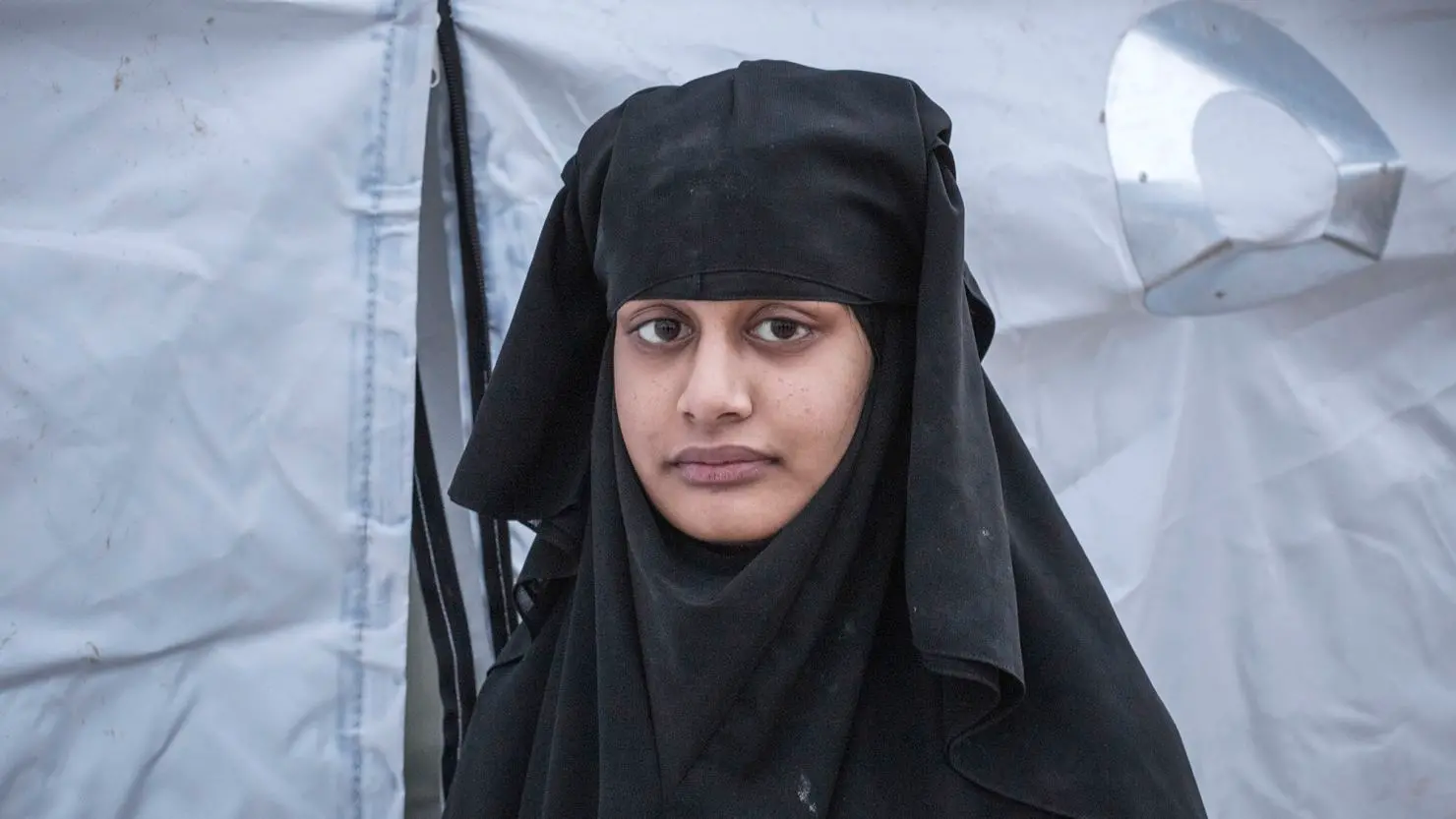
London: A new report from the Independent Commission on UK Counter-Terrorism Law, Policy and Practice has reignited the long-running debate surrounding Shamima Begum and other British nationals detained in camps in northern Syria. The commission has warned that the government’s current stance, which leaves detainees in indefinite legal limbo, is “unsustainable” and risks allowing the camps to become “Britain’s Guantánamo.”
Shamima Begum’s case remains one of the most polarising in recent British history. Born in east London in 1999 to Bangladeshi parents, Begum was just 15 when she travelled to Syria in 2015 with school friends Kadiza Sultana and Amira Abase to join the Islamic State (ISIS). Shortly after arriving, she married Dutch ISIS fighter Yago Riedijk and went on to have three children, all of whom died in infancy.
Begum remained under ISIS rule until the group’s collapse, after which she was discovered in the Al Roj camp in 2019. Soon afterwards, then Home Secretary Sajid Javid stripped her of her British citizenship on national security grounds—a decision that sparked fierce debate over justice, citizenship, and Britain’s responsibility to its nationals.
Her legal challenges have been repeatedly dismissed. In 2021, the Supreme Court ruled that she could not return to the UK to argue her case, effectively blocking her route back to Britain. She remains in the Al Roj camp, one of the most scrutinised detention sites in the region.
The commission’s latest report urges the government to review its approach, arguing that many detainees—including Begum—were minors when they travelled and may have been victims of grooming, trafficking, or coercion. It calls for a “coherent, humane, and security-conscious repatriation strategy” and recommends that the government “facilitate voluntary repatriation for British nationals, including those deprived of their citizenship.”
Public opinion in the UK remains sharply divided. Supporters of Begum argue that she was a vulnerable teenager groomed by extremists and should be given the chance to return and rehabilitate. Critics counter that her decision to join ISIS, and her continued association with the group, make her a security risk who should not be permitted back into the country.
The report now places renewed pressure on ministers to address a policy area that has long been marked by legal, ethical, and security tensions, and one that continues to divide Britain.