Indian worker among first fatalities in Saudi Arabia as Iran conflict spills into Gulf
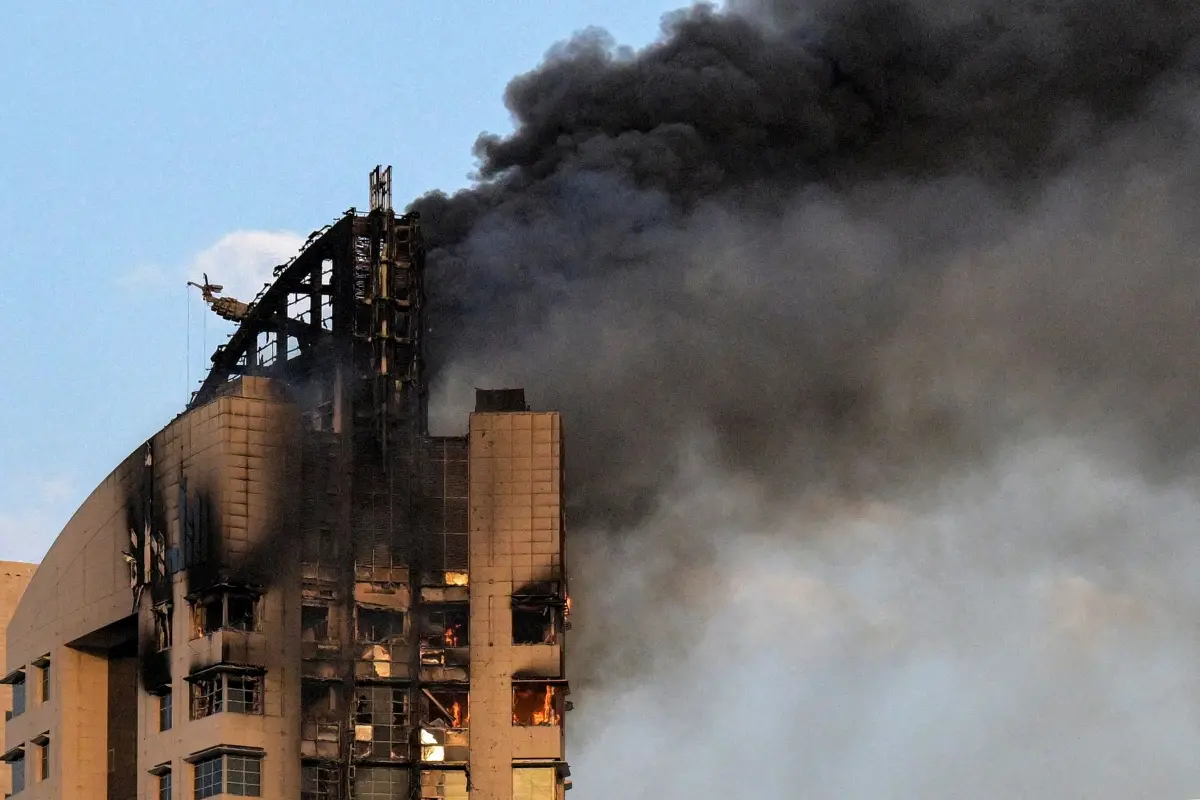
Dubai: The aerial conflict over Iran surged into a dangerous new phase on Sunday as hostilities shifted toward vital civilian infrastructure, with Bahrain accusing Tehran of targeting a desalination plant essential for the region’s drinking water.
As the war entered its ninth day, the environmental and human costs mounted. Thick, black smoke from Israeli-struck oil depots hung over Tehran, triggering emergency health warnings for the capital's residents. Meanwhile, Iranian President Masoud Pezeshkian vowed to intensify strikes against American assets across the Middle East, a sharp reversal from his brief attempt at a more conciliatory tone a day earlier.
Regional Casualties and Diplomatic Fury
Saudi Arabia reported its first fatalities of the conflict on Sunday, confirming that a military projectile struck a residential district, killing two foreign workers of Indian and Bangladeshi nationality and wounding 12 others. The incident underscores a grim trend in the Gulf, where foreign residents have comprised the majority of the war's casualties.
The escalating violence drew a stinging rebuke from Arab League chief Ahmed Abouel Gheit, who denounced Tehran for a “reckless policy” of aggression against neighbouring Arab states. Despite Pezeshkian’s Saturday apology for regional strikes, which was quickly undermined by Iranian hard-liners, the president adopted a defiant stance Sunday.
“The more pressure they impose on us, the stronger our response will naturally be,” Pezeshkian said. “Our Iran, our country, will not bow easily in the face of bullying, oppression or aggression, and it never has.”
Infrastructure Under Fire
The focus on water security has raised fears of a humanitarian catastrophe in the parched desert region. While Bahrain’s electricity and water authority stated that supplies remain functional, the strike on its desalination facility follows Iranian claims that a U.S. attack damaged a similar plant on Qeshm Island, cutting water to 30 villages.
Iranian Foreign Minister Abbas Araghchi argued that by hitting Iranian water utilities, “the U.S. set this precedent, not Iran.” In response, U.S. Navy Capt. Tim Hawkins, a spokesperson for Central Command, stated firmly that "U.S. forces do not target civilians – period.”
The Toll of Nine Days of War
Since the U.S. and Israel initiated airstrikes on Feb. 28, an operation that claimed the life of Supreme Leader Ayatollah Ali Khamenei, the death toll has risen steadily:
- Iran: At least 1,230 people killed; 10,000 civilian structures damaged.
- Lebanon: 397 confirmed dead, including 83 children and 82 women.
- Israel: 11 fatalities, including the first two military deaths reported Sunday in southern Lebanon.
- United States: Six service members killed.
In Lebanon, the humanitarian crisis has reached a breaking point. The government reports that 517,000 people have officially registered as displaced, though the actual figure is believed to be significantly higher as families sleep in cars and public parks along the Mediterranean coast.
U.S. Policy and Succession
In Washington, President Donald Trump reiterated his intent to maintain a decisive role in Iran’s future. Speaking to ABC News, Trump suggested that any new leader chosen by Tehran’s clerical body “is not going to last long” without American approval. Trump and Israeli Prime Minister Benjamin Netanyahu have remained steadfast in their coordinated campaign, even as global energy markets reel from the disruption of the Strait of Hormuz.
Iranian judicial chief Gholam Hossein Mohseni-Ejei warned on social media that any regional territory used “overtly or covertly” by the U.S. for acts of aggression would remain a target for "intense attacks."
With inputs from AP