Temple of Satan in Chile pushes for religious recognition, challenging catholic tradition
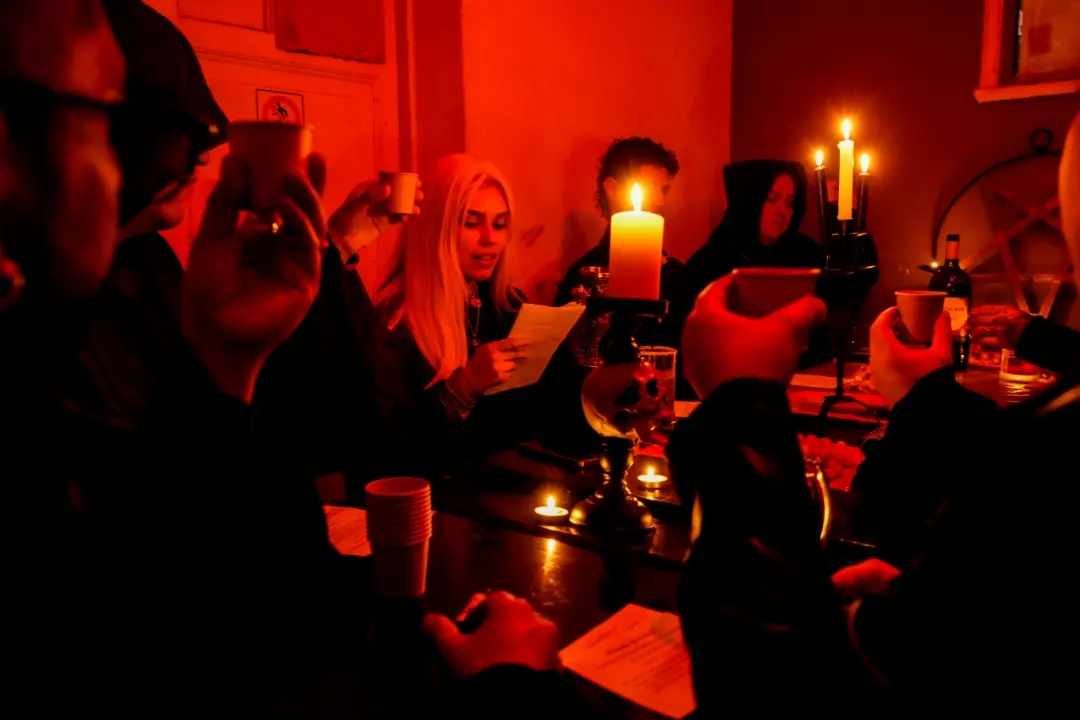
Chile: On Friday night in Downtown Santiago, the capital of Chile, a group of 15 individuals gathers to partake in a ritual, accompanied by a shared bottle of wine. The atmosphere is thick with the aromas of tobacco and incense, and black candles burn on an altar adorned with chalices and knives. This gathering is not for a traditional Satanic ceremony, but rather a modern religious group that champions reason, individualism, and challenges conventional religious beliefs.
Who are the members of the Temple of Satan?
Despite its name, Chile’s Temple of Satan does not worship the devil. Instead, members focus on personal freedom, rationality, and rejecting societal dogmas. With 100 members, the group includes a variety of people, such as publicists, firefighters, police officers, lawyers, and psychologists, who are united by a shared desire to break free from religious constraints.
The group’s spokesperson, Haborym, explains, "You are the owner of your present and future, there is no God that makes decisions for you."
The Temple’s rituals aim to stir emotion and cast aside intellectual thought, emphasising pleasure and individuality.
Dispelling misconceptions about satanism
Modern Satanism, especially as practiced by Chile’s Temple of Satan, is far from the sinister image often portrayed in Hollywood films like 'Rosemary’s Baby' or TV series like 'True Detective'.
Members strongly oppose animal abuse and criminal behavior, and they do not believe in Satan as an evil entity. Rather, they embrace skepticism and logic over supernatural beings. They view pleasure as a delight, not a sin, and do not force their beliefs on others.
“We don’t want people killing in the name of Satan,” says Haborym, making it clear that the group stands against violence or criminal acts under any circumstances.
The process to join the temple
Those wishing to join the Temple of Satan in Chile must go through a rigorous process.
Applicants must submit a form, provide proof of a clean criminal record, undergo an interview with a special commission, and be evaluated by a psychologist. After acceptance, members may choose a new name — typically that of a demon or fallen angel — to identify themselves within the group.
Founded in 2021, the Temple of Satan has recently seen a surge in interest, with over 400 people applying in just a few weeks, especially after the group requested recognition as a religious association from Chile's Ministry of Justice.
The controversy
The Temple’s request for legal recognition has stirred a heated debate in Chile, especially among the country’s main religious denominations. In a joint statement, Catholic, Anglican, Jewish, and Evangelical leaders warned that Satanism has often been linked to tragedy and violence.
However, members of the Temple of Satan argue that their beliefs are rooted in logic and individual empowerment, not in the worship of evil. They point out that modern Satanists are largely atheists or agnostics, with some practicing magic or witchcraft, but none of them engage in harmful or dangerous rituals.
Chile’s shift in religious landscape
Five years after the Satanic Temple in the United States made headlines by gaining recognition as a religious group, a similar organisation in Chile is pushing for the same. Chile, a predominantly Catholic country where half of the 18 million people identify as Catholic, is experiencing a shift in religious identity.
Mid growing scandals within the Catholic Church, many Chileans are seeking alternative spiritual paths, and organisations like the Temple of Satan are finding a new wave of support.
Luis Bahamondes, a professor at the University of Chile, explains that Chile's religious landscape is changing. He notes that the Catholic Church's influence, which once extended to all aspects of life, has weakened after numerous sexual abuse scandals. As a result, new groups are finding the courage to challenge traditional beliefs that were once deemed untouchable.
Searching for new beliefs
Many members of the Temple of Satan, including former Catholics, Protestants, and Jehovah's Witnesses, have turned to Satanism after rejecting the dogma of traditional religions. Kali Ma, a dentistry student and former Jehovah’s Witness, explains, “In Satanism, there are no solutions or absolute truths. You are your own god and you create your own reality.”
Experts suggest that the rise of such alternative belief systems may be linked to the growing desire for less dogmatic and more personalized spiritual practices.
The debate over religious recognition continues
While it’s unclear whether the Chilean government will grant the Temple of Satan legal recognition, its request has already sparked an important national conversation. As the group demands the right to be recognised as a legitimate religious entity, it challenges the country's long-standing religious traditions, embodying the very principles of rebellion and individuality that are central to Satanic ideology.
Haborym says, "We comply with everything that is requested of us as a religious entity," and questions why their request should be rejected, except for the controversy surrounding their name and beliefs.
AP