From cabin crew to rescue pilot: The story of Nepal’s first woman helicopter captain
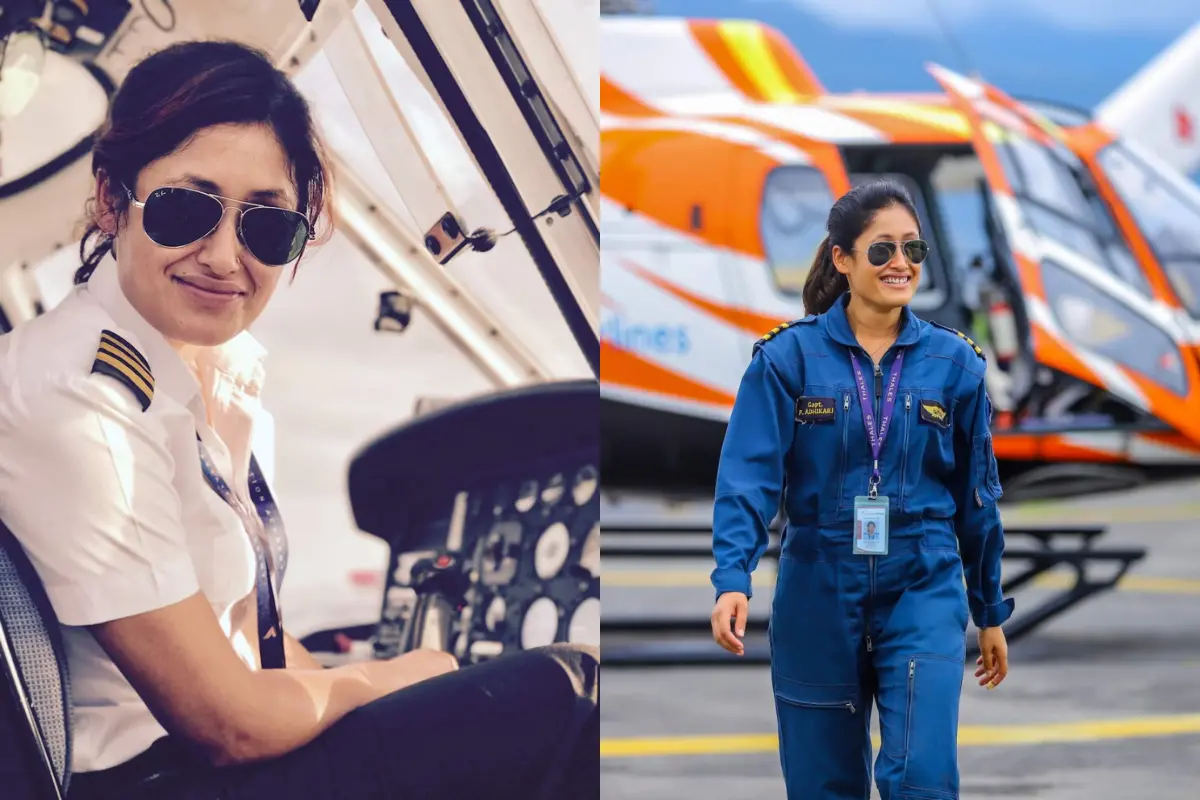
Priya Adhikari, Nepal’s first woman helicopter captain, has flown around 100 rescue missions in just six days, helping evacuate survivors from some of the worst flood- and landslide-hit areas along the Nepal-Tibet border.
At 40, Adhikari is an experienced high-altitude rescue pilot who has flown missions in the Himalayas, including rescues involving injured climbers on Mount Everest. As floodwaters and mudslides devastated Timure and other areas, she and other pilots have been working almost continuously to reach those stranded.
Who is Priya Adhikari?
Priya Adhikari, 40, is Nepal’s first woman helicopter captain and an experienced high-altitude rescue pilot. She has spent years flying search-and-rescue missions in the Himalayas, including operations involving injured climbers on Mount Everest.
Her aviation career began outside the cockpit. She studied environmental science and worked as cabin crew before a helicopter joyride sparked her interest in flying.
She later travelled to the Philippines for helicopter training and completed the flying hours required to become a captain. She became a full-time helicopter pilot in 2017.
Over the years, she specialised in high-altitude rescue operations, with some missions taking her to altitudes of around 6,200 metres.
100 rescue missions in six days
Adhikari has been flying almost continuously as rescue teams respond to devastating floods and landslides in Nepal and Tibet. The disaster has killed more than 1,000 people and left thousands missing, according to the reports provided.
One of the major rescue operations is centred on Timure village in Nepal’s Rasuwa district, where large areas have been devastated by flash floods and mudslides.
Around 20 helicopters have been involved in operations around Timure. Adhikari said several helicopters sometimes have to coordinate simultaneously, with five or six aircraft landing in the same area to evacuate survivors.
"Most of us are so exhausted because of all the flights we've been doing. We've been trained for this," she told CNN’s Anderson Cooper.
Why the rescue missions are so dangerous
The floods have left thick layers of mud across several areas, making helicopter landings particularly difficult.
According to Adhikari, some locations are so unstable that helicopters cannot safely land and shut down their engines. Pilots therefore have to keep the aircraft powered while survivors are evacuated.
The situation becomes even more challenging when multiple helicopters are operating at the same location. Pilots have to maintain constant radio communication and coordinate their movements to safely bring survivors out.
‘Everything is gone’
Adhikari has also witnessed the scale of the destruction from the air.
Flying over Timure, she recalled seeing bodies scattered across areas hit by the flash floods. More than 200 survivors were evacuated from the area during the first two days of the operation, with several helicopters, including Army Augusta helicopters, involved.
"Everything is gone. Five hydropower projects are gone, lives are gone," she said.
Despite the destruction, the sight of survivors waiting for rescue has provided moments of relief.
"Every time I go and land I see people around and waving at them," she said. "I say, you survived."
Adhikari said the emotional impact remains strong even though the people she rescues are strangers.
"They are not my relatives," she said, describing the emotions involved in seeing survivors and bodies during the missions.
A career in a male-dominated field
Adhikari's path to becoming Nepal's first woman helicopter captain was unconventional. Aviation, particularly helicopter operations, has traditionally been male-dominated, and she has spoken about facing doubts over whether a woman could become a helicopter captain.
She eventually broke that barrier and built a career in one of the most demanding areas of aviation: high-altitude search and rescue.
Her experience includes flying in the Himalayas and helping rescue injured climbers from Mount Everest. Some missions have taken her to approximately 6,200 metres.
Flood disaster tests years of experience
Although Adhikari has extensive experience in high-altitude rescue flying, she said the scale of the current disaster has been unlike anything she had previously encountered.
She compared the devastation caused by the flash floods with the impact of Nepal’s 2015 earthquake, saying the floods were even bigger in scale.
The continuing rescue effort has placed enormous demands on pilots, who must deal with difficult terrain, unstable landing areas, damaged infrastructure and the emotional strain of witnessing widespread destruction.
Yet Adhikari and other pilots continue flying into affected areas as rescue teams work to locate and evacuate people who remain stranded.