'Who am I to judge': The Pope who redefined Vatican's tone on LGBTQ lives
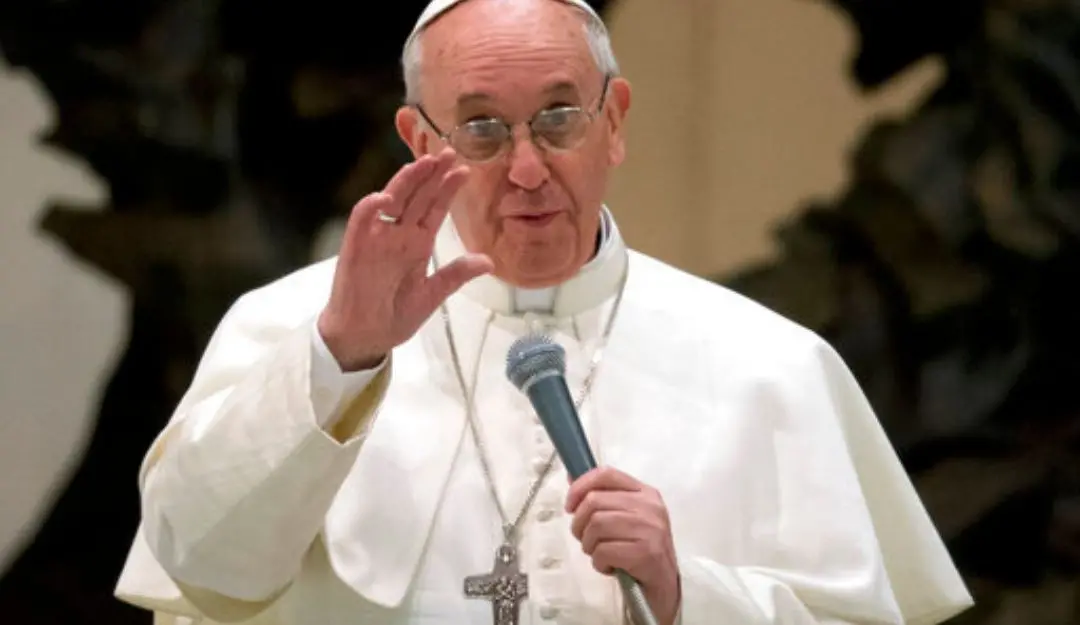
Vatican City: As the Catholic Church enters a period of mourning following the death of Pope Francis, tributes continue to pour in for a pontiff who was as beloved for his humility as he was controversial for his reforms.
Born Jorge Mario Bergoglio on 17 December 1936 in Buenos Aires to Italian immigrants, Francis was the eldest of five children. He entered the Jesuit order and was ordained a priest in 1969. During Argentina’s brutal dictatorship from 1976 to 1983, he led the Jesuits in the country — a role that would shape much of his later pastoral approach.
He became Archbishop of Buenos Aires in 1998 and was made a cardinal by Pope John Paul II in 2001. On 13 March 2013, following the resignation of Pope Benedict XVI, Bergoglio was elected the 266th Pope — the first from the Americas, the first Jesuit, and the first to choose the name Francis, in honour of St. Francis of Assisi.
A papacy of firsts
Pope Francis’s papacy was marked by a number of historic firsts. He was the first pontiff to visit Iraq, where he met with top Shiite Muslim cleric Grand Ayatollah Ali al-Sistani in 2021. He was also the first to use scientific data in a major Church document — his 2015 encyclical Laudato Si’ (Praised Be) urged environmental responsibility and criticised the global economic model for exploiting the poor and degrading the planet.
Champion of the marginalised
One of Francis’s earliest acts as pope was to visit the island of Lampedusa, a key arrival point for migrants entering Europe. There, he condemned what he called the “globalisation of indifference” towards migrants and refugees. He would later visit the US-Mexico border, pray for the dead, and bring 12 Syrian refugees back to Rome with him from a camp in Lesbos.
His advocacy often clashed with political leaders. In 2016, he publicly criticised then-US presidential candidate Donald Trump’s immigration stance, stating that anyone who builds walls “is not a Christian”.
A warmer tone on LGBTQ+ issues
Francis was widely regarded as more inclusive than his predecessors on LGBTQ+ issues. In 2013, he made headlines by saying, “Who am I to judge?” when asked about gay clergy.
A decade later, he approved blessings for same-sex couples — so long as they were distinct from marriage rites — and reaffirmed that “being homosexual is not a crime”.
Humble lifestyle
Francis modelled his papacy on simplicity and personal humility. Rejecting the opulence traditionally associated with the papacy, he chose to live in a modest guesthouse rather than the Apostolic Palace, continued wearing his old shoes, and was often seen in compact vehicles rather than luxury cars. In Argentina, he had been known to take public buses and cook his own meals.
Sexual abuse scandals
Perhaps the greatest crisis of his pontificate came in 2018, when he initially dismissed allegations made by Chilean victims of clerical abuse. After significant backlash, he reversed his position, invited the victims to the Vatican to apologise, and forced an overhaul of the Chilean Church leadership.
He later convened a global summit on sexual abuse in 2019, defrocked high-profile abusers such as former US Cardinal Theodore McCarrick, and changed Church law to lift papal secrecy in abuse cases. Still, critics maintained that he was inconsistent — and at times lenient — in his treatment of accused clergy.
Opposition and legacy
Francis faced significant resistance from traditionalists within the Church. Early in his papacy, some critics labelled him a heretic after he opened the door to allowing divorced and civilly remarried Catholics to receive communion.
In 2018, retired Vatican ambassador Archbishop Carlo Maria Viganò accused Francis and other senior officials of covering up abuse by McCarrick, calling for his resignation. Viganò’s claims gained traction among hardliners, but in 2024 he was excommunicated for schism by the Vatican.
Pope Francis passed away at 7:35 AM on Easter Monday, 21 April 2025, at the age of 88, at his residence in the Casa Santa Marta, Vatican City. Announcing his passing, Cardinal Kevin Farrell said:
“His entire life was dedicated to the service of the Lord and of His Church. He taught us to live the values of the Gospel with fidelity, courage, and universal love.”
The Vatican now enters a nine-day mourning period known as the Novendiale. The College of Cardinals will soon convene in conclave to elect the 267th Pope.