‘India warned us’: Belgian PM says Europe ignored India’s warning on trade dependence
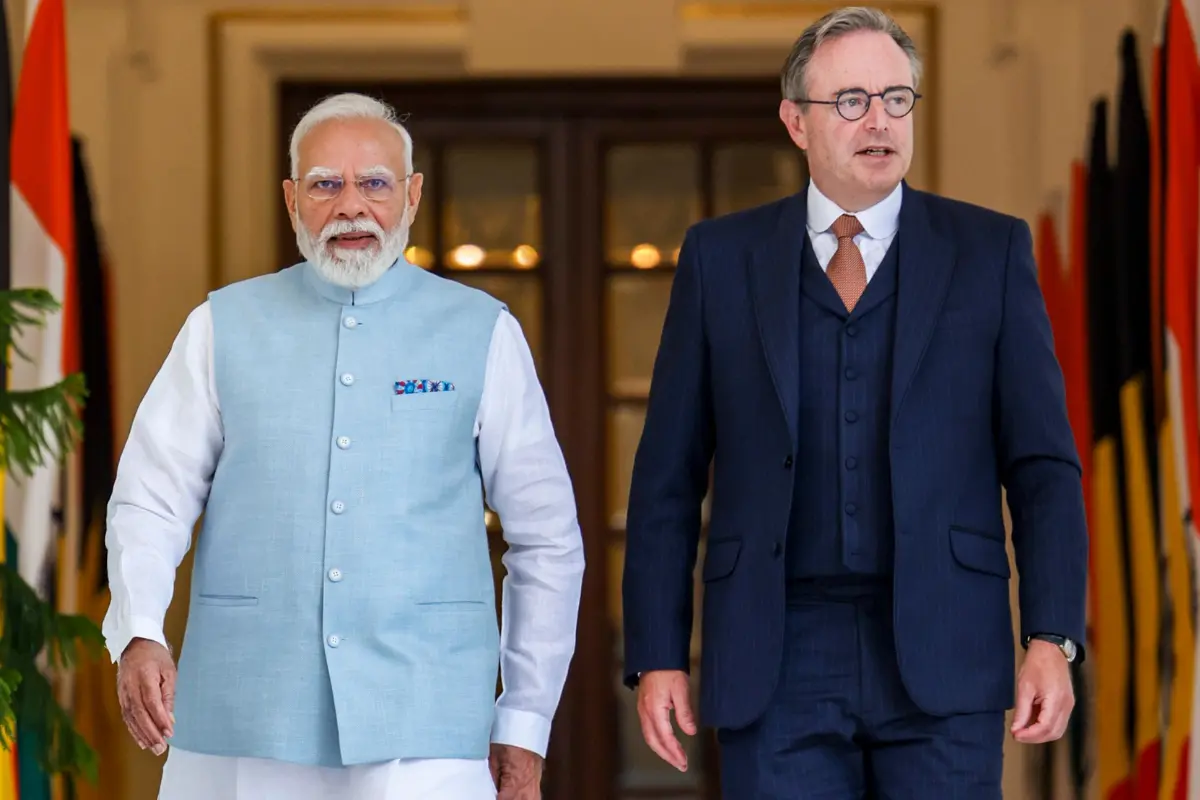
New Delhi: Belgian Prime Minister Bart De Wever has said Europe is undergoing a “rude awakening” over the risks of excessive economic dependence, acknowledging that India had warned European countries about the dangers much earlier.
Speaking at a Confederation of Indian Industry (CII) event during his two-day visit to India, De Wever said Europe had allowed foreign overcapacity to enter its markets at low prices, weakening its industrial base while creating dependencies that could later be used as economic or political leverage.
“The country that has profited most from that practice does not lie very far from here. It’s a neighbour you all know,” De Wever said in a veiled reference to China.
He said India had recognised the risks before Europe did.
“India saw this earlier than we did and they warned us and we didn’t listen,” he said.
‘Your Prime Minister warned Europe’
De Wever also credited Prime Minister Narendra Modi with raising concerns about such dependencies well before they became a major issue for European policymakers.
“Your Prime Minister warned Europe about this a long time ago already, but he was ignored. He wasn’t listened to. We are listening now,” he said.
The Belgian leader said Europe was now drawing lessons from its experience, even if the realisation had come later than it should have.
He linked the issue to a broader geopolitical shift in which economic relationships are increasingly being used as instruments of pressure.
“We do not like dependencies becoming weaponized against us,” De Wever said.
Also read | India-Belgium ties scale new heights; 10 key deals signed around ‘3Ts’
India Tops Belgium’s Partnership List
Against this backdrop, De Wever positioned India as a key partner for Europe.
“India is on that list. It’s number one,” he said when discussing the major economies with which Europe could build a relationship based on trust, respect and cooperation.
He said Belgium wanted to take its relationship with India to a new level across economic, political and strategic areas.
De Wever described India as a major democratic power with a large talent pool and significant opportunities for cooperation in trade, investment, technology and supply-chain resilience.
He argued that India and Europe could build a more diversified economic relationship while protecting their respective national interests.
Europe Seeks More Resilient Supply Chains
De Wever's comments come as European countries seek to reduce vulnerabilities created by concentrated supply chains and excessive dependence on individual countries.
He said openness to global trade should not mean ignoring strategic dependencies, adding that defending national interests was essential to maintaining the trust needed for free trade.
The Belgian prime minister also said India and Europe, despite differences in their histories, institutions and strategic outlooks, shared important interests.
“India is a major democratic power, a leader in innovation, a voice that cannot be missing when a free and prosperous world is shaped,” he said.
He said Europe, for its part, could offer its single market, industrial and technological capabilities and commitment to predictable, rules-based cooperation.
Belgium Signals Deeper Defence Cooperation
The India-Belgium relationship is also expanding beyond trade and economic ties.
The two countries are moving towards closer cooperation in the defence sector, with Indian and Belgian defence companies firming up 10 agreements on the sidelines of Prime Minister Modi's talks with De Wever.
The arrangements are expected to support greater defence-industrial cooperation, including possibilities for joint production of military equipment in India using Belgian technology.
The two sides also discussed expanding military exchanges and training, along with greater intelligence and security cooperation.
Modi has described defence and security as a key pillar of the broader India-Belgium partnership.
Also read | Modi congratulates Meloni on becoming Italy’s longest-serving PM
A Strategic Partnership in a Fragmenting World
De Wever's remarks underline a wider effort by Europe to strengthen relationships with countries that it sees as reliable long-term partners amid growing geopolitical and economic uncertainty.
He said the world was increasingly pushing countries to choose sides, but argued that India and Europe could instead build a partnership based on shared interests.
“In a world where too many countries are being asked to choose a camp, India and Europe choose partnership decisively,” he said.
For India, the Belgian prime minister's remarks offer a notable acknowledgement of New Delhi's long-standing concerns over economic dependence and supply-chain vulnerabilities.
For Europe, they reflect a growing recognition that economic security and strategic autonomy increasingly depend on diversifying trade, protecting industrial capacity and building trusted partnerships.