Pakistan’s Kirana Hill hit during Operation Sindoor? India’s ex-defence chief reveals
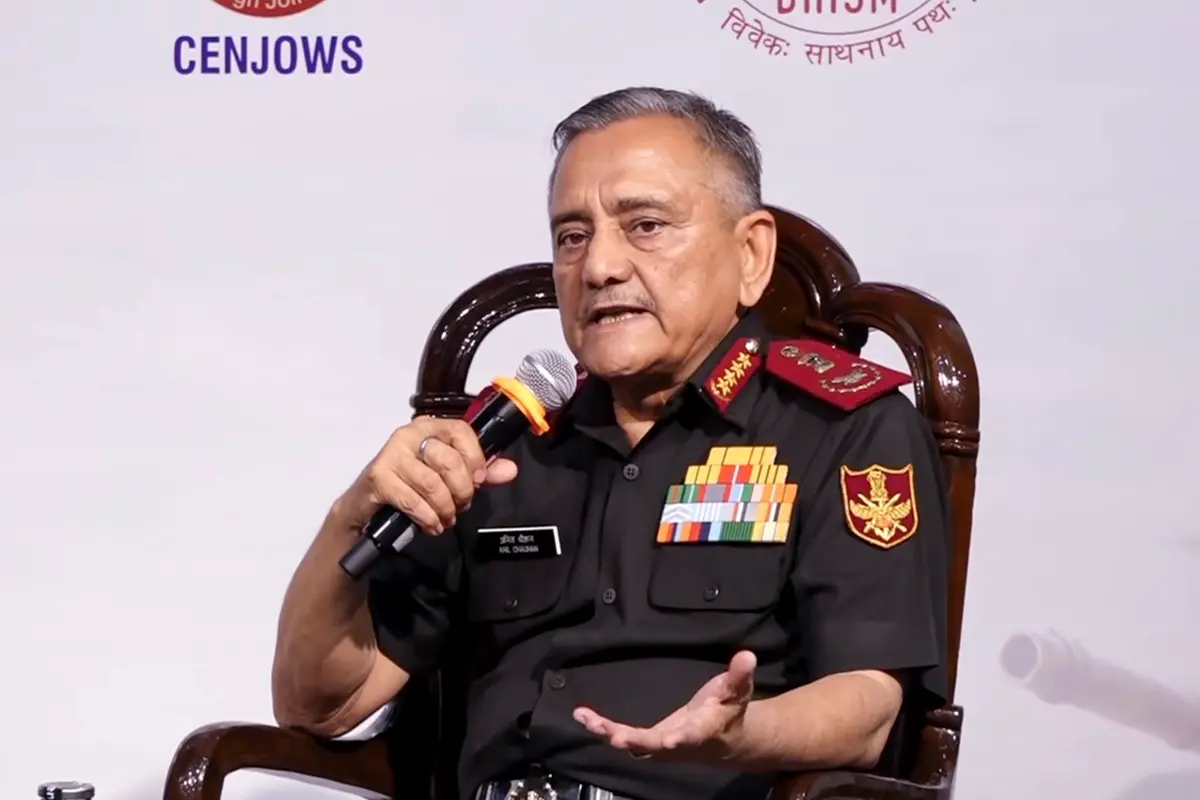
India’s former defence chief, General Anil Chauhan, revealed on Tuesday that Indian weapons unintentionally struck Pakistan’s Kirana Hills nuclear site during last year’s Operation Sindoor. Speaking at the Vivekananda International Foundation, he disclosed the strike left Pakistan "blind" and hunting for non-existent satellite evidence. The operation, launched on May 7, 2025, targeted terror infrastructure in Pakistan and PoJK.
A strike gone off course
General Chauhan explained that Indian loitering munitions, deployed to hunt for radars around Sargodha, ran out of fuel and unintentionally hit the nearby nuclear-associated hills.
"At occasions, it's been asked whether Kirana Hills were hit or not, which is where their (Pakistan's) nuclear facilities are... Before those strikes, we had sent in a lot of loitering missions at Sargodha and Kirana Hills is about 10 kilometers north of Sargodha," General Chauhan said.
With a lifetime of two hours, if the weapon fails to find a target, it "comes down and hits somewhere. It must have come and hit one of those hills," he added, noting that Pakistani media reported smoke rising from the hills.
#WATCH | Delhi | Former CDS Anil Chauhan says, "At occasions, it's been asked whether Kirana Hills were hit or not, which is where their (Pakistan's) nuclear facilities are... Before those strikes, we had sent in a lot of loitering missions at Sargodha and Kirana Hills is about… https://t.co/vHScZAapJS pic.twitter.com/M6rqsSkW7U
— ANI (@ANI) August 25, 2026
Islamabad left in the dark
The strike caused severe confusion, leaving Pakistan "blind" regarding the results of their own retaliatory attacks. Islamabad scrambled to purchase commercial satellite images from US and Chinese companies to find proof.
General Chauhan remarked that Pakistan was left "blind and you know they did not know the results of their strikes". From May 10 to May 12, "they were trying their best to obtain images so that they have some evidence of some target with their head".
Failing to secure evidence, "they tried other Chinese satellites also. But since they are not able to hit any target, they got no evidence," he said. This created "doubt in their mind after this also that you know people have maybe hidden this fact from them because of Indian insistence, so every kind of a theory there".
Inside the command room
Tension escalated so rapidly that when Pakistan requested talks at 10 AM, the Indian Air Force Chief sought permission to strike Sargodha.
"The Air Chief asked me whether he should strike Sargodha, I said, Go ahead. I said, could you please identify two more targets, so one of the targets he identified was Skardu," Chauhan recalled.
However, bad weather intervened: "We gave a yes, but after some time, the weather was bad over it and they had to change over to Bholari".
Chauhan stressed that India must constantly adapt to preserve surprise. Unlike land surgical strikes after Uri or massive air engagements after Pulwama, Operation Sindoor exploited lower airspace to keep the conflict threshold low.
"Sindoor was entirely different from what we had done. So, you have to have a new strategy always. You can't repeat an old strategy because the chances of success of the strategy you will not have," he noted.
Politics, risks, and ready troops
Reflecting on a democracy's civil-military relationship, Chauhan stated that "politics and war are inseparable" and "a nation's political interests are paramount". He explained that the "armed forces are one of the instruments acting to protect it, just one of the instruments".
He acknowledged that no army is ever flawless. "No military, I would say, is 100 per cent prepared, 100 per cent of the time," General Chauhan stated, adding that "there have always been deficiencies in all armed forces".
Yet, during Operation Sindoor, the service chiefs chose not to let these shortcomings delay action. "This particular operation stands out in a particular manner, in which all three services and myself, right from day 1, didn't bring any of this kind of deficiencies," Chauhan stated. Instead, they stood united, telling the government, "whatever decision they take, we should be able to carry out the operation for 1, 2 or several days".