Pakistan refuses Abraham Accords; US Senator calls its Iran mediator role ‘more than problematic’
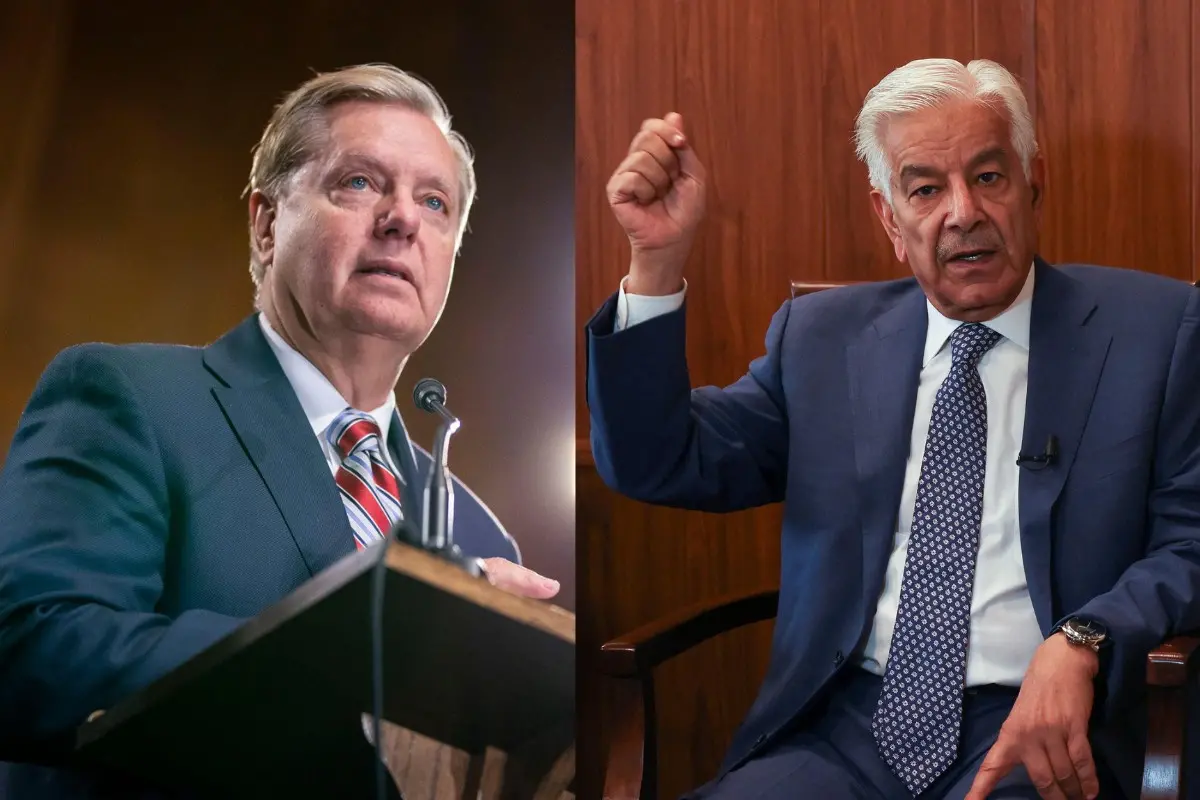
Washington DC: Republican Senator Lindsey Graham has once again questioned Pakistan’s neutrality as a potential mediator in talks involving the United States and Iran, pointing to Islamabad’s long-standing hostility towards Israel and calling its role “problematic”.
The remarks came after Pakistan’s Defence Minister Khawaja Muhammad Asif rejected US President Donald Trump’s call for Islamabad to join the Abraham Accords, saying Pakistan would not support any agreement that contradicted the country’s “fundamental ideologies”.
Graham raises concerns over Pakistan’s ties and rhetoric
In a post on X, Graham alleged that Pakistani air bases were hosting Iranian military aircraft and said statements made by senior Pakistani officials had intensified doubts over Islamabad’s ability to act as an impartial mediator.
“It has been apparent to me for quite a while that Pakistan as a mediator is more than problematic. Their animosity towards Israel is long-standing. It is undeniable that Iranian military aircraft are being housed on Pakistani air bases, and past rhetoric from the highest Pakistani officials against Israel is disturbing,” Graham wrote.
The US Senator also referred to comments made by Pakistan’s defence minister regarding the Abraham Accords, saying the remarks reflected continuing hostility towards Israel.
“As to the defence minister’s comments about the Abraham Accords, saying that Pakistan would never join because they don't trust Israel: The clip may be a year old, but I fear the sentiment is fresh,” Graham said.
“In that regard, it is imperative that Pakistan give an answer now to President Trump’s call to join the Abraham Accords,” he added.
Pakistan rejects joining Abraham Accords
Speaking in an interview with Pakistani broadcaster Samaa TV, Asif dismissed the possibility of Pakistan signing the Abraham Accords amid reported diplomatic pressure and signalling from Trump.
“Personally, I don't think we should join any such accord that clashes with our fundamental ideologies,” Asif said during the interview.
Questioning the credibility of engagement with Israel, the Pakistani defence minister added, “How will you sit down with those people whose word cannot be trusted even for a single day?”
He reiterated Islamabad’s long-standing position on recognising Israel, saying, “We have a very clear stance that this is not acceptable to us.”
Asif also highlighted Pakistan’s passport policy concerning Israel, underlining the country’s refusal to formally recognise the Jewish state.
“And secondly, on our passports, we are the only country whose passports don't even include Israel's name,” he said.
Trump pushes wider regional deal
The latest exchange comes amid renewed efforts by Trump to encourage several Muslim-majority and Arab nations to join the Abraham Accords as part of a broader regional framework linked to a possible agreement with Iran.
Also Read: Trump's Abraham ultimatum puts Pakistan in painful bind
In a lengthy post on Truth Social, Trump said negotiations with Iran were “proceeding nicely” and described the potential arrangement as a possible “historic event” for the Middle East.
The US President urged countries including Saudi Arabia, Qatar, Pakistan, Turkiye, Egypt, Jordan and Bahrain to join the accords simultaneously.
“Negotiations with the Islamic Republic of Iran are proceeding nicely! It will only be a Great Deal for all or no Deal at all,” Trump wrote.
He also warned that failure to reach an agreement could mean a return to conflict, saying it would be “back to the battlefront and shooting, but bigger and stronger than ever before”.
Trump further argued that Saudi Arabia and Qatar should immediately join the accords after any agreement with Iran is finalised, while encouraging other regional countries to follow suit.
What are the Abraham Accords?
The Abraham Accords are a series of agreements brokered by the United States in 2020 that led to the normalisation of diplomatic, economic and security relations between Israel and several Arab nations.
With agency inputs