Who was Mario Vargas Llosa? Nobel-winning author and Peruvian literary legend dies at 89
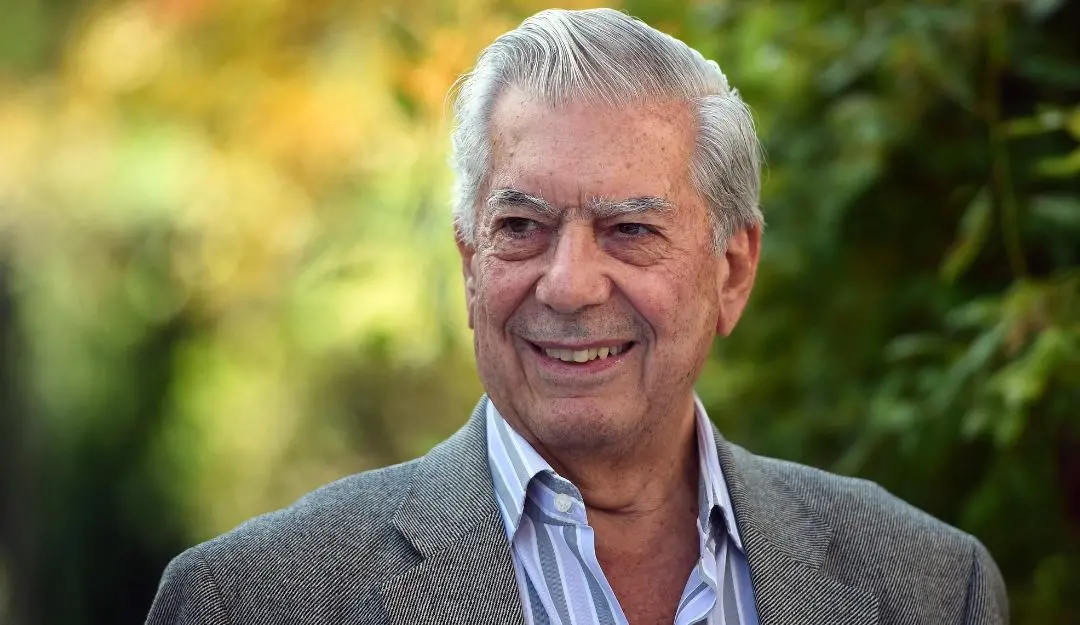
Lima, Peru: Mario Vargas Llosa, the towering Peruvian novelist, essayist and political figure whose prolific career spanned over six decades, has died at the age of 89, his family confirmed on Sunday.
“It is with deep sorrow that we announce that our father, Mario Vargas Llosa, passed away peacefully in Lima today, surrounded by his family,” read a statement shared by his son Álvaro on X. The message, signed by his children Álvaro, Gonzalo and Morgana, added that there would be no public ceremony and that his remains would be cremated.
“His departure will sadden his relatives, his friends and his readers around the world, but we hope that they will find comfort, as we do, in the fact that he enjoyed a long, adventurous and fruitful life, and leaves behind him a body of work that will outlive him,” the family wrote.
Vargas Llosa, whose literary influence reshaped Latin American literature, won the Nobel Prize in Literature in 2010, recognised “for his cartography of structures of power and his trenchant images of the individual's resistance, revolt, and defeat.”
His best-known novels include ‘The Time of the Hero’ (La Ciudad y los Perros), ‘Conversation in the Cathedral’ (Conversación en la Catedral), ‘The Feast of the Goat,’ ‘The Green House,’ and ‘The Dream of the Celt.’ His storytelling blended complex narrative structures with sharp political commentary, often exploring themes of authoritarianism, corruption and identity. Many of his works were also adapted into films, such as ‘Captain Pantoja and the Special Service’ and ‘Aunt Julia and the Scriptwriter.’
From journalist to literary force
Born Jorge Mario Pedro Vargas Llosa on 28 March 1936 in Arequipa, Peru, he was raised by his mother and maternal grandparents in Bolivia after his parents separated before his birth. His grandfather served as the Peruvian consul in Cochabamba. Vargas Llosa described his childhood as “somewhat traumatic,” surrounded by indulgence until the age of 10, when he learned his father — whom he had believed to be dead — was still alive. After his parents reconciled, the family settled in Lima.
His father, a strict disciplinarian, viewed literature as a path to ruin and tried to steer him away from the arts. When a naval academy refused to accept him due to his age, he was sent instead to the Leoncio Prado Military Academy — an experience that deeply influenced his breakout novel ‘The Time of the Hero,’ which was famously condemned by the Peruvian military, with generals publicly burning copies and labelling him a communist.
Vargas Llosa started writing early, and by 15 he was working part-time as a crime reporter. He went on to study literature and law at San Marcos University in Lima, pursuing the former out of passion and the latter to placate his family. In 1958, he won a scholarship to pursue doctoral studies in Madrid, eventually settling for years in Europe, including Paris and London.
His literary debut came in 1959 with the short story collection ‘The Cubs and Other Stories’ (Los Jefes), but it was the publication of ‘The Time of the Hero’ in 1963 that established him as a vital new voice. Alongside Gabriel García Márquez and Carlos Fuentes, he became a central figure in the Latin American literary "Boom" of the 1960s and ’70s.
He also held various jobs including teaching at the Berlitz language school in Paris, editing for AFP, and revising names on tombstones. These experiences enriched his understanding of people and politics — a theme deeply embedded in his novels.
Shifting politics and public life
Though once a supporter of the Cuban Revolution, Vargas Llosa later became an outspoken critic of Fidel Castro, distancing himself from socialist ideals by the 1980s. Over time, he transformed into a staunch advocate of liberal democracy and market economies, frequently criticising authoritarian regimes in Latin America.
In 1990, he entered the political arena, running for president of Peru during a time of deep economic crisis and guerrilla warfare. Though he was defeated by Alberto Fujimori, a political outsider at the time, many speculated that a literary loss had been narrowly avoided. “Peru’s uncertain gain would be literature’s loss. Literature is eternity, politics mere history,” remarked his friend and Cuban writer Guillermo Cabrera Infante.
Vargas Llosa's later works delved into historical fiction, including ‘The Way to Paradise,’ a dual biography of artist Paul Gauguin and his grandmother Flora Tristan, and ‘The Dream of the Celt,’ based on the life of Irish nationalist Roger Casement. His final novel, ‘Harsh Times’ (Tiempos Recios), published in 2019, chronicled the CIA-backed Guatemalan coup of 1954.
He contributed regularly to newspapers, notably through his long-running political column ‘Piedra de Toque’ ("Touchstones"), and became a member of the Royal Spanish Academy in 1994. In 2021, he was elected to the prestigious Académie française.
His accolades include the Rómulo Gallegos Prize (1967), the Prince of Asturias Award (1986), the Miguel de Cervantes Prize (1994), the Jerusalem Prize (1995), the Carlos Fuentes International Prize (2012), and the Pablo Neruda Order of Artistic and Cultural Merit (2018).
Personal life and controversies
Vargas Llosa’s personal life often made headlines. He married Julia Urquidi, 10 years his senior and the sister-in-law of his uncle, at age 19. Their nine-year marriage inspired his semi-autobiographical novel ‘Aunt Julia and the Scriptwriter.’ In 1965, he married his cousin Patricia Llosa, with whom he had three children. They remained together for five decades before parting ways in 2015. He later entered into a high-profile relationship with Isabel Preysler, the ex-wife of Julio Iglesias and mother of pop star Enrique Iglesias. The couple separated in 2022.
In 1976, he made international gossip columns after punching Gabriel García Márquez in public — a fallout that ended their friendship. The exact cause of the clash was never publicly revealed, and both writers remained silent about the matter.
Despite spending long periods abroad, he once described Peru as an “incurable illness,” and his literary compass remained tied to its social and political fabric.
Mario Vargas Llosa is survived by his three children — Álvaro, Gonzalo and Morgana — and leaves behind a literary legacy that spanned novels, essays, journalism and theatre, etched deeply into the cultural and political landscapes of the Spanish-speaking world.
(With inputs from AP)