Nobel Prize in Physics 2026: Francis Halzen wins for IceCube contributions
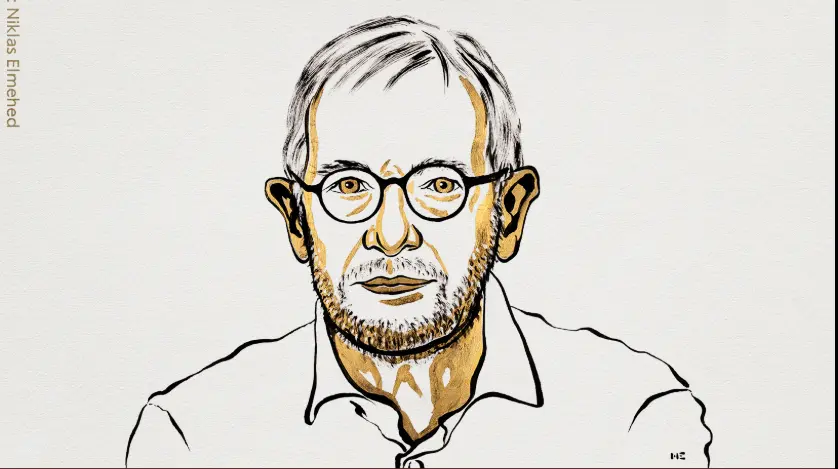
Stockholm: The 2026 Nobel Prize in Physics has been awarded to Belgium-born physicist Francis Halzen for his “decisive contributions to the IceCube Neutrino Observatory and the discovery of high-energy neutrinos of astrophysical origin”, the Royal Swedish Academy of Sciences announced on Tuesday.
Halzen’s work was central to the IceCube Neutrino Observatory, which uses a cubic kilometre of ice at the South Pole equipped with light sensors to track rare neutrino interactions from the distant cosmos.
Halzen’s IceCube breakthrough
Halzen first presented his vision for capturing neutrinos at the South Pole in 1988. His idea later gained support from other researchers, with preliminary testing of sensors in the ice beginning a few years afterward.
IceCube was completed in 2011. Researchers soon detected the first high-energy neutrinos and later published the discovery of neutrinos originating from far beyond our solar system.
High-energy cosmic neutrinos are extremely rare, making the observatory’s enormous volume of ice crucial for detecting enough collisions.
Why neutrinos matter
Scientists have long known that the cosmos contains natural particle accelerators capable of producing particles with energies up to a million times higher than those achievable in laboratories on Earth.
Neutrinos produced in these extreme environments can reach Earth without changing direction or losing energy. Their detection therefore gives scientists information about the violent settings in which they are created and opens a new way to study the universe.
IceCube continuously collects neutrino interactions from the distant cosmos and could help researchers identify previously unknown cosmic phenomena.
Nobel announcements continue
The 2026 Nobel announcements began Monday with the Nobel Prize in medicine, awarded to three scientists whose work led to a tool that uses light to help unravel how the brain works.
The chemistry prize will be announced Wednesday and the literature prize on Thursday. The Nobel Peace Prize will be awarded Friday, followed by the Nobel Memorial Prize in Economic Sciences on Monday.
Last year’s Physics Nobel
Last year, three scientists won the Nobel Prize in Physics for research into quantum tunnelling, work that enabled ultra-sensitive measurements used by MRI machines and laid the groundwork for better cellphones and faster computers.
Nobel prize money
The prize money this year is 12 million Swedish kronor, about $1.2 million, whether the prize is awarded to an individual, a small group of laureates or an organisation.