Venezuelan VP says location of Maduro, wife, is unknown; demands ‘proof of life’
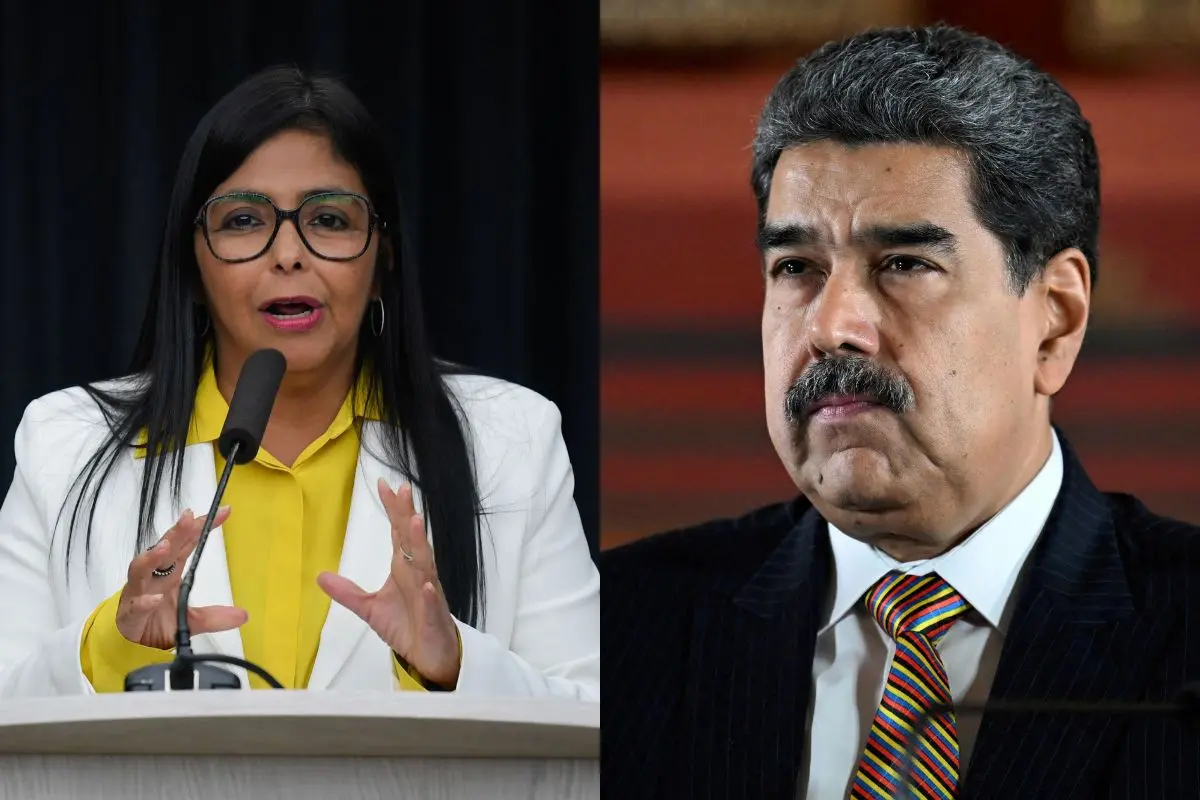
Venezuela’s political crisis deepened on Saturday after Vice President Delcy Rodriguez said the government has no information on the whereabouts of President Nicolás Maduro or First Lady Cilia Flores, following a wave of explosions and what the United States described as a military operation.
In an audio message broadcast on state television, Rodriguez declared: “We do not know the whereabouts of President Nicolás Maduro and First Lady Cilia Flores. We demand proof of life.”
Her remarks came hours after a series of blasts were reported across Caracas and other parts of the country, striking both civilian and military locations. A person close to the Venezuelan government said Rodriguez herself was safe.
US says it captured Maduro in overnight operation
The United States launched what it called a “large-scale strike” on Venezuela early Saturday, with US President Donald Trump announcing on social media that Maduro and his wife had been captured and flown out of the country.
In a post on Truth Social, Trump wrote that Maduro “has been, along with his wife, captured and flown out of the Country. This operation was done in conjunction with U.S. Law Enforcement. Details to follow.” He said the strike had been carried out “successfully” and scheduled a press conference for later in the day.
The explosions – at least seven reported in the early hours – sent residents fleeing into the streets while others posted videos on social media documenting low-flying aircraft and the sound of blasts. It was not immediately clear whether there were casualties.
The strike lasted less than half an hour but followed months of escalating US pressure on Maduro, who faces narco-terrorism charges in the United States.
Escalation after months of tension
The operation came on the heels of a series of US military actions targeting drug routes, including a CIA-linked drone strike last week on a docking site believed to be used by Venezuelan drug organisations – reportedly the first such action on Venezuelan soil.
Since early September, US forces have carried out strikes on boats in the Caribbean Sea and eastern Pacific. As of Friday, 35 vessels had been hit and at least 115 people killed, according to figures released by Trump’s administration. A major US naval buildup preceded the strike, with the arrival of an advanced aircraft carrier in November.
Trump has repeatedly argued that such actions are part of an “armed conflict” with drug cartels and a necessary move to curb narcotics trafficking. Maduro, in a recorded interview aired Thursday, accused Washington of seeking regime change and access to Venezuela’s oil reserves.
The US Federal Aviation Administration also issued a ban on American commercial flights over Venezuela due to “ongoing military activity.”
Regional fallout and international responses
Venezuela’s government denounced the explosions as an “imperialist attack” and urged citizens to take to the streets in defiance. With Maduro’s location unknown, it remains unclear who is currently in command of the country.
Neighbouring Colombia reacted swiftly. President Gustavo Petro said he ordered troops to the Venezuelan border in response to US “attacks,” describing Washington’s actions as an “assault on the sovereignty” of Latin America and warning of an impending humanitarian crisis.
Iran – a long-time ally of Caracas – also condemned what it called an American military assault. The Iranian foreign ministry said it “strongly condemns the American military attack on Venezuela and the flagrant violation of the national sovereignty and territorial integrity of the country”. Iranian state television aired images of the explosions in Caracas.
(With inputs from agencies)