New Gaza plan revealed: Trump’s son-in-law Kushner outlines $25B reconstruction blueprint
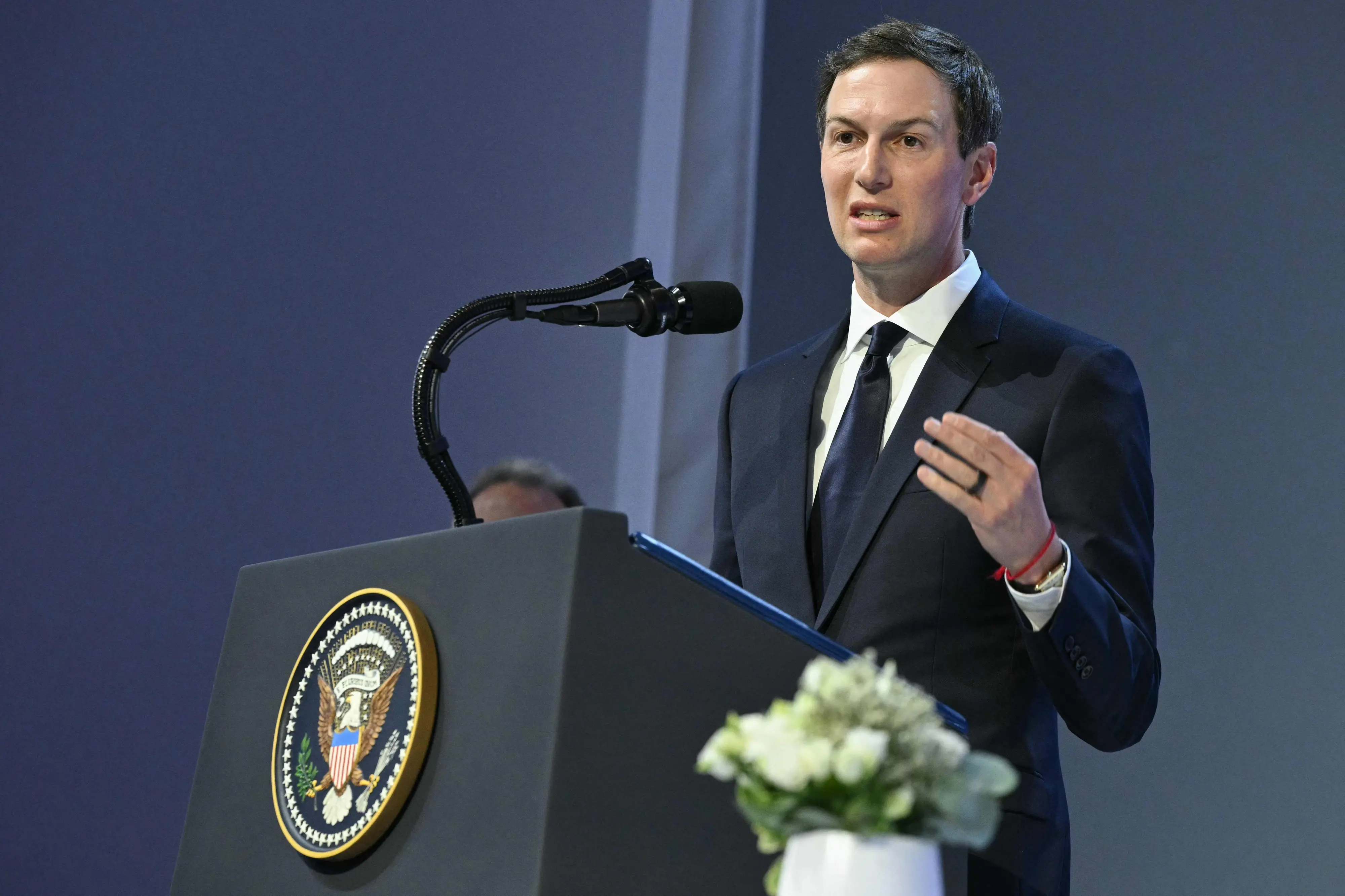
Davos: At the World Economic Forum in Davos, Jared Kushner laid out a comprehensive plan for Gaza’s reconstruction, focusing on security, governance, and economic redevelopment under the newly launched US-backed Board of Peace.
Who is Jared Kushner?
Jared Kushner is an American investor, real estate developer, and political adviser. He is best known for being a senior adviser to former U.S. President Donald Trump, as well as Trump’s son-in-law, having married his daughter Ivanka Trump in 2009.
Phased governance and demilitarisation
Kushner emphasised that the success of Gaza’s reconstruction depends on demilitarisation and the creation of a technocratic administration capable of restoring basic services. A 15-member committee will oversee daily governance, ensuring delivery of public services while operating under the Board of Peace, chaired by President Trump. Full disarmament of Hamas remains a central and contentious requirement.
Economic redevelopment: “New Gaza”
The initiative introduces a multi-phase master plan to transform Gaza into an economic hub by 2035. Targets include raising Gaza’s GDP above $10 billion and increasing average household income to over $13,000. The plan prioritises market-based growth over aid dependence, creating employment and restoring dignity for residents. Infrastructure projects include workforce housing, industrial zones, data centres, a new port, airport, rail links, and ring roads connecting urban areas. Coastal areas are earmarked for tourism and mixed-use development with 180 towers.
Financial and human resource support
The Board of Peace estimates over $25 billion will be needed to modernise utilities and public services. Of this, $1.5 billion is dedicated to vocational training and job creation, aiming for more than 500,000 jobs in construction, agriculture, manufacturing, and digital sectors. An additional $3 billion will support commercial zones, business districts, and microgrants for local entrepreneurs.
Humanitarian groundwork
Kushner highlighted ongoing humanitarian efforts, noting that more than 55,000 trucks and 1.4 million pallets of aid have been delivered, meeting 100% of basic food needs during the conflict. The first 100 days of the plan focus on sustaining humanitarian relief while laying the foundation for long-term recovery.
Progress, challenges, and regional cooperation
Key crossing points, such as Rafah, are expected to reopen soon to facilitate civilian and goods movement. Arab partners and the Palestinian Authority will support the technocratic committee. However, Hamas has not formally committed to demilitarisation, and political and security disagreements remain a major hurdle.
Why it matters
If successfully implemented, the plan could shift Gaza from a conflict zone dependent on foreign aid to a self-sustaining society with stable governance, economic growth, and modern infrastructure. Its success will depend on local cooperation, international backing, and progress on security and political agreements.