Inside Netanyahu’s secret Abu Dhabi meeting: Iran, Hamas warning and unanswered questions
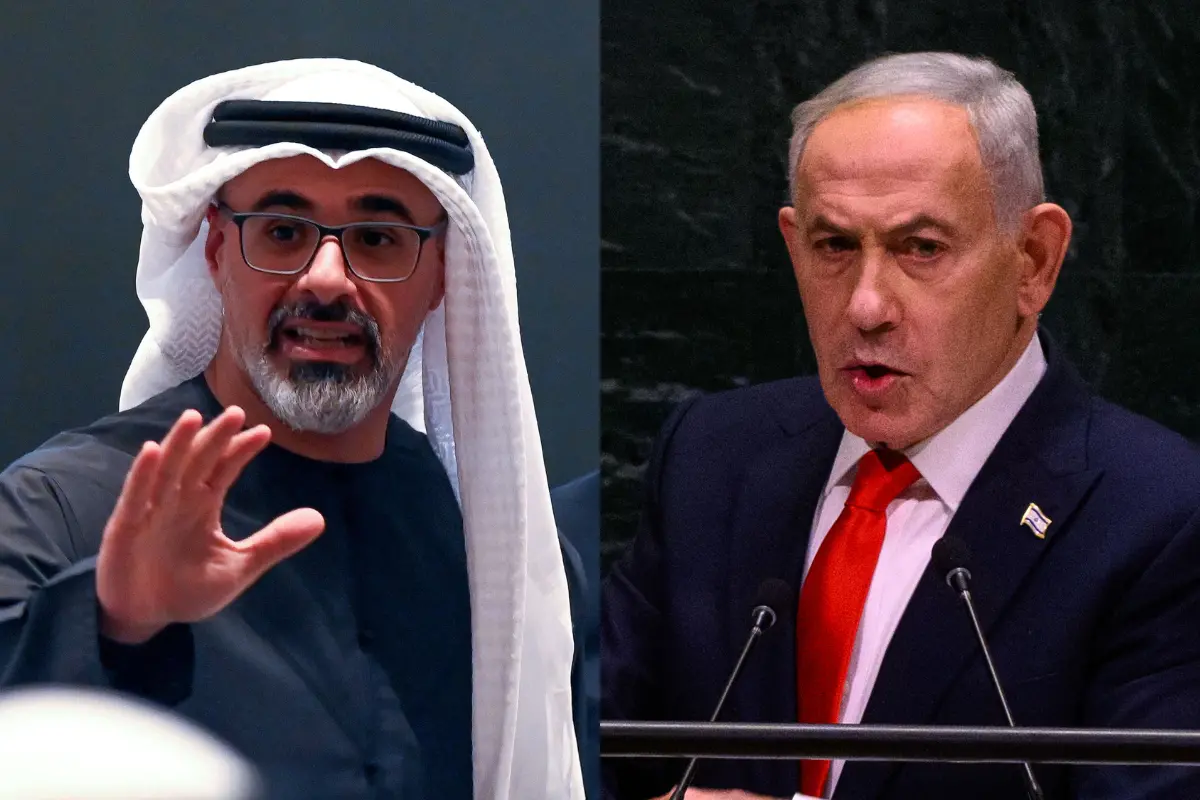
Israeli Prime Minister Benjamin Netanyahu secretly travelled to the United Arab Emirates on Sunday and met President Sheikh Mohamed bin Zayed Al Nahyan in Abu Dhabi. The visit was confirmed publicly only after reports of the trip emerged.
According to the UAE’s state news agency WAM, the two leaders discussed bilateral relations and ways to strengthen ties. Netanyahu’s office said the meeting was held at Sheikh Mohamed’s invitation and focused on strengthening relations and regional developments. Israeli officials cited by Reuters said the talks also focused on Iran.
The meeting has attracted particular attention because of a separate, disputed report concerning the October 7, 2023 Hamas attack on Israel.
What is the October 7 warning controversy?
The controversy stems from a September report by Haaretz, based on reporting for a book by journalists Shlomi Eldar and Ruth Yuval. The report alleged that Sheikh Mohamed spoke to Netanyahu around 10 days before the October 7 attack and warned him that Hamas was preparing a major operation.
According to the report, the conversation lasted about 45 minutes and involved concerns that an attack could destabilise the region. Netanyahu’s office has rejected the allegation, saying no warning was given to the prime minister by the UAE before October 7.
The UAE has not publicly confirmed that Sheikh Mohamed personally issued such a warning.
Why has the UAE meeting drawn attention?
The timing of Netanyahu’s visit has brought the disputed warning allegation back into focus. The Associated Press reported, citing people briefed on the trip, that Netanyahu asked Sheikh Mohamed to publicly deny the Haaretz report during their meeting. Netanyahu’s office has disputed that account.
There are also conflicting reports about the length and precise focus of the meeting. Reuters cited Israeli officials who said the discussions lasted about six hours and centred on Iran, while AP reported that sources described an approximately one-hour meeting involving the warning controversy.
Neither the UAE's official account nor Netanyahu’s office publicly referred to the alleged October 7 warning in their descriptions of the meeting.
What happened before October 7?
The UAE report is part of a wider debate in Israel over warnings received before the Hamas attack.
The Atlantic has separately reported that Egypt’s intelligence chief, Abbas Kamel, travelled to Israel in September 2023 and warned Israeli officials that Gaza was approaching a dangerous escalation. That account has also been disputed in parts by Netanyahu’s office and former Israeli national security adviser Tzachi Hanegbi.
The October 7 attack killed about 1,200 people in Israel and resulted in 251 people being taken hostage, according to figures cited in reporting on the attack. The subsequent war has generated continuing scrutiny of Israel’s intelligence and security failures before the assault.
What does the UAE say?
The UAE has not publicly endorsed the specific allegation that Sheikh Mohamed personally warned Netanyahu before October 7.
Instead, Abu Dhabi has emphasised its continuing diplomatic relationship with Israel. The two countries established formal diplomatic relations in 2020 under the US-brokered Abraham Accords.
The latest meeting was officially described by the UAE as a discussion on bilateral relations. Netanyahu’s office also said regional challenges were discussed, while Israeli officials told Reuters that Iran was a major subject.
Why Iran may have been important
The meeting also comes amid heightened regional tensions involving Iran. Reuters reported that Israeli officials described Iran as a central subject of the discussions.
That makes the meeting significant beyond the October 7 controversy. Israel and the UAE have maintained diplomatic and security contacts since normalising relations in 2020, even as regional conflicts have placed their relationship under pressure.
The exact balance between bilateral relations, Iran-related security concerns and the disputed warning allegation remains unclear because the two sides have released only limited details of the private discussions.
The Abu Dhabi meeting has two distinct dimensions. The first is the current Israel-UAE relationship, including regional security and Iran. The second is the disputed question of what warnings Israeli leaders received before October 7, 2023, and how those warnings were handled.
The alleged UAE warning remains an allegation reported by Haaretz and other media, rather than an established fact accepted by all parties. Netanyahu has denied receiving such a warning, while the UAE has not publicly confirmed the specific claim.
The secrecy surrounding the latest visit, combined with conflicting accounts of its duration and agenda, has therefore intensified interest in the meeting. Official statements from Abu Dhabi and Jerusalem have focused on bilateral ties and regional challenges, while separate reports have linked the meeting to the controversy over the alleged pre-October 7 warning.