Silva, host of NatGeo Brain Games, says US legality debate ignores Venezuela’s 25‑year ‘kidnap’ saga
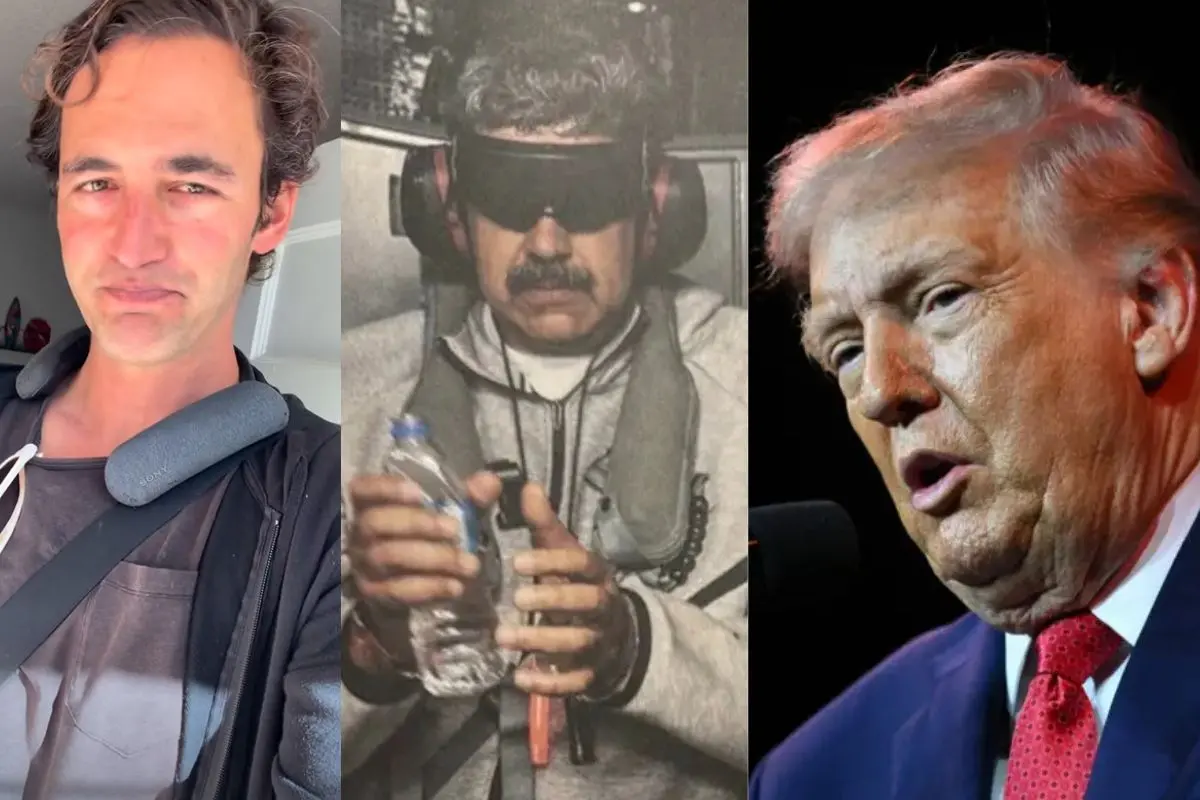
Venezuela is in mourning as the country observes seven days of national grief, following US action that has sparked intense global debate. Amid the unfolding crisis, Venezuelan-American thinker and television host Jason Silva has shared a personal and political perspective on the turmoil shaking his homeland.
Raised in Venezuela and relocating to the United States at 18, Silva is best known internationally as the Emmy-nominated host of National Geographic’s Brain Games and the creator of the acclaimed web series Shots of Awe. A filmmaker, futurist, and public speaker, he blends philosophy, psychology, and current affairs, offering reflections that are both emotionally charged and intellectually probing. His insights into Venezuela’s current moment carry the weight of lived experience and global perspective.
In a Facebook video shared on Tuesday, Silva spoke on the decades-long trauma inflicted by Maduro’s rule, the human cost of political repression, and the moral complexities revealed by international intervention. He framed the crisis not only as a political upheaval but as a profound collective psychological moment for Venezuelans—a reckoning that reaches far beyond headlines.
Silva described the hardships endured by Venezuelans under Nicolás Maduro’s government. He said Maduro’s leadership “has long been accompanied by credible accusations of crimes against humanity, torture, arbitrary detention, forced disappearances, and the violent suppression of descent. Truly the stuff of nightmares.”
He highlighted the human cost of decades of political instability, economic collapse, and civil liberty suppression, noting, “I have close friends who personally were victims of abuse at the hands of authority… and subsequently were tortured.” Silva emphasised that a quarter century of fear, scarcity, surveillance, and humiliation has left deep psychological scars, leaving the Venezuelan people “collectively traumatized.”
Global debate often misses the Venezuelan reality
Silva criticised international responses that focus narrowly on the legality of US intervention while neglecting the lived experiences of Venezuelans. He observed that public outrage abroad can appear “abstract, ideological, performative,” with voices defending sovereignty but remaining silent on torture and systemic oppression.
He stressed that 25 years under Maduro had “effectively kidnapped” the nation by dismantling judicial independence, freedom of expression, and electoral legitimacy. “This is not solidarity. It is projection. It is the moral luxury of distance masquerading as principle,” Silva said.
With Maduro removed, he argued that Venezuela now stands on “newly exposed ground… terrifying, fragile, but also generative,” offering the chance for societal and psychological renewal.
Confronting trauma to build a future
Silva highlighted that Venezuela’s recovery will require confronting and integrating collective trauma. “The unresolved cannot be erased by decree alone; it must be felt, named, metabolized, and integrated,” he said.
He emphasised the importance of addressing mistrust, displacement, institutional decay, and the intergenerational cost of life under repression, framing the moment as both an inner and outer revolution. Drawing on Carl Jung, Silva noted that the current political upheaval reflects “the outward eruption of an inner reality that can no longer be denied,” calling for Venezuelans to confront their history, trauma, and unrealised aspirations to enable authentic renewal.