Mystery surrounds $1.2 billion Army contract to build huge detention tent camp in Texas desert
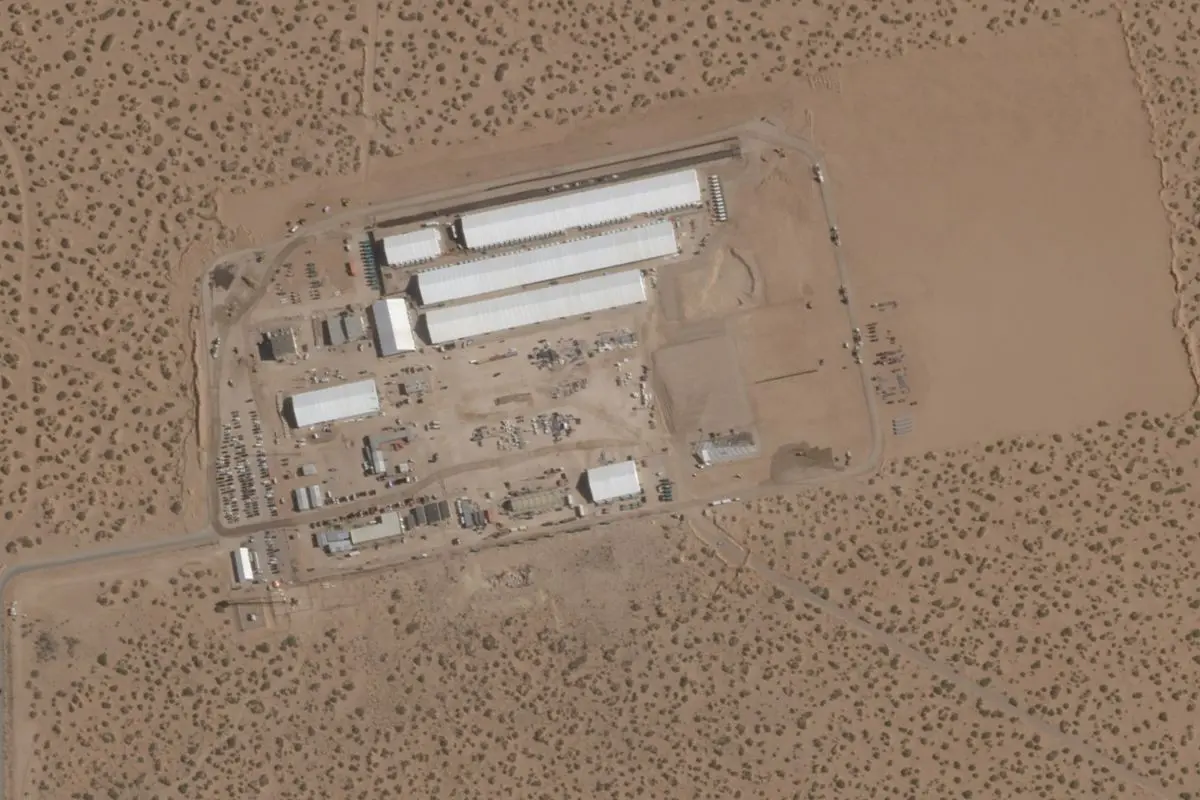
Washington: A small Virginia-based company with no public record of operating correctional facilities has been awarded a federal contract worth up to $1.2 billion to build and manage what the Trump administration says will be the nation’s largest immigration detention camp.
Instead of turning to established private prison operators, the Army selected Acquisition Logistics LLC, a modestly sized business that has never handled a contract larger than $16 million. The firm, which lacks a functioning website, is registered to the suburban home of a 77-year-old retired Navy flight officer, Ken A. Wagner, who is listed as president and CEO.
The facility at Fort Bliss in El Paso, Texas, has already begun accepting detainees. Yet the Pentagon has declined to release the contract or explain why Acquisition Logistics was chosen over more experienced competitors, fuelling further scrutiny as at least one rival has filed a protest.
Contract raises questions over transparency
The swift award on July 18 highlights the Trump administration’s urgency in expanding detention capacity as part of its pledge to arrest and deport as many as 10 million undocumented migrants.
Rep. Veronica Escobar, a Democrat whose district includes Fort Bliss, voiced concerns after a recent tour. “It's far too easy for standards to slip,” she said. “Private facilities far too frequently operate with a profit margin in mind as opposed to a governmental facility.”
Joshua Schnell, a lawyer specialising in federal contracting, also questioned the lack of public information. “The lack of transparency about this contract leads to legitimate questions about why the Army would award such a large contract to a company without a website or any other publicly available information demonstrating its ability to perform such a complicated project,” he said.
Wagner has not responded to calls or emails, and no one answered the door at his three-bedroom home listed as the company’s headquarters.
Army declines to release contract
Defence Secretary Pete Hegseth approved Fort Bliss for the new camp, while the Pentagon has indicated more facilities may follow at other military bases. An Army spokesperson declined to comment on the Acquisition Logistics deal, citing ongoing litigation.
The Department of Homeland Security, which oversees US Immigration and Customs Enforcement (ICE), also declined to answer questions.
The 60-acre site, named Camp East Montana after a nearby road, sits in the harsh Chihuahuan Desert where summer temperatures routinely top 100 degrees Fahrenheit. The location is near El Paso International Airport, a hub for deportation flights.
Comparisons to past camps
Satellite imagery shows three large tents, each about 810 feet long, surrounded by several smaller buildings. The design has drawn comparisons to “Alligator Alcatraz,” a $245 million ICE detention centre built in Florida’s Everglades. That facility was plagued by complaints of unsanitary conditions before a federal judge ordered its closure.
Advocates also warn of historical echoes. Setareh Ghandehari of Detention Watch pointed to World War II, when Japanese Americans were held in Army camps, including at Fort Bliss itself.
“Conditions at all detention facilities are inherently awful,” she said. “But when there's less access and oversight, it creates the potential for even more abuse.”
Funding and expansion plans
According to a Defence Department notice, the Army allocated an initial $232 million to build the first 1,000 beds. Construction began within days of the award, though site work had started months earlier, before Congress passed Trump’s sweeping tax and spending package that set aside a record $45 billion for immigration enforcement.
ICE currently detains about 57,000 migrants nationwide, most housed in private prisons operated by Florida-based Geo Group and Tennessee-based CoreCivic. With those facilities nearing capacity, military bases in California, New York and Utah are also being evaluated for temporary camps.
Scope of Acquisition Logistics’ role
A June 9 solicitation made clear the contractor would be responsible not only for building but also operating the facility, including security and medical care. It included a strict secrecy clause, ordering that any calls from members of Congress or the media must be referred to ICE.
The bid process was limited to small firms owned by veterans or minorities, allowing Acquisition Logistics - classified as a veteran- and Hispanic-owned disadvantaged small business, to qualify. Though the Trump administration has sought to dismantle diversity, equity and inclusion initiatives, federal contracting rules continue to mandate such set-asides.
Rival bidder challenges award
Texas-based Gemini Tech Services, one of the unsuccessful bidders, has filed a protest with the Government Accountability Office (GAO), Congress’ independent oversight arm. The complaint alleges Acquisition Logistics lacks the staffing and resources to handle such a large-scale project, according to a person familiar with the filing who spoke on condition of anonymity.
Acquisition Logistics’ past work includes repairing small boats for the Air Force, providing IT services for the Defence Department and constructing temporary offices to support immigration enforcement, none remotely comparable to managing a 5,000-bed detention centre.
A ruling from GAO on whether to sustain, dismiss or require corrective action is expected by November. A separate appeal is also pending in federal court in Washington.
Speculation over bigger players
Experts suggest Acquisition Logistics could be working with a larger subcontractor. Geo Group CEO George Zoley said during a recent earnings call that his company had partnered with an established Pentagon contractor, though he declined to identify it. Geo Group did not respond to questions about whether that partner was Acquisition Logistics. CoreCivic said it is not working with either Acquisition Logistics or Gemini.
(With inputs from AP)