Indian farmer’s AI use and a warning against hype: What Microsoft CEO Satya Nadella said at Davos
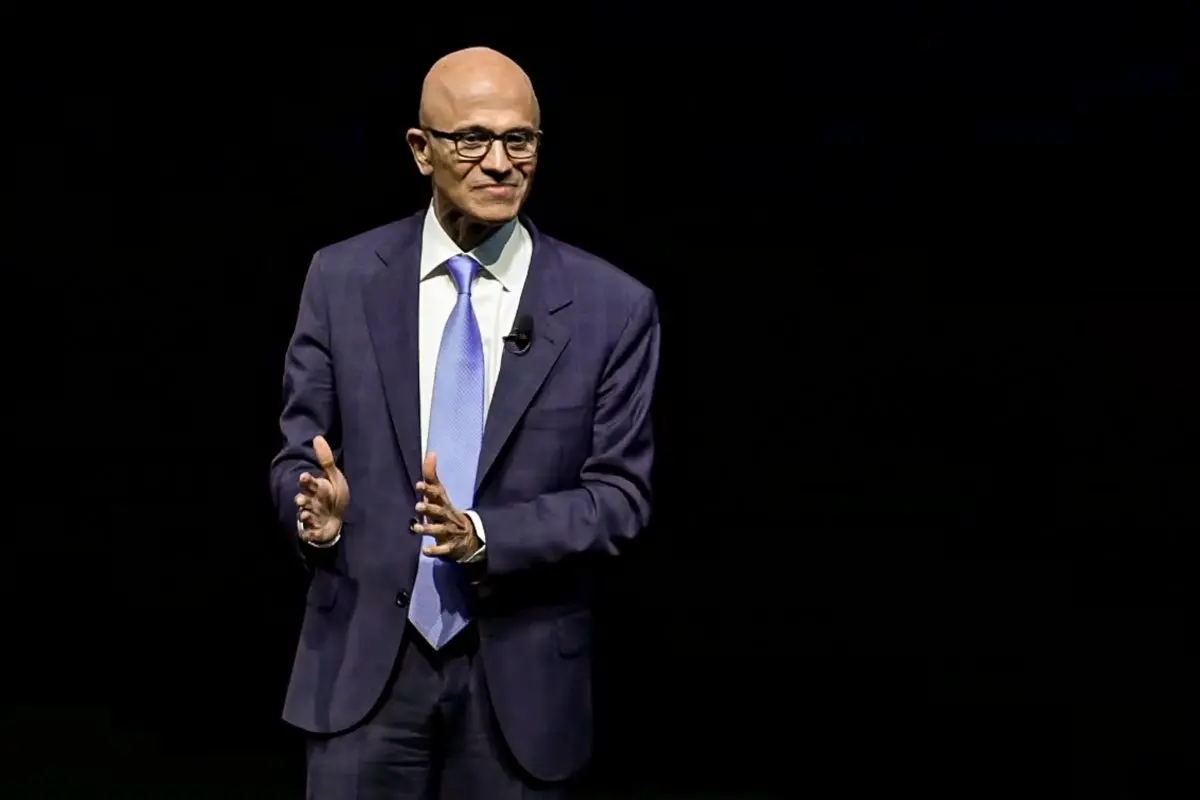
Artificial intelligence must be judged by its impact on people’s lives, not by the hype around technology firms or capital spending, Microsoft Chairman and Chief Executive Officer Satya Nadella has said, warning that a narrow focus on supply-side growth could signal an emerging AI bubble.
Speaking during multiple interactions at the World Economic Forum, Nadella argued that AI’s real value lies in how it improves education, boosts public sector efficiency, accelerates drug development and transforms productivity across industries.
He cautioned that relentless attention on the technology itself, rather than on outcomes, would be a “tell-tale” sign of imbalance in the fast-growing AI economy.
From laboratories to livelihoods
Nadella stressed that artificial intelligence should drive meaningful economic growth rather than simply fuelling higher spending or speculative investment. He pointed to its growing role in helping pharmaceutical companies bring critical drugs to market faster and shorten clinical trials.
Beyond industry, he said AI is reshaping how people work and raising productivity across sectors, calling for a broader examination of its role in everyday life.
“We as a global community have to get to a point where we are using AI to do something useful that changes the outcomes of people and communities and countries and industries,” Nadella said.
An Indian farmer and the promise of AI diffusion
Highlighting AI’s reach beyond advanced economies, Nadella recalled the story of a rural Indian farmer who used a simple AI-powered bot to access government farm subsidies in his local language.
“It was at the beginning of 2023, a rural Indian farmer was able to use a bot built, I think very early GPT 3 or 2.5 even, essentially to reason over some farm subsidies that he had heard about in a local language,” he recalled.
The farmer went a step further, asking the tool to complete forms on his behalf. Nadella described this as an example of AI restoring “agency” to people previously excluded from digital systems.
Avoiding an AI bubble through inclusion
Nadella repeatedly underlined that the benefits of artificial intelligence must be spread far more evenly to prevent the technology from becoming a bubble driven by concentration and inequality.
He said the most pressing challenge facing governments and businesses is ensuring rapid and equitable diffusion of AI across regions, particularly in the Global South.
“I think when it comes to AI, the real question in front of all of us is how do you ensure that the diffusion of AI happens, and happens fast,” Nadella said.
He argued that data, models and infrastructure must be more widely distributed to generate economic surplus across countries and communities.
Infrastructure, leadership and the productivity curve
Drawing parallels with past technological revolutions—from mainframes to cloud computing—Nadella said AI belongs to the same class of transformative technologies, with the potential to be even more powerful.
“In that context, I would say that AI is of the same class, like the web or the internet, or mobile, or PC, or cloud, or maybe even greater,” he said.
He pointed to rapid advances in AI’s reasoning, prediction and action-taking abilities, which could help “bend the productivity curve” and unlock broad-based growth.
However, Nadella warned that widespread adoption depends on skilling, leadership and public-private cooperation. He called for joint efforts to build energy infrastructure, address data sovereignty concerns and ensure AI tools are accessible across societies.
“I feel ultimately it’s going to require real leadership from the private sector, the public sector, to ensure the diffusion happens,” he said.