Mark Carney elected to replace Trudeau as Canada’s PM; vows to stand up to Trump
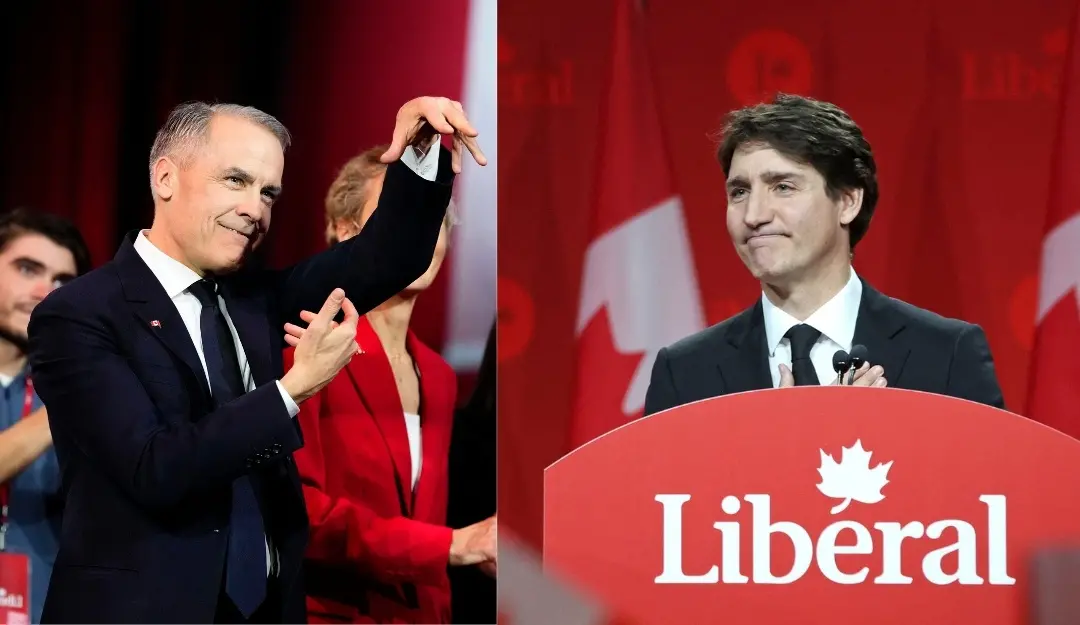
Ottawa: Canada’s Liberal Party has elected Mark Carney as its new leader, making the former central banker the country’s next prime minister. Carney, 59, secured a decisive victory over his main challenger, former Deputy Prime Minister Chrystia Freeland, winning 85.9% of the nearly 152,000 votes cast.
In his victory speech, Carney issued a stark warning about the challenges Canada faces under the leadership of US President Donald Trump. “The Americans want our resources, our water, our land, our country,” Carney declared. “These are dark days, dark days brought on by a country we can no longer trust.”
Carney’s ascension to the top political post comes at a precarious moment for Canada, with a general election due by October but an early vote potentially imminent. Current polling suggests a tight race, with the opposition Conservative Party, led by Pierre Poilievre, holding a slight advantage.
The new prime minister’s campaign centred on standing up to Trump, whose policies have disrupted bilateral trade and heightened tensions with Ottawa. Trump’s past remarks about annexing Canada, coupled with aggressive tariff actions, have fueled economic uncertainty. Outgoing Prime Minister Justin Trudeau, in his farewell address, warned that “Canadians face from our neighbour an existential challenge.”
Carney, who previously led both the Bank of Canada and the Bank of England, has no prior elected experience but has built a reputation as an economic crisis manager. His background in finance, including a stint at Goldman Sachs, and his more recent work as a UN climate envoy, were key selling points in his leadership bid.
Despite his strong economic credentials, Carney’s lack of political experience could be a challenge in an election battle against Poilievre, whose party has already begun attacking Carney’s credibility and shifting policy positions. Analysts caution that while his bold rhetoric against Trump may energise Liberal supporters, it remains to be seen whether he can withstand the rigours of an electoral campaign.
Recent polling by Angus Reid suggests Carney may have an edge in one crucial area: 43% of Canadians believe he is best suited to deal with Trump, compared to 34% who back Poilievre. This shift has injected new life into the Liberal Party, which was previously trailing significantly in the polls.
Carney’s leadership is expected to mark a strategic shift for the Liberals as they prepare for the upcoming election, with his experience in global finance and economic policy positioned as a counter to Trump’s unpredictability. The coming weeks will be crucial in determining whether his leadership can unify the party and persuade Canadian voters to extend the Liberals’ hold on power.