Louvre reopens 3 days after heist; Apollo room remains sealed
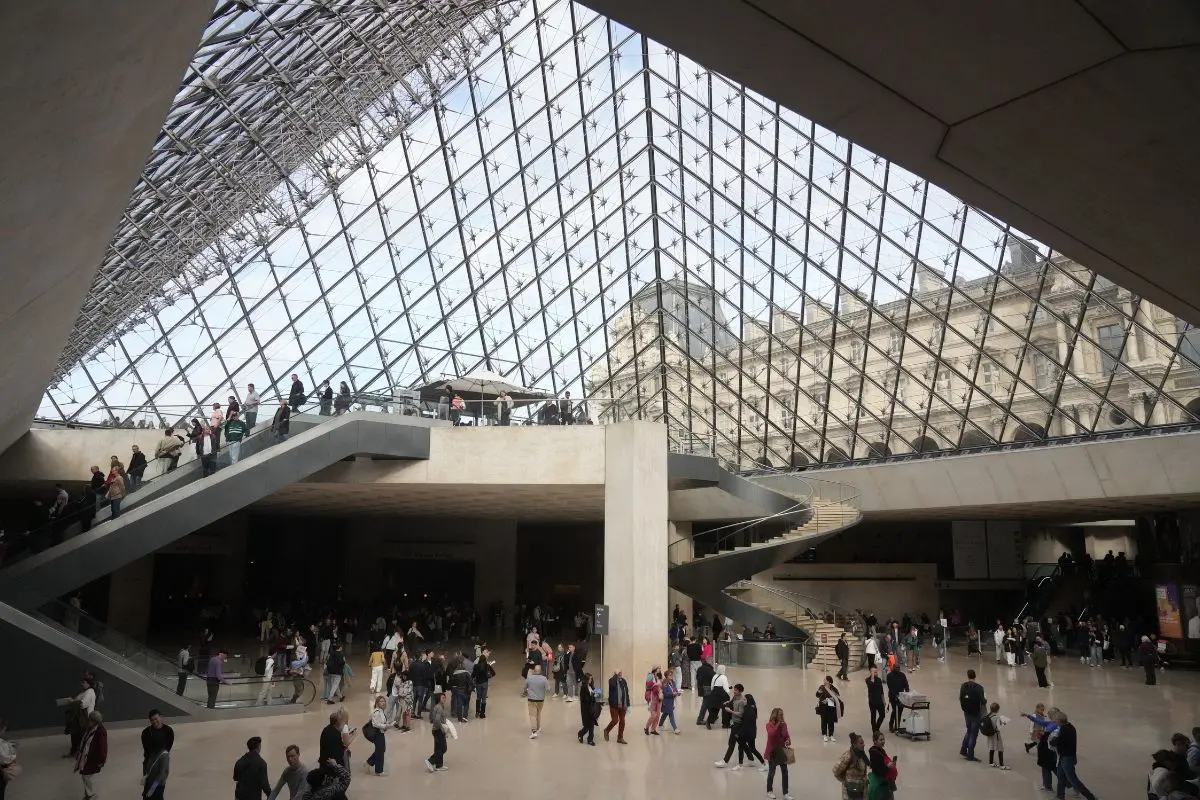
The Louvre reopened to eager crowds on Wednesday morning beneath its iconic glass pyramid, just days after a dramatic smash-and-grab robbery at the renowned museum shook France. The theft, which occurred early Sunday, has sparked national outrage and drawn comparisons to the 2019 Notre-Dame cathedral fire.
Despite Tuesday’s scheduled closure for routine maintenance, the museum resumed normal operations, though the Apollo Room—the scene of the heist—remained shuttered.
How did the heist happen?
Authorities revealed the gang spent less than four minutes inside the museum. Using a freight lift brought to the Seine-facing façade, the thieves forced open a window, smashed two display cases, and fled on motorbikes into central Paris. Louvre security responded promptly to alarms, causing the criminals to escape empty-handed in that moment, but not before the theft was complete.
Justice Minister Gérald Darmanin condemned the security lapse, saying, “We have failed,” and highlighting how easily the criminals managed “to place a freight lift on a public way,” damaging France’s international image.
Eight priceless objects were stolen, including a sapphire diadem, necklace and single earring linked to 19th-century queens Marie-Amélie and Hortense; an emerald necklace and earrings associated with Empress Marie-Louise, Napoleon Bonaparte’s second wife; a reliquary brooch; and Empress Eugénie’s diamond diadem and corsage-bow brooch. One item—the emerald-set imperial crown of Empress Eugénie, adorned with over 1,300 diamonds—was later found damaged but recoverable outside the museum.
The stolen treasures are valued at approximately €88 million (£75 million), a staggering sum that Prosecutor Laure Beccuau described as “spectacular” but which fails to capture their historical significance. She warned the thieves would likely strip the jewels from their settings or melt the metals, destroying centuries of cultural heritage for the sake of the black market.
No arrests have been made and the jewels remain missing. The investigation has identified four suspects at the scene, with around 100 investigators working to uncover the full extent of the criminal network.
Security checks
The theft has intensified scrutiny of the Louvre’s security systems. Museum president Laurence des Cars appeared before the Senate’s culture committee on Wednesday but has not been removed from her post. The incident comes amid a security overhaul announced by President Emmanuel Macron’s government earlier this year, including a new command centre and expanded camera coverage.
Questions remain over whether staffing levels and uneven application of security upgrades contributed to the breach. While major works like the Mona Lisa are protected by bulletproof glass and climate-controlled cases, Sunday’s heist revealed vulnerabilities within the sprawling museum’s 33,000-object collection.
The event has also spotlighted ongoing issues of overcrowding and staff shortages. In June, a staff strike delayed the museum’s opening over concerns about mass tourism stretching resources thin, creating risk points where visitor flows, construction zones, and freight access intersect.
On Wednesday, other Louvre highlights such as the Venus de Milo and Winged Victory of Samothrace were open to the public, but the empty, cordoned-off vitrines in the Apollo Room served as a stark reminder of a security failure measured not only in minutes and millions of euros but in the fragility of France’s cultural patrimony.