Why is Lebanon stuck between Israel and Hezbollah? | EXPLAINER
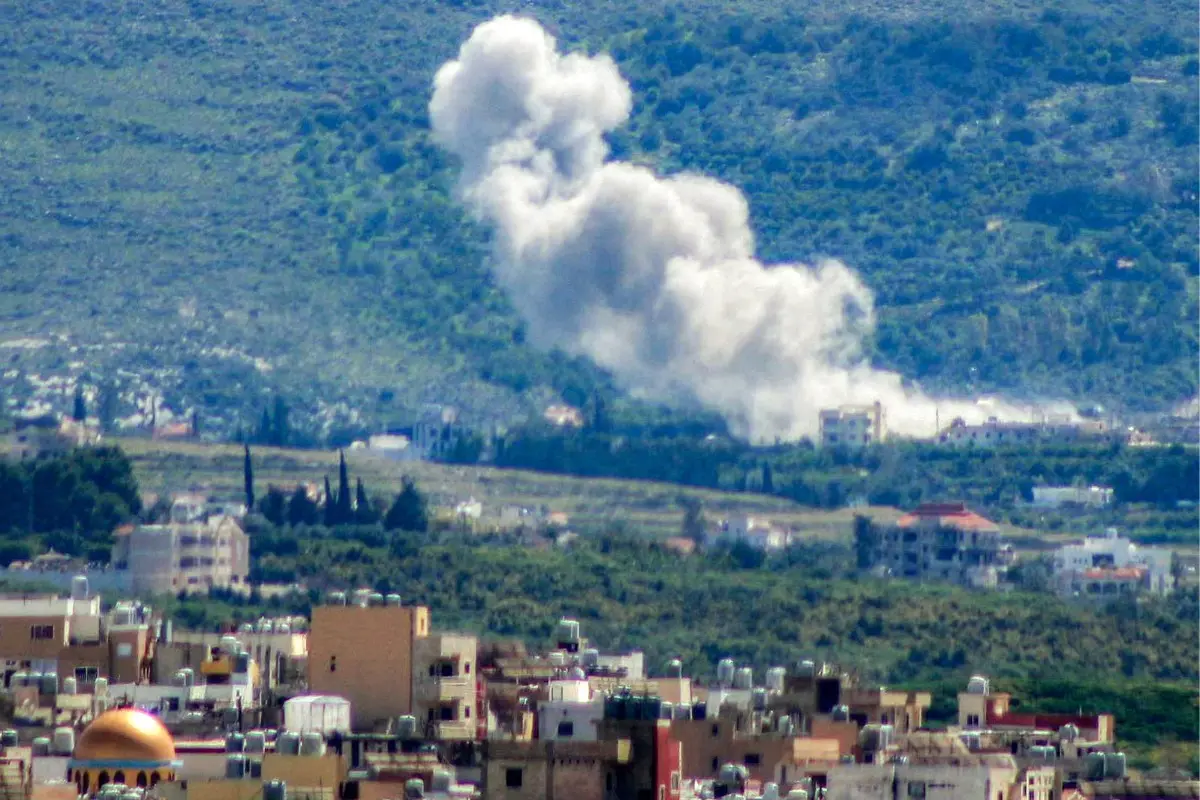
Lebanon’s already fragile government has found itself drawn into a conflict it did not initiate, caught between the actions of Hezbollah and the military response of Israel.
While the Iran-backed group has taken a firm stance, Israel has made it clear that it seeks the group’s complete elimination.
The situation escalated after Hezbollah launched rockets into Israel on March 2, saying it was in retaliation for the killing of Ali Khamenei. Since then, Lebanon has been attempting to prevent further escalation while dealing with the consequences of the conflict.
The human cost has been severe, with over 1,000 people killed in Lebanon and more than one million displaced.
What position has the Lebanese government taken?
The government in Beirut has been trying to manage a highly complex situation. It has taken steps that are seen as unprecedented in its efforts to limit Hezbollah’s role and the influence of its ally, Iran.
Authorities have announced a ban on Hezbollah’s military and security activities, as well as on the operations of Iran’s Revolutionary Guards. Lebanese Prime Minister Nawaf Salam has accused the Guards of directing Hezbollah’s military actions.
In another significant move, the government decided to expel Iran’s ambassador, a decision that has angered Hezbollah. A source from the group said it had asked the ambassador to ignore the order.
However, despite these announcements, there has been no concrete implementation of the ban. Hezbollah continues its military actions, including attacks on northern Israel and Israeli forces in southern Lebanon.
Why is the government unable to act more strongly?
Lebanese authorities face a difficult and risky choice. According to analyst Faysal Itani, the government must either confront Hezbollah directly or risk Israel taking action against the group within Lebanon.
A Lebanese official, speaking anonymously, said Israel has communicated through Jeanine Hennis-Plasschaert that it wants Hezbollah eliminated. However, the official added that disarming the group quickly is not feasible.
The government is also cautious about triggering internal instability. Hezbollah enjoys significant support among Lebanon’s Shia Muslim population, and any direct confrontation could lead to domestic unrest.
There are additional concerns about the army, which is under-resourced but remains one of the few institutions uniting the country. A confrontation with Hezbollah could risk dividing the military along sectarian lines, something that occurred in 1976 during the civil war.
What is Hezbollah’s stand?
Hezbollah, which was formed following Israel’s invasion of Lebanon in 1982, has maintained its weapons even after the end of the country’s civil war between 1975 and 1990. It has consistently justified this by describing itself as a resistance force against Israel.
Since the current conflict began, the group has not backed down. Its leader Naim Qassem has called on the Lebanese government to withdraw its ban on the group’s military activities.
Another senior figure, Mahmud Qamati, described the government’s decision as unlawful and compared it to the Vichy regime in France during the Second World War.
A Lebanese security source has also indicated that Iranian advisers and liaison officers have been supporting Hezbollah and assisting it in reorganising since the 2024 ceasefire with Israel.
Hezbollah and Iran’s Revolutionary Guards have announced joint operations against Israel since the conflict began, and a Western diplomat suggested that the group’s stance has become more rigid under this influence.
What is happening on the ground?
The Lebanese army had earlier been working to dismantle Hezbollah’s infrastructure in southern Lebanon following a ceasefire in November 2024. By January, it said it had completed operations between the Israeli border and the Litani River, roughly 30 kilometres north.
However, the current conflict has disrupted those plans. Fighting is ongoing in the same region, where Israel aims to establish a security zone.
The army has also pulled back from certain border areas to avoid being drawn into direct clashes, even as some residents continue to remain in their homes despite evacuation warnings from Israeli forces.
According to Itani, Israel no longer sees the Lebanese army as a credible force in this context and has largely stopped engaging with it.
Are there any chances of negotiations or a ceasefire?
Lebanese President Joseph Aoun has proposed direct talks with Israel along with a comprehensive ceasefire in an attempt to break the political deadlock.
However, the prospects for negotiations remain uncertain. Lebanon and Israel have technically been at war since 1948 and do not have formal diplomatic relations.
Hezbollah’s leadership has rejected the idea of negotiating while military operations continue, describing it as equivalent to surrender. At the same time, Israeli officials are said to favour negotiations only under ongoing military pressure and are unwilling to accept a ceasefire on the terms proposed by Aoun.
What happens next for lebanon?
For now, Lebanon’s government appears to have limited options. According to an official source, its immediate focus is on using diplomatic channels to prevent further damage, particularly to critical infrastructure.
With agency inputs