Russia unleashes its most powerful Oreshnik hypersonic missile in ‘apocalyptic’ strike on Kyiv
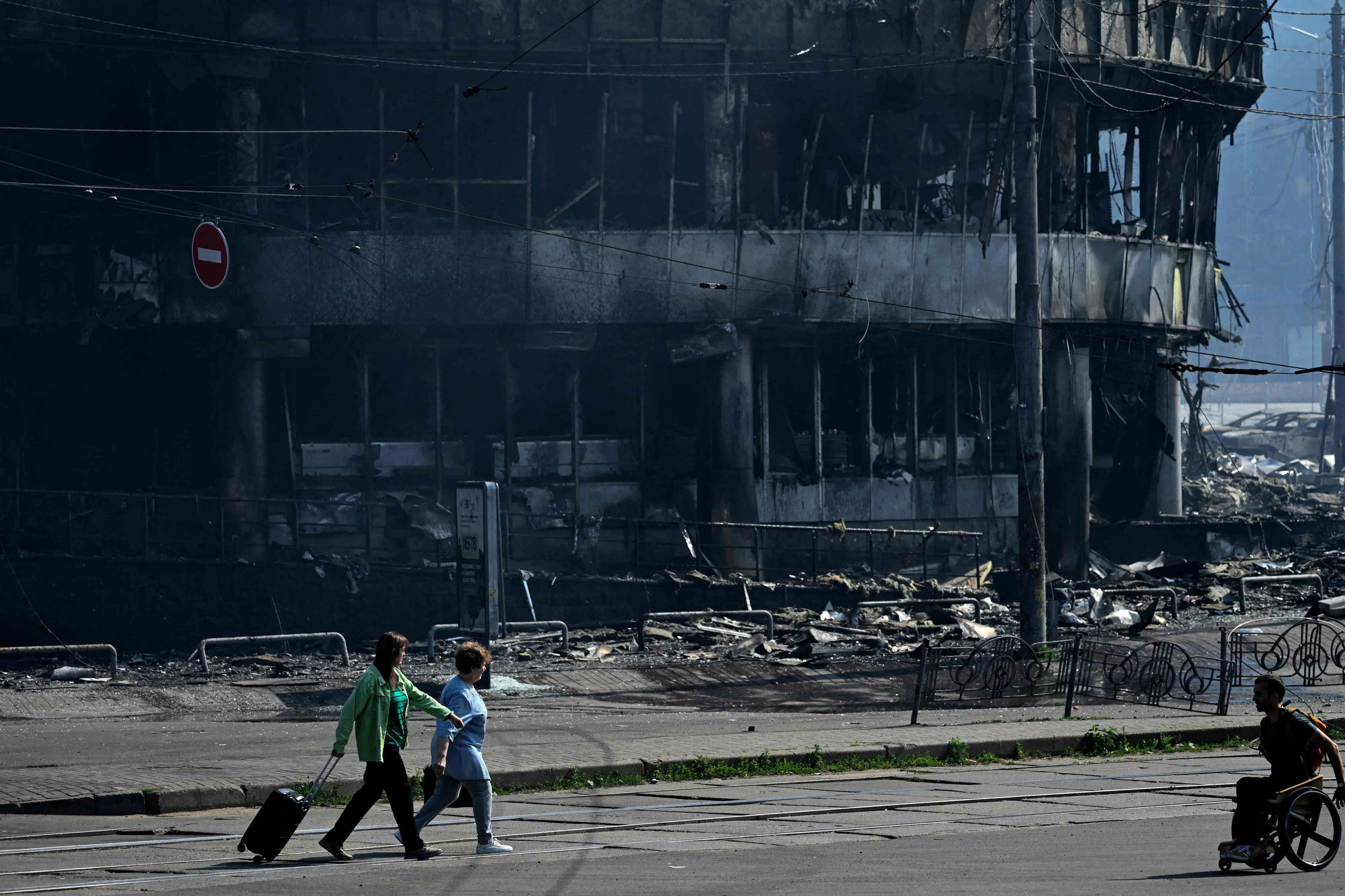
Kyiv endured one of the deadliest and most destructive nights of the four-year war after Russia unleashed a sweeping drone-and-missile barrage across the Ukrainian capital, deploying its powerful hypersonic Oreshnik ballistic missile for only the third time in the conflict, Ukrainian President Volodymyr Zelenskyy said on Sunday.
The overnight onslaught, described by residents as “apocalyptic”, left at least two people dead and more than 80 injured, while fires raged for hours across multiple districts. Entire neighborhoods were rattled as explosions echoed over the city and smoke blanketed the skyline.
Ukrainian authorities reported that the waves of strikes hit areas near government buildings, homes, schools, markets and other public facilities. Emergency workers said damage was documented in at least 50 locations across Kyiv and its surrounding region.
According to Ukraine’s Air Force, the attack involved around 600 strike drones and 90 missiles launched from air, sea and ground. Ukrainian defenders managed to intercept or jam the majority of them, 549 drones and 55 missiles, while about 19 missiles malfunctioned before reaching targets.
But officials acknowledged that not all ballistic missiles were intercepted, underscoring Ukraine’s ongoing shortage of high-precision air defense systems capable of stopping weapons like the Oreshnik. Kyiv continues to rely heavily on US-supplied Patriot interceptors, which remain in limited supply.
Hypersonic Oreshnik missile used again
Zelenskyy confirmed that the Oreshnik missile, capable of carrying either nuclear or conventional payloads, struck the city of Bila Tserkva in the Kyiv region. Russia’s Defense Ministry later acknowledged deploying the missile, along with other systems, claiming the strikes targeted “military command and control facilities,” air bases and industrial sites. Moscow insisted the barrage was retaliation for alleged Ukrainian attacks on “civilian facilities” inside Russia.
The Oreshnik, which can travel at up to ten times the speed of sound and is designed to destroy fortified underground structures, was previously used on Dnipro in November 2024 and again in the Lviv region in January, according to earlier reports.
Retaliation rhetoric intensifies
The latest escalation comes after Russian President Vladimir Putin condemned a drone strike on a college dormitory in Russian-occupied eastern Ukraine last week. Moscow said the incident killed 21 people and wounded 42, prompting two days of mourning in the Luhansk region. Putin vowed that Russia would respond militarily.
At an emergency U.N. Security Council meeting called by Moscow, Ukrainian Ambassador Andrii Melnyk dismissed Russian allegations of war crimes as a “pure propaganda show,” insisting that Kyiv’s May 22 operations “exclusively targeted the Russian war machine.”
Kyiv’s European partners also denounced the strikes. Leaders including French President Emmanuel Macron and German politician Friedrich Merz issued strong statements condemning Russia’s use of the Oreshnik. EU foreign policy chief Kaja Kallas said EU diplomats would soon meet to consider new ways to tighten pressure on Moscow.
Scenes of destruction across Kyiv
The scale of Saturday night’s assault stunned residents across the capital. AP reporters described hearing successive explosions near the city center as air raid sirens wailed for hours.
A residential building in the Shevchenko district was hit, causing a fire that killed one person, emergency services said. Mayor Vitali Klitschko confirmed that a school sheltering civilians also sustained damage. Supermarkets, warehouses and police buildings across the city were left shattered by shockwaves.
Footage circulating online showed a cruise missile slamming into central Kyiv, erupting into a blinding flash before a massive blast.
Near the Lukianivska metro station, a business center and an adjacent market were completely destroyed, according to Euromaidan Press. Among the structures ruined was a café that had been rebuilt six times after previous Russian strikes.
Residents described terror and helplessness as blasts tore through neighborhoods. “It was a terrible night, and there had never been anything like it in the entire war,” said Svitlana Onofryichuk, a 55-year-old market vendor who lost her livelihood in the fires. “My job is gone, everything is gone, everything has burned down.”
Another resident, Yevhen Zosin, 74, said he was thrown by the shock wave as he tried to protect his dog. “We both survived, she and I. My apartment was blown to pieces,” he said.
Strikes beyond the capital
Authorities reported widespread damage across the wider Kyiv region. A Ukrainian drone attack on the Russian town of Grayvoron in Belgorod killed one civilian, local officials said.
Russia claimed its air defenses intercepted or jammed 33 Ukrainian drones overnight across several regions, including the Moscow area and Russian-occupied Crimea.
Ukrainian officials say the latest assault shows Russia’s intent to inflict maximum destruction on civilian areas.
Andrii Sybiha, writing on X, said the attack “was not about military targets but about harming civilians,” listing numerous regions struck across the country, including Cherkasy, Kharkiv, Kropyvnytskyi, Odesa, Poltava, Sumy and Zhytomyr.
Zelenskyy accused Russia of deliberately targeting markets, schools, water facilities and residential neighborhoods, describing the attack as a deliberate campaign of terror.
(With AP inputs)