Keir Starmer quits: UK's sixth prime minister to fall in a decade
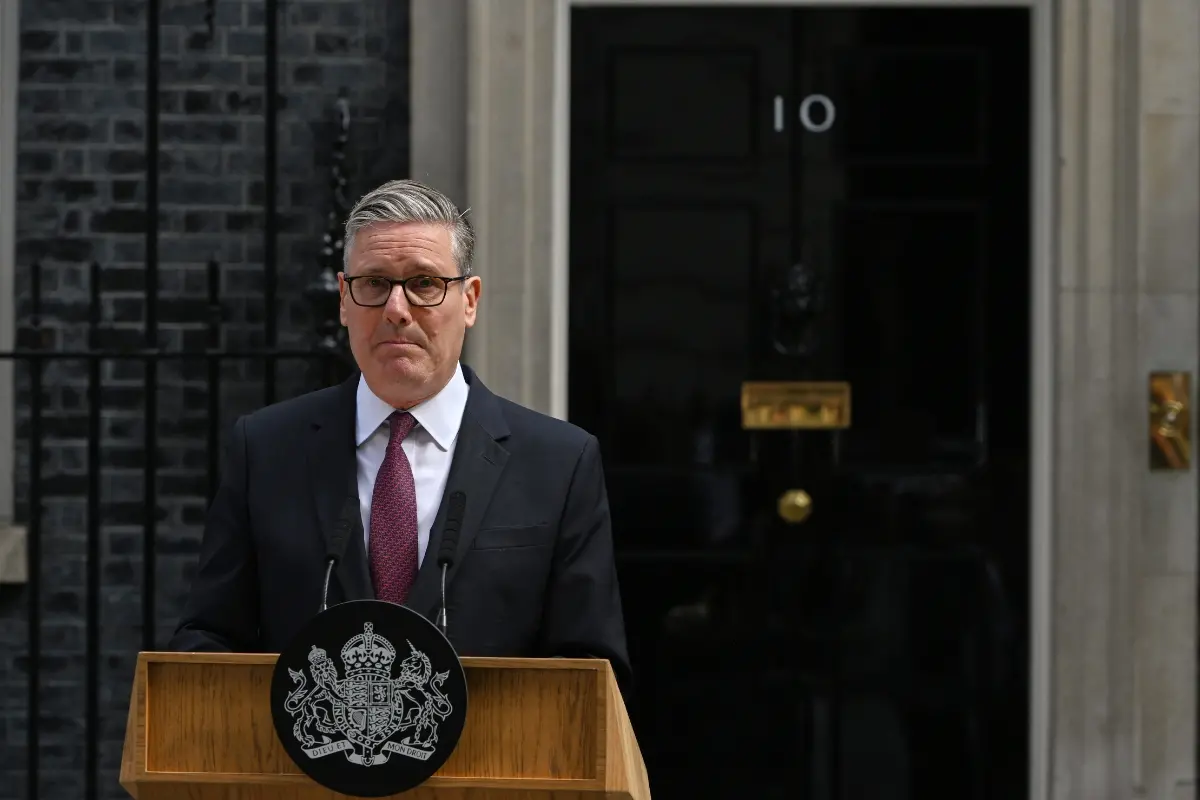
London: Keir Starmer has announced his resignation as leader of the Labour Party and, in due course, as the United Kingdom's prime minister, ending a turbulent period in office marked by declining public support, electoral setbacks and mounting pressure from within his own party.
After weeks of speculation over his future, Starmer confirmed he would step aside following growing dissatisfaction within Labour ranks and a series of disappointing electoral performances.
The decision follows Andy Burnham's emphatic victory in the Makerfield by-election, a result widely viewed as a sign of shifting sentiment within Labour. Although Starmer had repeatedly insisted he would continue fighting on, reports suggest private discussions with senior party figures and cabinet colleagues convinced him that his position had become untenable.
Unlike the chaotic departures of former Conservative prime ministers Boris Johnson and Liz Truss, Starmer has sought to manage a more orderly transition of power.
Sixth British prime minister to leave office in a decade
Starmer's resignation makes him the sixth British prime minister to step down in the past ten years, underlining the extraordinary political instability that has defined modern British politics since the Brexit referendum.
His departure adds to a growing list of short-lived premierships that includes David Cameron, Theresa May, Boris Johnson, Liz Truss and Rishi Sunak.
The rapid turnover of leaders has fuelled debate over whether any modern British prime minister can maintain long-term political authority in an increasingly fragmented political landscape.
A prime minister who never enjoyed widespread popularity
Even before entering Downing Street following Labour's 2024 election victory, Starmer struggled with weak personal approval ratings.
Polling before the election showed more voters were dissatisfied with him than satisfied, making him one of the least popular incoming prime ministers in modern British history.
While his approval ratings improved slightly after Labour returned to power, the post-election boost was modest and short-lived compared with the prolonged popularity enjoyed by former Labour leader Tony Blair after his 1997 landslide victory.
Political analysts argued that Starmer's electoral success was driven more by voter frustration with the Conservatives than by enthusiasm for Labour itself.
The challenge of holding Labour's coalition together
Many observers believe the roots of Starmer's downfall lie in the same political divisions that troubled his predecessor Jeremy Corbyn.
Labour's broad coalition included working-class voters concerned about immigration and national identity, progressive urban voters focused on climate and social justice issues, and younger voters mobilised around international causes such as Gaza.
Over time, those competing interests became increasingly difficult to reconcile.
Labour found itself squeezed between Reform UK on one side and the Green Party and independent progressive candidates on the other, resulting in electoral losses and declining support across key regions.
Brexit divisions continue to shape British politics
Although the Brexit referendum took place a decade ago, analysts argue its political consequences continue to dominate British politics.
The divisions between Leave and Remain voters have evolved into broader cultural and political identities that continue to influence voting behaviour.
As a result, major parties increasingly struggle to hold together diverse voter coalitions with conflicting priorities.
Political experts suggest that both Starmer and Corbyn faced similar challenges, attempting to unite groups of voters whose only common ground was opposition to the government of the day.
Electoral warning signs mounted
Labour's difficulties became increasingly visible through by-election defeats, disappointing local election performances and struggles in Scotland, where the party failed to make significant gains against the Scottish National Party.
At the same time, Reform UK made inroads into traditional Labour areas, while the Green Party expanded its parliamentary presence and independent candidates achieved breakthrough victories in Labour strongholds.
These results raised questions about Labour's long-term electoral coalition and Starmer's ability to keep the party united.
What happens next?
Starmer's resignation opens a new chapter for Labour as the party prepares for a leadership contest and attempts to rebuild support ahead of future elections.
His departure also raises broader questions about political stability in Britain, where prime ministers have increasingly struggled to survive the pressures of coalition politics, social division and a rapidly changing electorate.
For many analysts, Starmer's resignation is not simply the story of one leader's downfall but another sign of the deeper challenges facing modern British politics.