Israel strikes Syrian air base, blames Turkey-backed troop deployment
Damascus: Israel has accused Syria of moving towards allowing Turkish troops to deploy at a Syrian air base, citing the planned deployment as a security threat after an Israeli strike hit the facility in northern Syria.
Turkey rejected the allegation on Wednesday, accusing Israel of using the claim to justify what it called unlawful attacks on Syrian territory.
The strike on the Abu Duhur air base in Idlib province marked a significant escalation in Israel's military actions in Syria and came despite US efforts to support Syria's new government, led by former jihadist Ahmed al-Sharaa, a figure backed by Turkey.
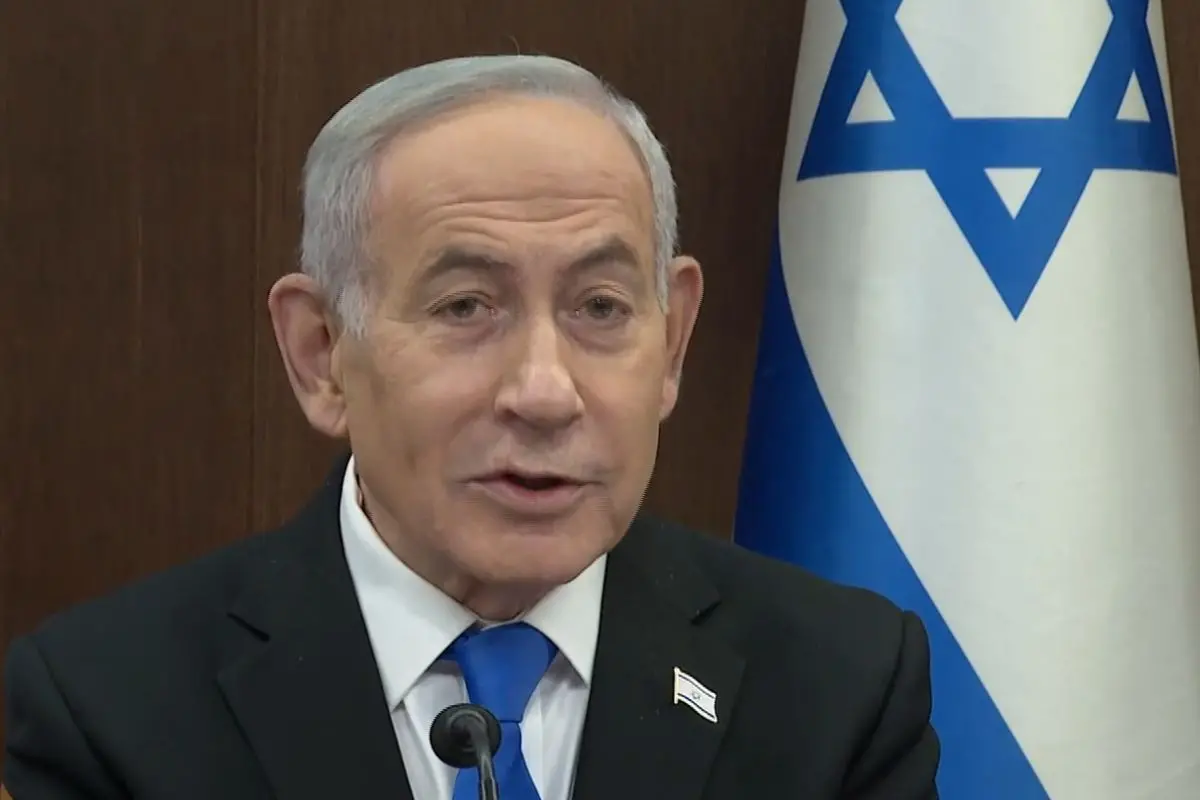
Israel did not initially acknowledge responsibility for the attack. However, Prime Minister Benjamin Netanyahu's office later said Israel had warned Syria against allowing Turkish troops to deploy at an airbase near Aleppo.
"Israel and Syria agreed to a status quo in security matters, which Syria was on the verge of breaching by permitting Turkish troops to deploy at an airbase near Aleppo," Netanyahu's office said.
"Israel repeatedly warned Syria that such a deployment would pose a threat to Israel's security. Syria chose to ignore these warnings," it added.
Turkey strongly rejected the Israeli claim.
"The frivolous allegations put forward by the Israeli Prime Minister's office aim to legitimize Israel's unlawful airstrikes targeting Syria's sovereignty and territorial integrity," the Turkish government said in a statement quoted by state-run Anadolu news agency.
US envoy for Syria Tom Barrack confirmed earlier that Israel carried out the strikes on the Abu Duhur air base.
The attacks "constitute an unnecessary escalation that does not advance regional stability", Barrack, who is also the US ambassador to Turkey, wrote on X.
"We encourage all parties to prioritise logical discourse over further military incidents," he said.
Israel-Turkey tensions deepen
Israel has carried out hundreds of strikes in Syria since December 2024, when Bashar al-Assad was ousted by Islamist forces led by Ahmed al-Sharaa.
Sharaa's new administration has relied heavily on Turkish support, adding another layer to Israel's increasingly tense relationship with Ankara.
Israel has also deployed troops into the UN-patrolled buffer zone separating Israeli and Syrian forces in the Golan Heights and has conducted repeated incursions into Syrian territory.
The latest strike, however, reached considerably deeper into Syria.
Syrian state media, citing a military source, reported that Israeli aircraft carried out eight strikes on the base's runway, damaging infrastructure but causing no casualties.
The airfield has reportedly been out of service since 2012 and is guarded by Syrian Defence Ministry forces, according to a security source cited by AFP.
The Syrian Observatory for Human Rights said the strikes followed a visit by a Turkish military delegation to the airfield in recent days as part of efforts to reactivate the facility.
Syria condemns Israeli strikes
Syria's Foreign Ministry condemned the attack and called for international action.
It described the strikes as "an unjustified act of aggression" and urged the UN Security Council to take action.
The ministry said Syria "has exercised restraint and worked to consolidate stability and avoid escalation".
Despite the growing tensions, Israel and Syria's new authorities have held several rounds of direct talks and agreed to establish an intelligence-sharing mechanism.
Last month, Syrian Foreign Minister Asaad al-Shaibani called for Israel's unconditional withdrawal from Syrian territory and warned that "the unlawful occupation of our land beyond the 1974 line is a direct threat to the security of the region".
Israeli Defence Minister Israel Katz said last week that Israel planned to maintain its military presence in Syria.
UN Secretary-General Antonio Guterres, during a visit to Damascus last month, said that "violations of Syria's sovereignty and territorial integrity are unacceptable and must cease," while reiterating that "the Golan Heights are Syrian territory."
Israel captured most of the Golan Heights from Syria during the 1967 Arab-Israeli War and later annexed the territory under its control. The annexation has not been recognised by most of the international community.